
Xylitol Poisoning in Dogs and Cats: The Hidden Danger in Sugar-Free Products

Published June 22, 2025
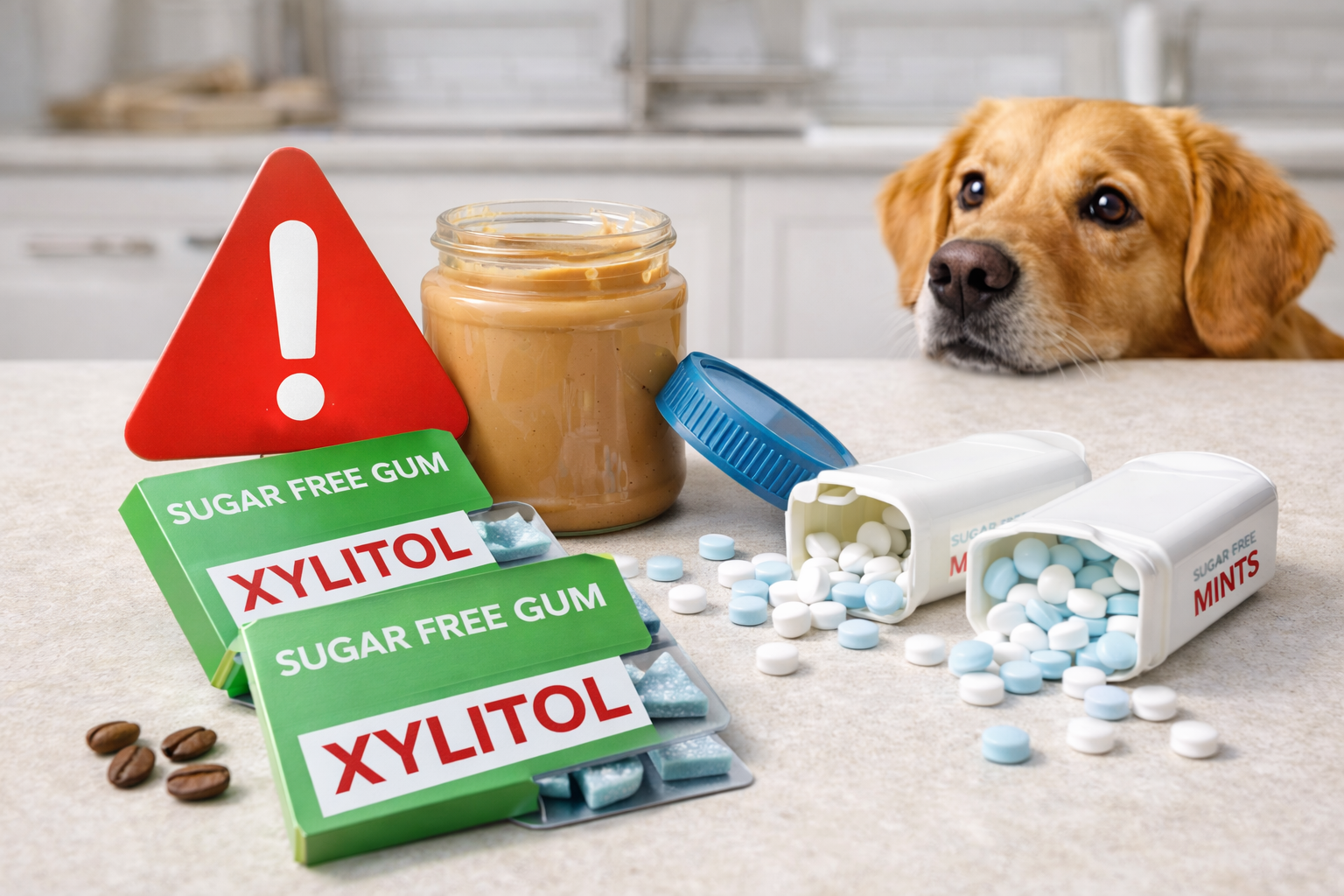
While some foods may be safe for us, they are not always safe for our pets. Xylitol is among the most common ingredients that can be a serious concern if ingested by pets. Experts estimate Xylitol is approximately 100 times more toxic to dogs than chocolate.
What is Xylitol?
Xylitol is a sugar alcohol used as a sweetener in sugar-free beverages, candies, and chewing gums. It's made from birch trees or a vegetable fiber called Xylan. Natural sources of xylitol include lettuce, berries, plums, mushrooms, and hardwood fruits and trees.
This sweetener is found in a surprising variety of products:
- Chewing gum (most common source of pet poisoning)
- Sugar-free candy and mints
- Toothpaste and mouthwash
- Peanut butter (many brands!)
- Baked goods and baking mixes
- Breath fresheners
- Nasal sprays
- Vitamins and supplements
Xylitol: Safe for Humans
Xylitol is very safe for humans and actually has some health benefits:
- Dental health: Unlike sugar, xylitol doesn't contribute to tooth decay. In fact, it reduces tooth decay by 30% to 85%
- Low glycemic: Suitable for diabetics and low-carb diets as it doesn't raise blood sugar levels
- Fewer calories: Contains 40% fewer calories than regular sugar
None of the adverse side effects of sugar are present in xylitol for humans. However, this is precisely why it's so dangerous - products we consider "healthy" alternatives may be deadly to our pets.
Xylitol: Extremely Toxic to Dogs
While xylitol has its recognized place in people's everyday lives, it can be disastrous for animals. Here's why:
How Toxic Is It?
| Dog Weight | Hypoglycemia Dose | Liver Toxicity Dose |
|---|---|---|
| 10 lbs (4.5 kg) | ~1 piece of gum | ~4-5 pieces of gum |
| 20 lbs (9 kg) | ~2 pieces of gum | ~9 pieces of gum |
| 45 lbs (20 kg) | ~4-5 pieces of gum | ~18-20 pieces of gum |
Note: Xylitol content varies significantly between products. Some gums contain much more xylitol than others.
Symptoms of Xylitol Poisoning
If you suspect your pet has consumed xylitol, watch for these symptoms:
Early Symptoms (within 30 minutes)
- Vomiting
- Weakness and lethargy
- Loss of coordination / difficulty walking
- Tremors or shakiness
Severe Symptoms
- Seizures
- Collapse
- Coma
Delayed Symptoms (12-24+ hours - liver damage)
- Jaundice (yellowing of skin/eyes)
- Dark or bloody stool
- Bleeding disorders
Xylitol Toxicity: Dogs vs. Cats
In Dogs
Xylitol is exceptionally toxic to dogs. A small amount leads to:
- Rapid insulin release causing dangerous blood sugar drops
- Seizures
- Liver failure
- Death (if untreated)
In Cats
Small amounts of xylitol in cats can bring about an "impulsive" release of insulin, leading to hypoglycemia (low blood sugar). Cats may be able to survive exposure, but liver failure is common. However, due to their pickier eating habits, cats rarely choose candy or baked goods, making poisoning less common.
If you believe your cat consumed something containing xylitol, seek immediate veterinary attention as this condition may result in seizures and possibly a coma.
Products That May Contain Xylitol
These are the most common culprits for pet poisoning:
- Chewing gum - #1 cause of xylitol poisoning in dogs
- Sugar-free candy and mints
- Peanut butter - many brands use xylitol!
- Toothpaste and mouthwash
- Baked goods (cookies, muffins, cakes)
- Jam, jelly, and pudding
- Fruit drinks
- Cereal
- Vitamins and chewable supplements
What To Do If Your Pet Eats Xylitol
-
Check the Ingredient Label
Confirm the product contains xylitol. Try to determine how much your pet consumed.
-
Contact a Veterinarian Immediately
Call your vet, emergency animal hospital, or Animal Poison Control Center right away.
-
Do NOT Induce Vomiting
Unless specifically directed by a veterinarian. This could cause more harm.
-
Gather Information
Know your pet's weight and bring the product packaging to the vet.
-
Act Fast
Even if your pet seems normal, call poison control - the amount ingested may still be dangerous.
How Xylitol Poisoning Is Treated
First and aggressive treatment by a vet is necessary to reverse the harmful effects of xylitol:
- IV fluids with dextrose (sugar) to stabilize blood pressure and blood sugar
- Blood work to assess overall health and blood sugar levels
- Induced vomiting (if recent and directed by vet) to prevent further absorption
- Extended hospitalization with blood glucose monitoring for up to 48 hours
- Liver protectants and potassium supplementation
- Follow-up appointments with liver enzyme blood work to check for long-term damage
This is particularly important if your pet is over 8 years old, as they may be more susceptible to liver damage.
How to Keep Your Pet Safe
Prevention is the best approach to xylitol poisoning:
- Always check ingredient labels when purchasing new items
- Keep products in closed cabinets - never within reach of pets
- Don't leave purses or backpacks on the floor - dogs love to explore!
- Take medications behind closed doors so dropped pills don't reach your pet
- Don't let pets eat anything off the ground during walks
- Educate family members and guests about xylitol dangers
- Choose xylitol-free peanut butter - look for brands with only peanuts and salt
Emergency Contacts
🇺🇸 United States
ASPCA Animal Poison Control: (888) 426-4435
Pet Poison Helpline: (855) 764-7661
Note: Consultation fees may apply ($75-95)
What About Other Pets?
Even though the toxicity of xylitol in other species is not well-documented, there is concern that other non-primate species may react similarly to dogs and cats. This includes:
- Ferrets
- Guinea pigs
- Hamsters
- Rabbits
Until more research is available, it's best to keep all xylitol-containing products away from all pets.
Conclusion
Xylitol is one of the most dangerous substances your dog can encounter, and it's hiding in products you might never suspect. The key to keeping your pet safe is vigilance: always read ingredient labels, store products securely, and act immediately if you suspect exposure.
Remember: with xylitol poisoning, time is critical. If you suspect your pet has ingested any amount of xylitol, contact your veterinarian or poison control immediately - even if they seem fine. Early intervention can be the difference between life and death.
Download the ToxiPets app to instantly scan any product and check if it contains xylitol or other ingredients dangerous to your pets.
Be honest — you won't remember this article at 2am when your pet eats something.
Skip the Googling next time. Scan any food, plant, or product in ToxiPets and get an instant answer personalized to your pet’s weight and breed.
Frequently Asked Questions
Is xylitol toxic to dogs?
Is xylitol toxic to cats?
What products contain xylitol?
How much xylitol is toxic to dogs?
What are the symptoms of xylitol poisoning in dogs?
What should I do if my dog eats xylitol?
Can dogs recover from xylitol poisoning?
Does peanut butter contain xylitol?
Dr. Kamala Freeman
DVM • Emergency Veterinarian
Dr. Kamala Freeman is an emergency veterinarian with extensive experience in urgent pet care and toxicity cases. She works at an emergency veterinary hospital treating pets exposed to poisons, toxins, and other life-threatening emergencies.
Related Articles
Foods Toxic to Dogs and Cats: The Complete Guide (2026)
Complete list of human foods that are dangerous for your pets. Learn which common foods can harm your dog or cat, symptoms of poisoning, and what to do in an emergency.
Pet Poisoning: What to Know and What to Do in an Emergency
Complete guide to recognizing poisoning symptoms in dogs and cats, common toxins to avoid, and the exact steps to take in a pet poisoning emergency.
Stop Googling. Start scanning.
Next time your pet gets into something, skip the articles. Open ToxiPets, scan it, and get a personalized answer in seconds — based on your pet's weight, breed, and health.
Free to download • Used by 50,000+ pet parents