
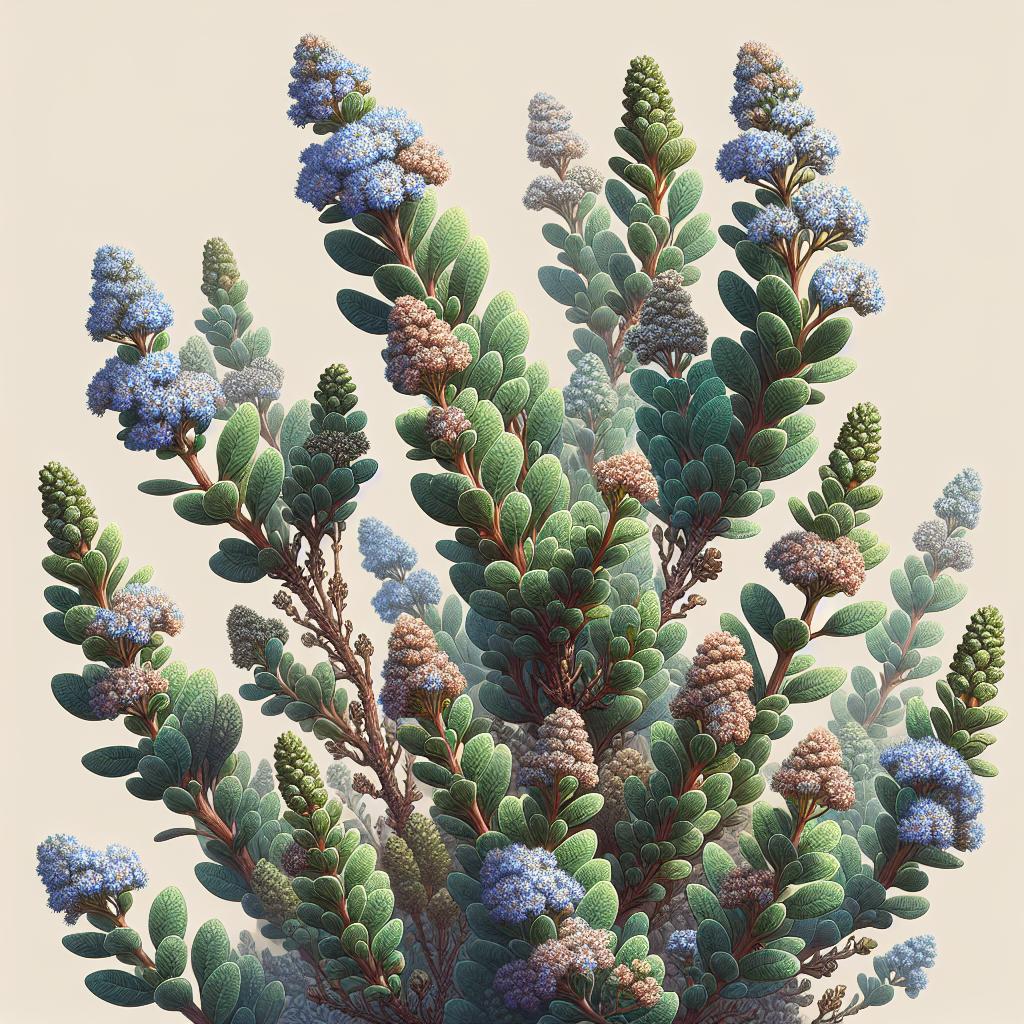
Is Ceanothus foliosus var. foliosus Toxic to Dogs and Cats?
Safe
### Safety Information for Pets Ceanothus foliosus var. foliosus, commonly known as wavyleaf ceanothus, is considered non-toxic to pets. However, it is always advisable to monitor pets to ensure they do not ingest large quantities of any plant, as this can sometimes lead to gastrointestinal upset. ### Detailed Plant Description #### **Scientific Name** - **Ceanothus foliosus var. foliosus** #### **Common Names** - Wavyleaf ceanothus - Wavyleaf ceanothus #### **Family** - **Rhamnaceae** (Buckthorn family) #### **Plant Type** - Shrub #### **Origin and Habitat** Ceanothus foliosus var. foliosus is native to California, particularly thriving in the coastal ranges and foothills. It prefers well-drained soils and is often found in chaparral, coastal sage scrub, and woodland ecosystems. #### **Growth Habit** - **Form**: This plant is an evergreen shrub, typically growing between 2 to 5 feet in height, though it can sometimes reach up to 8 feet. It often has a dense, spreading form. - **Leaves**: The leaves are small, ovate to elliptical, with a wavy margin, giving rise to its common name. They are typically dark green on the upper surface and lighter beneath, with a glossy texture. #### **Flowers** - **Blooming Season**: Wavyleaf ceanothus flowers in the spring, usually from April to June. - **Inflorescence**: The flowers are small, star-shaped, and are grouped in dense clusters. - **Color**: The blossoms are typically a vibrant blue to lavender-blue, although white-flowered forms can occasionally be found. - **Pollinators**: The flowers attract a variety of pollinators, including bees and butterflies, making it an excellent choice for wildlife gardens. #### **Fruits and Seeds** - Following the blooming period, the plant produces small, dry, three-lobed capsules that contain seeds. These capsules are typically less than half an inch in diameter. #### **Cultivation and Care** - **Soil Requirements**: Prefers well-drained soils and can thrive in poor, rocky substrates. - **Watering**: Drought-tolerant once established, it requires minimal watering. Overwatering can lead to root rot. - **Sun Exposure**: Full sun to partial shade. - **Pruning**: Prune lightly after flowering to maintain shape and encourage dense growth. - **Hardiness**: It is hardy in USDA zones 7-9. #### **Uses in Landscaping** Ceanothus foliosus var. foliosus is often used in native plant gardens, xeriscapes, and as a ground cover or erosion control due to its dense growth habit. It is also valued for its vibrant spring flowers and ability to attract pollinators. #### **Ecological Benefits** - **Wildlife Habitat**: Provides habitat and food for various insects, birds, and small mammals. - **Soil Stabilization**: The plant’s root system helps in stabilizing soil, making it useful for preventing erosion. #### **Propagation** - **Seed**: Seeds may require scarification or stratification to enhance germination. - **Cuttings**: Semi-hardwood cuttings taken in late summer can also be used for propagation. #### **Potential Problems** - **Pests and Diseases**: Generally resistant to pests and diseases, but can occasionally suffer from fungal infections in overly moist conditions. ### Summary Ceanothus foliosus var. foliosus, or wavyleaf ceanothus, is a versatile and attractive evergreen shrub suitable for a variety of landscaping uses, particularly in regions with similar climates to its native California habitat. Non-toxic to pets, it is a safe and beneficial addition to gardens aimed at supporting local wildlife.
⚠️ Think your pet ate Ceanothus foliosus var. foliosus?
Get a personalized safety assessment now.
What To Do If Your Pet Ate Ceanothus foliosus var. foliosus
Stay calm and remove your pet from the source
Contact your veterinarian immediately
Call ASPCA Poison Control: (888) 426-4435
Be honest — you won't remember this article at 2am when your pet eats something.
Skip the Googling next time. Scan Ceanothus foliosus var. foliosus (or anything else) in ToxiPets and get an instant answer personalized to your pet's weight and breed.