
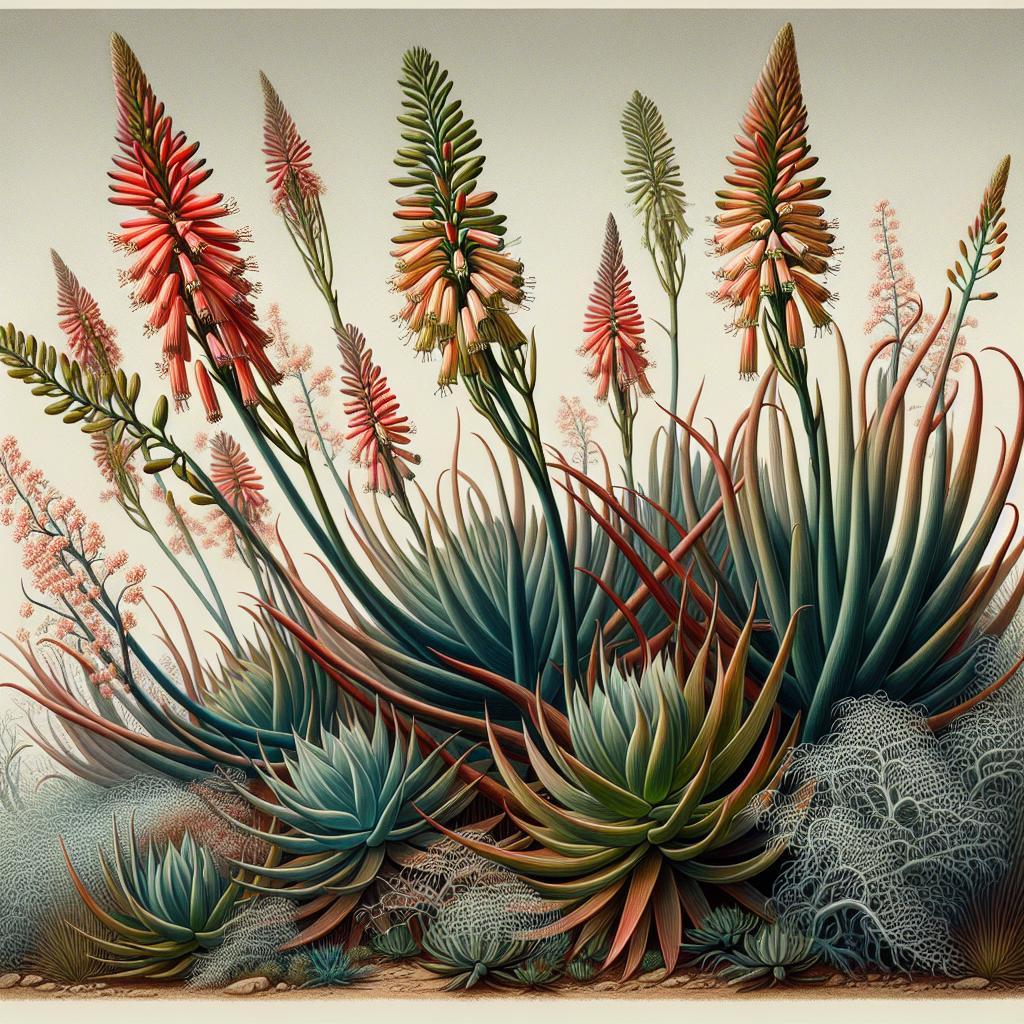
Is Hesperaloe parviflora Toxic to Dogs and Cats?
Safe
Certainly! Here's detailed information about Hesperaloe parviflora: ### Safety Information for Pets - **Toxicity**: Hesperaloe parviflora is generally considered non-toxic to pets, including dogs and cats. However, as with any plant, ingestion of large quantities may cause gastrointestinal upset such as vomiting or diarrhea. It’s always best to supervise pets around new plants to ensure they do not ingest any part of the plant. ### General Information - **Scientific Name**: Hesperaloe parviflora - **Common Names**: redflower falseyucca, redflower false yucca, Samandoque flor roja, red-yucca, red hesperaloe, red-flower-yucca, red-flower hesperaloe - **Family**: Agavaceae - **Plant Type**: Succulent ### Description - **Origin**: Native to the Chihuahuan Desert of Texas and northeastern Mexico. - **Growth Habit**: This plant forms a clump of arching, grass-like leaves that can reach up to 2-3 feet in height and spread up to 4 feet wide. - **Leaves**: The leaves are long, slender, and fibrous, resembling those of the yucca. They are typically blue-green to gray-green in color and have a rough texture. The edges of the leaves are adorned with curly white threads. - **Flowers**: Hesperaloe parviflora is renowned for its striking flower spikes, which can grow up to 5 feet tall. The flowers are tubular, typically a vibrant red or pink, and bloom from late spring to summer. These flowers are very attractive to hummingbirds and other pollinators. - **Fruit**: The plant produces elongated seed capsules following the flowering season. ### Growing Conditions - **Light**: Prefers full sun to partial shade. It thrives best with at least 6 hours of direct sunlight per day. - **Soil**: Well-drained soil is essential. It can tolerate a variety of soil types, including sandy and rocky soils, but it does not perform well in heavy, clayey soils that retain moisture. - **Watering**: Drought-tolerant once established. It requires minimal watering, making it an excellent choice for xeriscaping. Overwatering can lead to root rot. - **Temperature**: Hardy to USDA zones 5-10. It can tolerate a wide range of temperatures, including extreme heat and cold down to -20°F (-29°C) with proper protection. - **Fertilization**: Rarely needs fertilization. If required, a balanced, slow-release fertilizer can be applied in the spring. ### Landscape Use - **Ornamental Use**: Hesperaloe parviflora is highly valued in landscaping for its striking appearance and low maintenance requirements. It works well in rock gardens, desert landscapes, and as an accent plant. - **Wildlife**: The flowers attract hummingbirds, bees, and butterflies, making it a great addition to wildlife-friendly gardens. - **Companion Plants**: Pairs well with other drought-tolerant plants such as agaves, yuccas, and various cacti. ### Maintenance - **Pruning**: Minimal pruning is required. Remove spent flower stalks and any dead or damaged leaves to maintain a tidy appearance. - **Propagation**: Can be propagated by seed or by division of clumps. Seeds should be sown in well-draining soil and kept lightly moist until germination. ### Pests and Diseases - **Pests**: Generally pest-resistant. Occasionally, it might be affected by scale insects or aphids, but these are not typically serious. - **Diseases**: Rarely affected by diseases. Root rot can occur if the plant is overwatered or planted in poorly-draining soil. In summary, Hesperaloe parviflora is a resilient, attractive succulent that provides vibrant color and texture to a garden while requiring minimal maintenance. Its non-toxicity to pets makes it a safe choice for households with animals.
⚠️ Think your pet ate Hesperaloe parviflora?
Get a personalized safety assessment now.
What To Do If Your Pet Ate Hesperaloe parviflora
Stay calm and remove your pet from the source
Contact your veterinarian immediately
Call ASPCA Poison Control: (888) 426-4435
Be honest — you won't remember this article at 2am when your pet eats something.
Skip the Googling next time. Scan Hesperaloe parviflora (or anything else) in ToxiPets and get an instant answer personalized to your pet's weight and breed.