
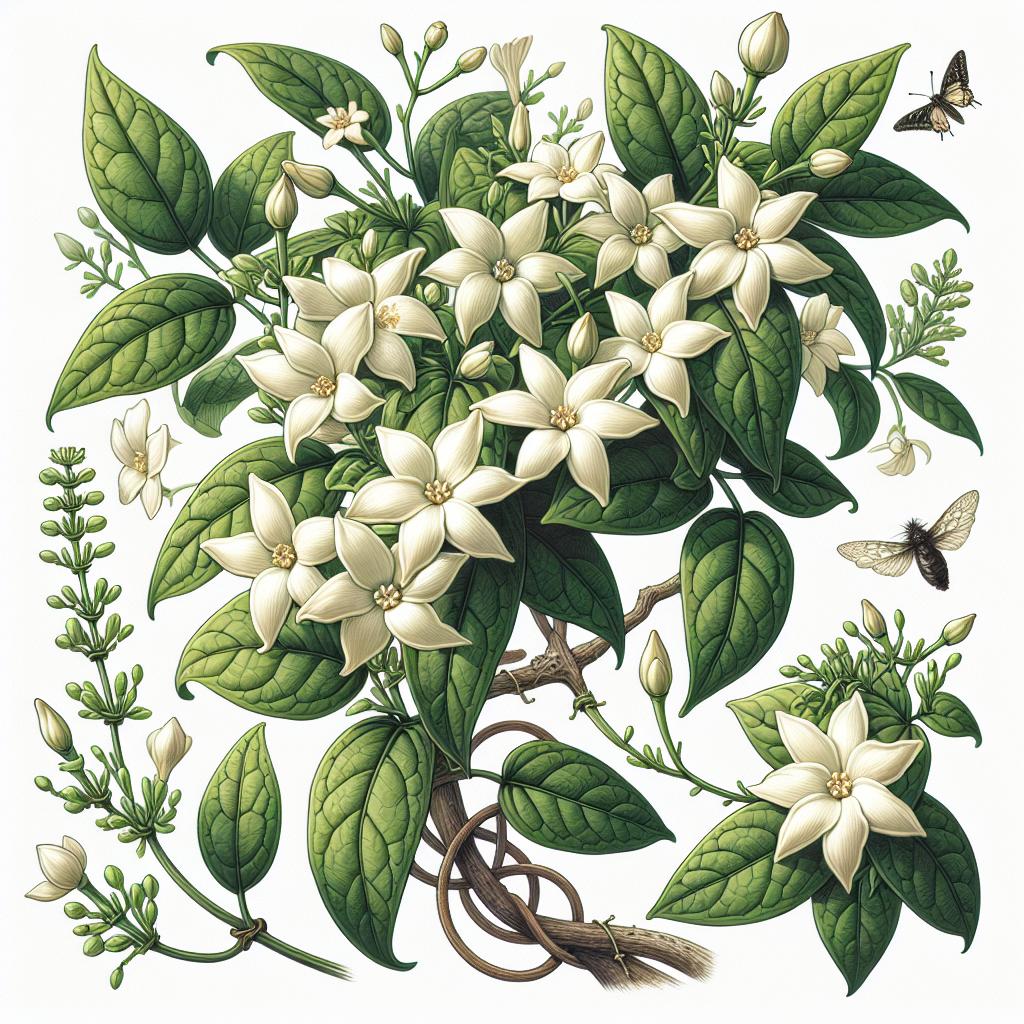
About Trachelospermum jasminoides
### Safety Information for Pets: **Trachelospermum jasminoides**, commonly known as confederate jasmine, is considered to be **non-toxic to pets**. This includes cats, dogs, and other common household animals. However, it is always advisable to monitor pets to ensure they do not ingest large quantities of any plant material, as this can sometimes cause mild digestive upset. ### Detailed Plant Description: **Scientific Name**: Trachelospermum jasminoides **Common Names**: Confederate jasmine, star jasmine **Family**: Apocynaceae **Plant Type**: Vine **Origin**: Native to eastern and southeastern Asia, including countries such as China, Korea, and Japan. **Growth Habit**: - **Type**: Evergreen, woody vine - **Height**: Can grow up to 20-30 feet when provided with a structure to climb, such as trellises, fences, or walls. - **Spread**: Typically around 3-6 feet wide, depending on the growing conditions and support structure. **Leaves**: - **Shape**: Oval to lance-shaped. - **Size**: Around 2-4 inches long. - **Color**: Dark green, glossy, and leathery. New growth may have a reddish tint. **Flowers**: - **Appearance**: Small, white, star-shaped flowers. - **Size**: About 1 inch in diameter. - **Fragrance**: Highly fragrant, with a sweet, jasmine-like scent. - **Blooming Season**: Late spring to early summer. **Light Requirements**: - **Full Sun to Partial Shade**: Prefers full sun for optimal blooming but can tolerate partial shade. In very hot climates, some afternoon shade can be beneficial. **Soil Requirements**: - **Type**: Well-draining soil. - **pH**: Neutral to slightly acidic soil. - **Moisture**: Regular watering, especially during dry periods, but avoid waterlogged conditions. **Watering**: - **Regular**: Keep the soil consistently moist but not soggy. Once established, it can tolerate short periods of drought. - **Frequency**: Water deeply, allowing the soil to dry slightly between waterings. **Fertilizing**: - **Type**: Balanced, slow-release fertilizer. - **Frequency**: Once in early spring and again in mid-summer. **Pruning**: - **Purpose**: To shape the plant, control its size, and remove any dead or diseased wood. - **Timing**: Best done after the flowering period. **Propagation**: - **Methods**: Primarily through cuttings. Semi-hardwood cuttings taken in late summer or early autumn root most successfully. - **Steps**: Dip cuttings in rooting hormone and plant in well-draining soil mix. Keep moist and provide indirect light until roots develop. **Pests and Diseases**: - **Common Pests**: Aphids, scale insects, and spider mites. - **Common Diseases**: Root rot if overwatered, and occasionally fungal diseases like powdery mildew in overly humid conditions. **Uses**: - **Landscaping**: Commonly used for covering fences, trellises, and walls. Also suitable as a groundcover in large areas. - **Indoor**: Can be grown in containers indoors if provided with adequate light and support. **Maintenance Level**: Moderate. Requires regular pruning and monitoring for pests and diseases, but is generally hardy once established. **Additional Notes**: - **Climate**: Hardy in USDA zones 8-11. - **Winter Care**: In cooler climates, it may require protection from frost or can be grown in containers and moved indoors during winter. Confederate jasmine is a popular choice for its robust growth and enchanting fragrance, making it a favorite among gardeners looking to add vertical interest and aromatic appeal to their outdoor spaces.
Be honest — you won't remember this article at 2am when your pet eats something.
Skip the Googling next time. Scan Trachelospermum jasminoides (or anything else) in ToxiPets and get an instant answer personalized to your pet's weight and breed.