
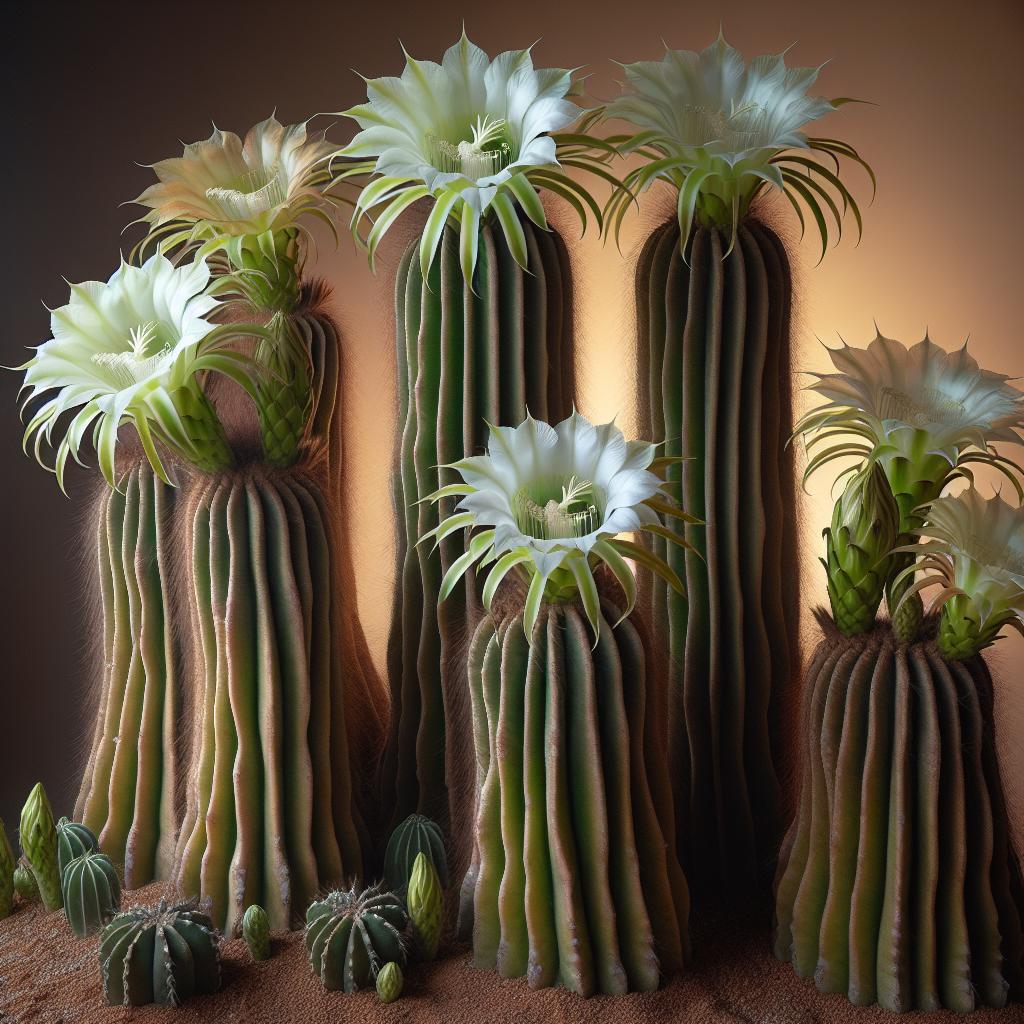
Is Harrisia martinii Toxic to Dogs and Cats?
Safe
### Harrisia martinii #### Safety Information for Pets - **Toxicity to Pets**: The Harrisia martinii, commonly known as the Moon Cactus or Harrisia Cactus, is generally considered non-toxic to pets, including cats and dogs. However, it is always advisable to keep an eye on pets to prevent them from chewing on the plant, as the spines can cause physical injury or irritation. #### Detailed Plant Information - **Scientific Name**: Harrisia martinii - **Common Names**: Moon cactus, Moon Cactus, Harrisia cactus, Moonlight cactus, Mooncactus, Snake cactus, Mooncactus, Moon Cactus, Harrisia kaktus, Toukaktus - **Family**: Cactaceae - **Plant Type**: Cactus #### Description - **Growth Habit**: Harrisia martinii is a perennial cactus that typically grows upright with an erect, columnar form. It can reach heights of up to 1.5 meters (approximately 5 feet) in the wild. - **Stems**: The stems are cylindrical, ribbed, and typically green, covered in clusters of spines. The ribs are usually prominent and may number between 10 to 15 per stem. - **Spines**: The spines are sharp, needle-like, and can range in color from yellow to brown. They are clustered along the ribs of the stem, providing the plant with a distinctive, somewhat intimidating appearance. - **Flowers**: Harrisia martinii produces large, showy, night-blooming flowers that are typically white or pale yellow. The flowers are fragrant and can be up to 20 cm (approximately 8 inches) in diameter. They usually bloom in the spring and summer. - **Fruits**: The fruit is oval to spherical, often red or purple when ripe, and can be edible. However, the fruit is also covered in small spines, which need to be carefully removed before handling or consumption. #### Habitat and Distribution - **Native Range**: Harrisia martinii is native to South America, particularly to regions in Argentina, Bolivia, and Paraguay. - **Preferred Environment**: This cactus thrives in arid to semi-arid environments, preferring well-drained sandy or rocky soils. It is well-suited to desert landscapes and can tolerate drought conditions. It requires full sun to partial shade to grow optimally. #### Cultivation and Care - **Soil**: Use a well-draining cactus or succulent mix. Avoid heavy, water-retentive soils as they can lead to root rot. - **Watering**: Water sparingly. Allow the soil to dry out completely between waterings. Overwatering is a common cause of problems in cacti care. - **Light**: Prefers full sun but can tolerate partial shade. Insufficient light can lead to etiolation, where the cactus becomes elongated and pale. - **Temperature**: Harrisia martinii is frost-sensitive and prefers temperatures between 20°C to 30°C (68°F to 86°F). It should be protected from frost and cold drafts. - **Fertilization**: During the growing season (spring and summer), a diluted cactus fertilizer can be applied once a month. No fertilization is needed during the dormant period (fall and winter). #### Propagation - **Seeds**: Germination from seeds can be a slow process but is possible. Seeds should be sown in a well-draining soil mix and kept moist until germination. - **Cuttings**: Stem cuttings are a more common method of propagation. Cut a healthy stem, allow the cut end to callous over for a few days, and then plant it in a well-draining soil mix. Water sparingly until new growth appears. #### Potential Problems - **Pests**: Watch for common cactus pests such as mealybugs, spider mites, and scale insects. Regular inspection and prompt treatment with appropriate insecticides or natural remedies can help manage these issues. - **Diseases**: Root rot is a significant concern due to overwatering. Ensure proper drainage and avoid excessive moisture to prevent this problem. ### Summary Harrisia martinii, or Moon Cactus, is a striking and resilient cactus species that can be a unique addition to any cactus collection. With proper care and attention to its specific needs, it can thrive and even produce beautiful night-blooming flowers. Always handle with care due to its sharp spines, and monitor interactions with pets to avoid any accidental injuries.
⚠️ Think your pet ate Harrisia martinii?
Get a personalized safety assessment now.
What To Do If Your Pet Ate Harrisia martinii
Stay calm and remove your pet from the source
Contact your veterinarian immediately
Call ASPCA Poison Control: (888) 426-4435
Be honest — you won't remember this article at 2am when your pet eats something.
Skip the Googling next time. Scan Harrisia martinii (or anything else) in ToxiPets and get an instant answer personalized to your pet's weight and breed.