
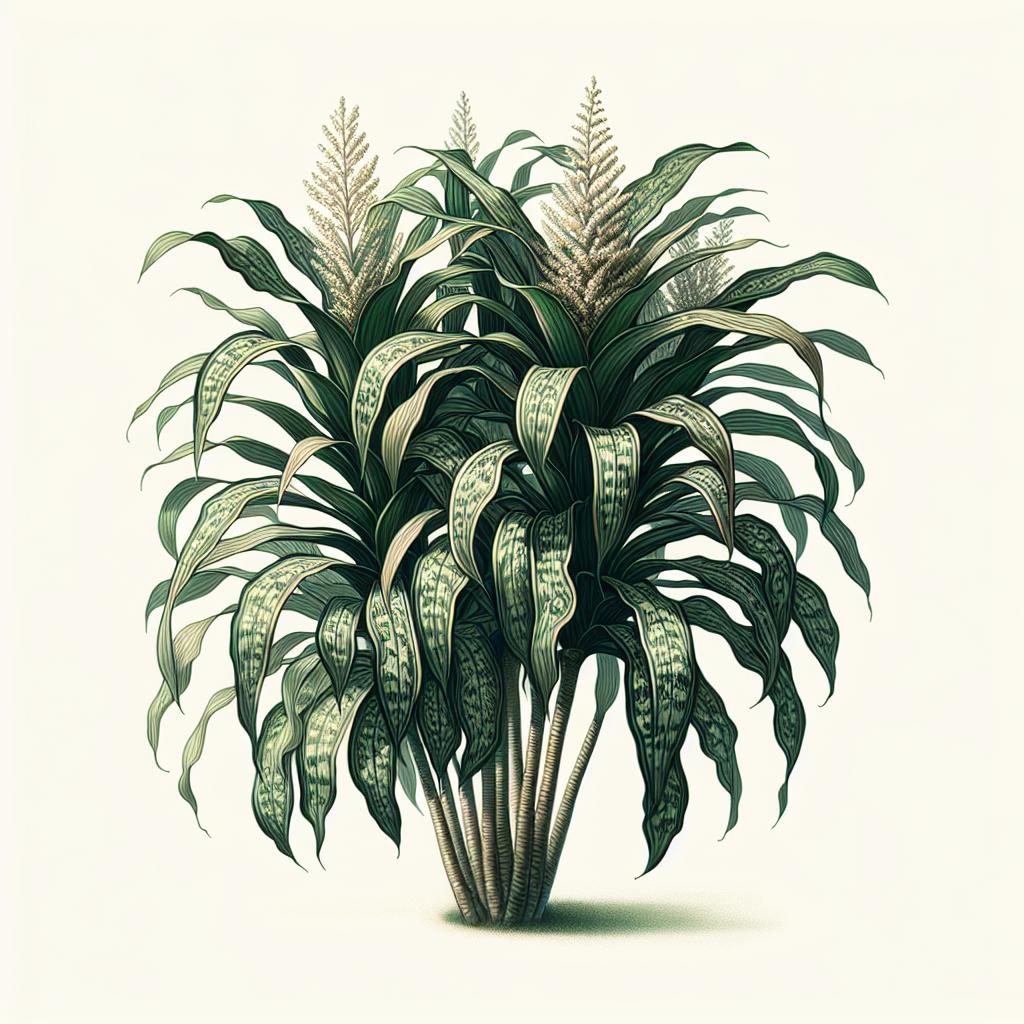
Is Dracaena fragrans Toxic to Dogs and Cats?
Toxic - Danger
This can be dangerous at any amount. Contact your veterinarian or poison control immediately if your pet is exposed.
### **Dracaena fragrans (Common Names: pau-d'água, Dracaena, Dragonnier, Fragrant Dracaena, palmillo, doftdracena, fragrant dracaena, coqueiro-de-vênus, dracena, Dracéna odorant)** #### **Safety Information for Pets** Dracaena fragrans is **toxic to pets**, particularly cats and dogs. If ingested, the plant can cause symptoms such as: - **Cats**: Vomiting, loss of appetite, drooling, and dilated pupils. - **Dogs**: Vomiting, loss of appetite, drooling, depression, and increased heart rate. If you suspect your pet has ingested any part of this plant, contact your veterinarian immediately. #### **General Description** - **Scientific Name**: Dracaena fragrans - **Family**: Agavaceae - **Plant Type**: Shrub #### **Origin and Habitat** Dracaena fragrans is native to tropical Africa. It typically grows in shaded understory areas of rainforests. #### **Description and Appearance** - **Height**: Can grow up to 15 meters (50 feet) in its natural habitat, but typically remains between 2-3 meters (6-10 feet) when grown indoors. - **Leaves**: The leaves are glossy, arching, and lanceolate, ranging in color from solid green to variegated with yellow or white stripes. They can grow up to 1 meter (3 feet) long and 10 centimeters (4 inches) wide. - **Stem**: The stem is woody, and as the plant matures, it can develop a tree-like appearance with a thick trunk. - **Flowers**: Dracaena fragrans produces highly fragrant flowers, which are small, white, and clustered in panicles. However, it rarely flowers when grown indoors. #### **Growth and Care** - **Light Requirements**: Prefers bright, indirect sunlight but can tolerate low light conditions. Avoid direct sunlight, which can scorch the leaves. - **Watering**: Keep the soil consistently moist but not waterlogged. Allow the top inch of soil to dry out between waterings. Overwatering can lead to root rot. - **Soil**: Prefers well-draining potting soil. A mix designed for houseplants or a combination of peat, pine bark, and perlite is ideal. - **Temperature**: Thrives in average household temperatures ranging from 18-24°C (65-75°F). Avoid cold drafts and temperatures below 10°C (50°F). - **Humidity**: Prefers higher humidity levels but can adapt to normal indoor humidity. Increase humidity by misting the leaves or using a humidity tray. - **Fertilization**: Feed with a balanced, water-soluble fertilizer every 4-6 weeks during the growing season (spring and summer). Reduce feeding in the fall and winter. #### **Propagation** Dracaena fragrans can be propagated through stem cuttings or air layering. For stem cuttings, cut a healthy section of the stem, let it dry for a day, then plant it in moist potting soil. Keep the soil consistently moist and provide bright, indirect light. #### **Common Problems** - **Yellowing Leaves**: Often a sign of overwatering or poor drainage. - **Brown Leaf Tips**: Can indicate low humidity or fluoride buildup from tap water. Use filtered or distilled water if this occurs. - **Pests**: Watch for spider mites, scale, and mealybugs. Treat infestations with insecticidal soap or neem oil. ### **Summary** Dracaena fragrans is a popular ornamental plant known for its attractive foliage and easy care requirements. However, pet owners should be cautious due to its toxicity to cats and dogs. Proper care involves providing bright, indirect light, maintaining consistent moisture without overwatering, and ensuring adequate humidity and temperature.
⚠️ Think your pet ate Dracaena fragrans?
Get a personalized safety assessment now.
What To Do If Your Pet Ate Dracaena fragrans
Stay calm and remove your pet from the source
Contact your veterinarian immediately
Call ASPCA Poison Control: (888) 426-4435
Be honest — you won't remember this article at 2am when your pet eats something.
Skip the Googling next time. Scan Dracaena fragrans (or anything else) in ToxiPets and get an instant answer personalized to your pet's weight and breed.