
Is Coffea arabica Toxic to Dogs and Cats?
Toxic - Danger
This can be dangerous at any amount. Contact your veterinarian or poison control immediately if your pet is exposed.
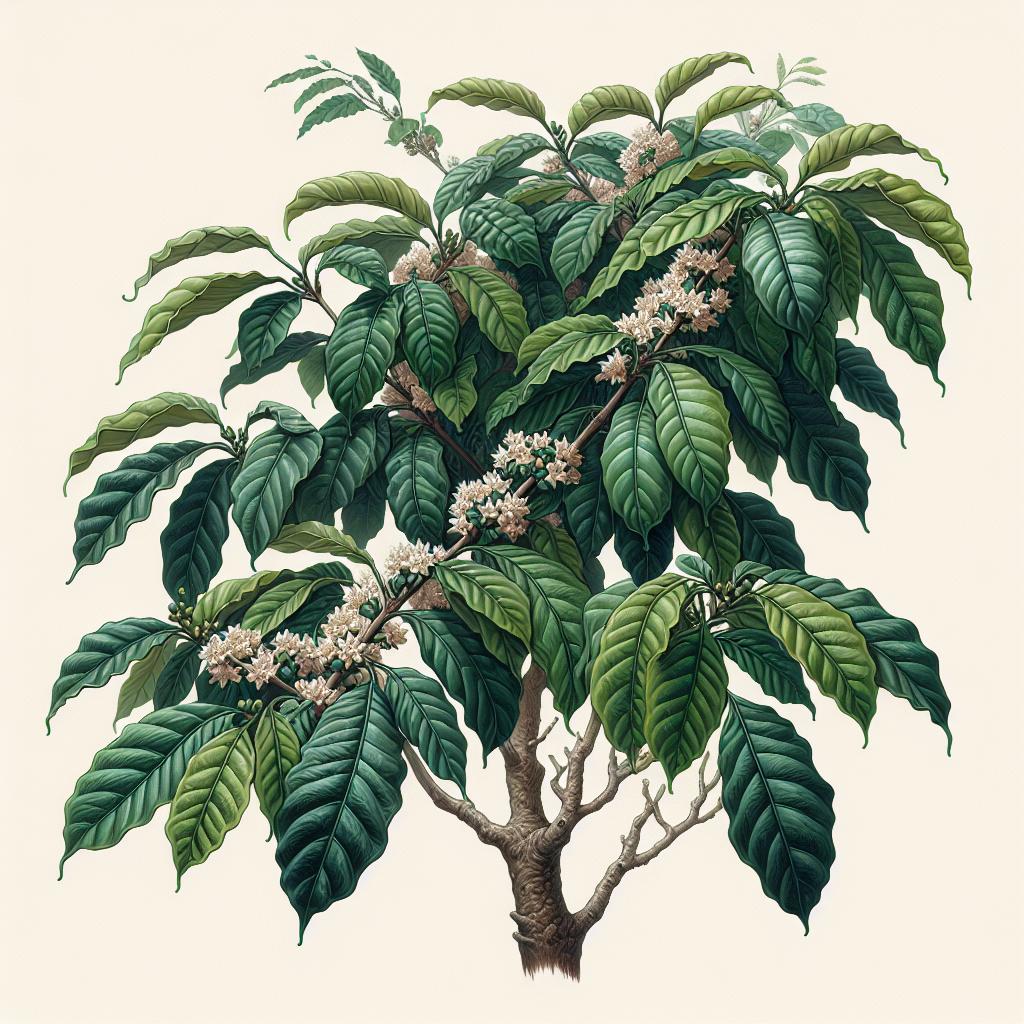
### Safety Information for Pets **Coffea arabica** (commonly known as Coffee or Arabian coffee) contains compounds such as caffeine and theobromine, which are toxic to pets, including dogs, cats, and birds. Ingestion of any part of the plant or its seeds (coffee beans) can lead to symptoms like: - Vomiting - Diarrhea - Elevated heart rate - Restlessness - Hyperactivity - Tremors - Seizures If you suspect your pet has ingested any part of this plant, it is crucial to contact a veterinarian immediately. ### General Information **Scientific Name**: Coffea arabica **Common Names**: arabischer Kaffeestrauch, Café arabica, Kaffeestrauch, cafeeiro, Bergkaffee, Arabicakaffee, Coffee, arabian-coffee, arabiskt kaffe, cafeiro, cafeto arábico, Arabian coffee, cafeto de Arabia, arabica coffee, Caféier, Caféier d'Arabie, Café, Café d'Arabie, arabischer Kaffeebaum, Arabica coffee, Arabian coffee, Coffee tree, Coffee **Family**: Rubiaceae **Plant Type**: Shrub ### Description **Coffea arabica** is a species of coffee plant that is highly valued for its beans, which are used to produce the majority of the world's coffee. It is a perennial shrub native to the highlands of Ethiopia and South Sudan. #### Physical Characteristics - **Height**: Typically grows between 2.5 to 4.5 meters (8 to 15 feet) in height, but it can be pruned to around 1.5 meters (5 feet) for easier harvesting. - **Leaves**: The leaves are glossy, dark green, and oval-shaped, usually measuring between 6 to 12 centimeters (2.4 to 4.7 inches) long. - **Flowers**: White, fragrant, star-shaped flowers that appear in clusters. Each flower has five petals and is about 1 to 1.5 centimeters (0.4 to 0.6 inches) in diameter. - **Fruit**: The fruit, known as a coffee cherry, is a drupe that turns from green to red or purple as it ripens. Each cherry typically contains two seeds, commonly referred to as coffee beans. ### Growing Conditions - **Climate**: Prefers tropical climates with temperatures ranging from 15°C to 24°C (59°F to 75°F). It does not tolerate frost. - **Soil**: Requires well-draining, fertile soil with a pH level between 6 and 6.5. - **Water**: Needs consistent moisture but should not be waterlogged. Regular watering is essential, especially during dry periods. - **Light**: Thrives in partial shade to full sun. However, too much direct sunlight can scorch the leaves, so some shade is beneficial. ### Cultivation and Care - **Propagation**: Usually propagated by seeds or cuttings. Seeds should be sown in a well-draining medium and kept moist until germination. - **Pruning**: Regular pruning helps maintain the shrub’s size and shape, encourages healthy growth, and facilitates harvesting. - **Pests and Diseases**: Susceptible to pests like coffee borer beetles, aphids, and whiteflies. Common diseases include coffee leaf rust and coffee berry disease. ### Uses - **Culinary**: The primary use of **Coffea arabica** is the production of coffee. The beans are harvested, processed, and roasted to produce coffee, which is a globally popular beverage. - **Economic**: Coffee is one of the most traded commodities in the world, and **Coffea arabica** accounts for about 60-70% of global coffee production. ### Conclusion **Coffea arabica** is a significant plant both economically and culturally due to its role in coffee production. While it can be grown as an ornamental shrub, its primary value lies in its beans. However, due to its toxicity to pets, it should be cultivated with caution in households with animals.
⚠️ Think your pet ate Coffea arabica?
Get a personalized safety assessment now.
What To Do If Your Pet Ate Coffea arabica
Stay calm and remove your pet from the source
Contact your veterinarian immediately
Call ASPCA Poison Control: (888) 426-4435
Be honest — you won't remember this article at 2am when your pet eats something.
Skip the Googling next time. Scan Coffea arabica (or anything else) in ToxiPets and get an instant answer personalized to your pet's weight and breed.