
Is Calochortus striatus Toxic to Dogs and Cats?
Safe
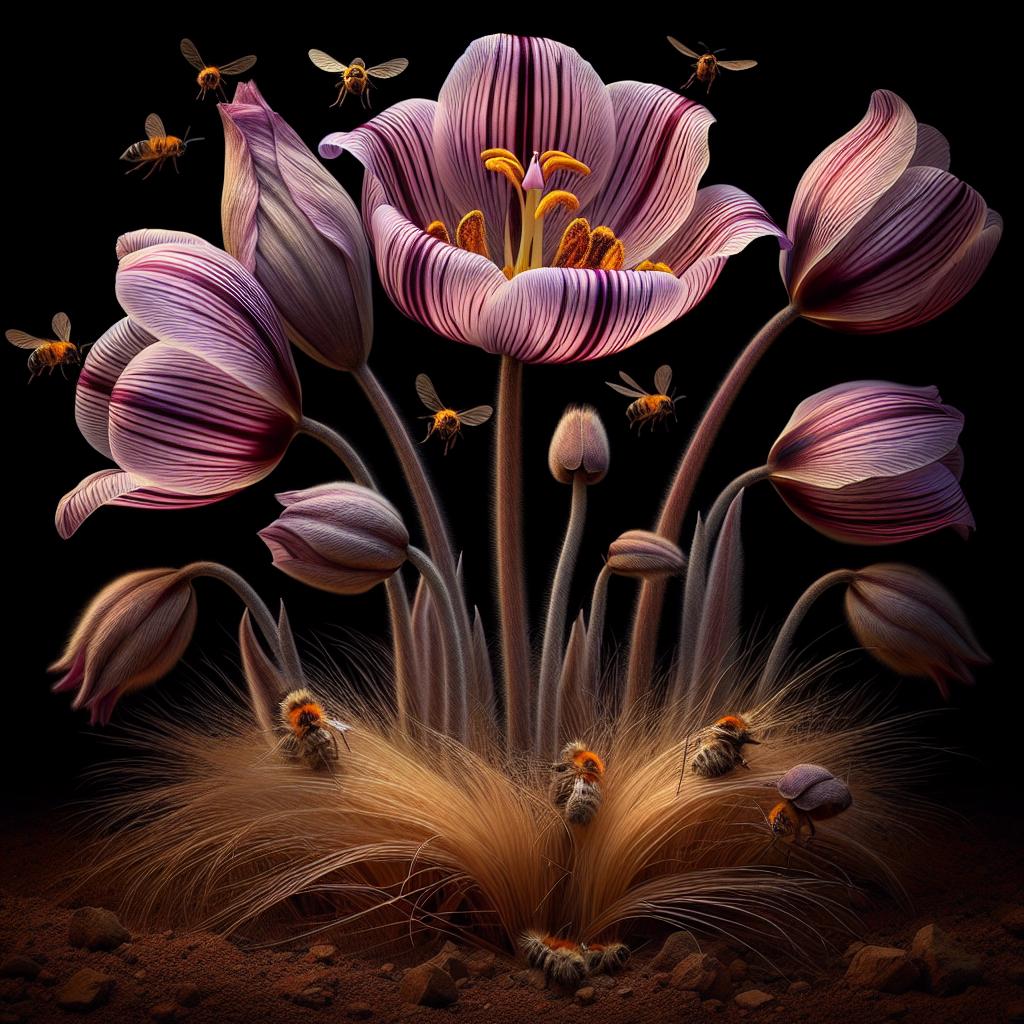
### Calochortus striatus (Alkali Mariposa Lily) #### Safety Information for Pets: - **Toxicity**: There is limited information specifically regarding the toxicity of Calochortus striatus to pets. However, members of the Liliaceae family can sometimes be toxic to animals, particularly cats. It is advisable to keep pets, especially cats and dogs, away from this plant to avoid potential health risks. If ingestion is suspected, contact a veterinarian immediately. #### General Description: - **Scientific Name**: Calochortus striatus - **Common Names**: Alkali mariposa lily, alkali mariposa-lily - **Family**: Liliaceae - **Plant Type**: Flowering perennial #### Morphological Characteristics: - **Height**: Typically grows to about 20 to 60 centimeters (8 to 24 inches) tall. - **Leaves**: The plant has narrow, linear leaves that are often grass-like, growing from the base of the stem. - **Flowers**: - **Shape**: The flowers are typically cup-shaped or bell-shaped. - **Color**: The petals are usually white to pale pink with distinctive dark pink to purple veins (striations) running through them, hence the name "striatus." - **Bloom Period**: Blooms typically occur in the spring, from April to June. - **Arrangement**: Flowers are borne singly or in small clusters at the top of the stems. - **Fruit**: Produces a capsule containing several seeds. #### Habitat and Ecology: - **Native Range**: This species is native to the southwestern United States, particularly found in California and Nevada. - **Preferred Habitat**: Grows in saline or alkaline soils, often in desert flats, saltbush scrub, alkali meadows, and other arid environments. - **Elevation**: Typically found at elevations ranging from near sea level to about 1,500 meters (5,000 feet). #### Growing Conditions: - **Soil**: Prefers well-drained, alkaline to saline soils. - **Water**: Requires minimal water once established; adapted to arid conditions. - **Sunlight**: Thrives in full sun to partial shade. - **Climate**: Tolerates a range of temperatures but is best suited to desert or semi-desert climates. #### Conservation Status: - **Status**: Not currently listed as endangered, but habitat destruction and changes in land use could impact local populations. Conservation efforts focus on preserving natural habitats and promoting awareness of the species. #### Uses: - **Ornamental**: Valued for its attractive and uniquely patterned flowers, making it a choice plant for native plant gardens and xeriscaping. - **Ecological**: Provides habitat and food for various pollinators, including bees and butterflies. #### Miscellaneous: - **Propagation**: Typically propagated by seeds. Seeds should be sown in well-drained soil and may require a period of cold stratification to germinate successfully. - **Care**: Minimal care once established; avoid over-watering and ensure good drainage to prevent root rot. In summary, Calochortus striatus is a distinctive and beautiful flowering plant adapted to arid environments. While it is not widely known to be toxic to pets, caution is advised due to its family association. Its unique flowers and minimal care requirements make it a desirable addition to appropriate garden settings.
⚠️ Think your pet ate Calochortus striatus?
Get a personalized safety assessment now.
What To Do If Your Pet Ate Calochortus striatus
Stay calm and remove your pet from the source
Contact your veterinarian immediately
Call ASPCA Poison Control: (888) 426-4435
Be honest — you won't remember this article at 2am when your pet eats something.
Skip the Googling next time. Scan Calochortus striatus (or anything else) in ToxiPets and get an instant answer personalized to your pet's weight and breed.