
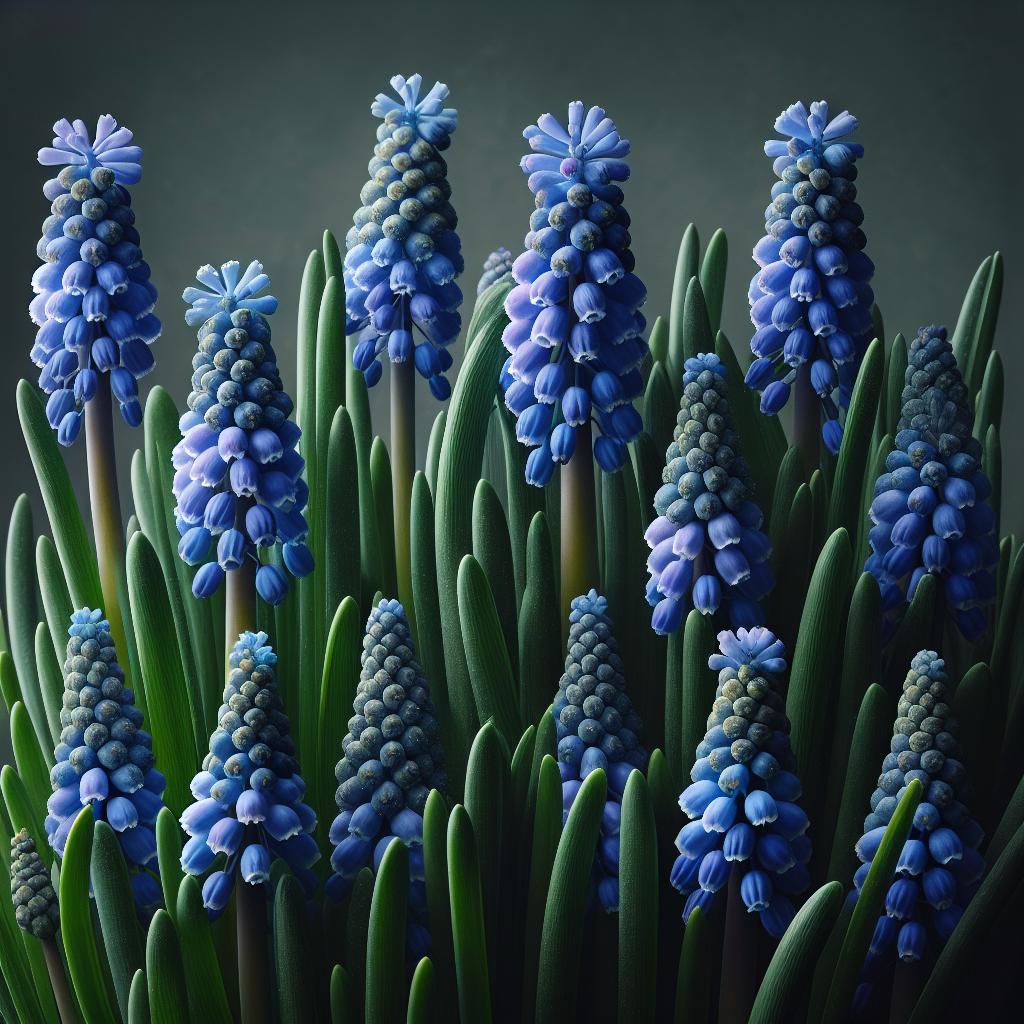
Is Muscari armeniacum Toxic to Dogs and Cats?
Safe
### Safety Information for Pets **Muscari armeniacum**, commonly known as Armenian grape hyacinth, is generally considered non-toxic to pets, including cats and dogs. However, it's always a good practice to monitor pets around any plant, as ingestion of large quantities of plant material can lead to gastrointestinal upset. ### General Information #### Scientific Name - **Muscari armeniacum** #### Common Names - Armenian grape hyacinth - Grape hyacinth #### Family - **Liliaceae** (Lily family) #### Plant Type - Flowering perennial ### Description **Muscari armeniacum** is a hardy bulbous perennial known for its dense clusters of small, bell-shaped flowers that resemble a bunch of grapes. Here's a more detailed look at its characteristics: #### Leaves - **Type**: Basal, linear leaves - **Color**: Dark green - **Texture**: Smooth - **Arrangement**: Leaves emerge from the base of the plant and are usually narrow and strap-like. #### Flowers - **Bloom Time**: Early to mid-spring - **Color**: Typically deep blue, but can also be found in shades of white and pink. - **Shape**: Bell-shaped, about 6mm in diameter - **Arrangement**: Dense, spike-like racemes - **Fragrance**: Slightly fragrant #### Growth Habit - **Height**: Typically 6-8 inches (15-20 cm) - **Spread**: About 2-3 inches (5-8 cm) #### Bulbs - **Type**: Small, tunicate bulbs - **Planting Depth**: About 3-4 inches (7-10 cm) - **Spacing**: 3 inches (7 cm) apart ### Growing Conditions #### Light - **Sun Exposure**: Prefers full sun to partial shade. It thrives best in areas where it can receive at least 6 hours of sunlight each day. #### Soil - **Type**: Well-drained soil - **pH**: Neutral to slightly alkaline - **Moisture**: Moderately moist, but can tolerate periods of drought once established. #### Watering - **Frequency**: Regular watering during the growing season. Reduce watering after the flowering period until the foliage dies back. #### Temperature - **Hardiness Zones**: USDA zones 4-8 - **Temperature Range**: Can tolerate cold winters, with a preference for climates that have a pronounced winter chill to encourage blooming. ### Propagation - **Method**: Primarily by bulb offsets. They can be divided and replanted during the dormant season (late summer to early fall). - **Seed**: Can be grown from seeds, but this is less common and more time-consuming. ### Uses - **Garden Design**: Often used in rock gardens, borders, and as ground cover. Ideal for naturalizing in lawns and under trees. - **Containers**: Suitable for pots and containers. - **Cut Flowers**: Can be used in floral arrangements, though their short stems limit use. ### Maintenance - **Pruning**: Deadhead spent flowers to prevent self-seeding unless naturalizing is desired. - **Fertilization**: Apply a balanced, slow-release fertilizer in early spring. - **Pests and Diseases**: Resistant to most pests and diseases but can be affected by bulb rot in poorly-drained soils. ### Additional Notes - **Companion Plants**: Pairs well with other spring bulbs like tulips, daffodils, and crocuses. - **Wildlife**: Attracts bees and other pollinators. By providing a visually striking display and requiring minimal maintenance, **Muscari armeniacum** is a versatile and attractive addition to many garden settings.
⚠️ Think your pet ate Muscari armeniacum?
Get a personalized safety assessment now.
What To Do If Your Pet Ate Muscari armeniacum
Stay calm and remove your pet from the source
Contact your veterinarian immediately
Call ASPCA Poison Control: (888) 426-4435
Be honest — you won't remember this article at 2am when your pet eats something.
Skip the Googling next time. Scan Muscari armeniacum (or anything else) in ToxiPets and get an instant answer personalized to your pet's weight and breed.