
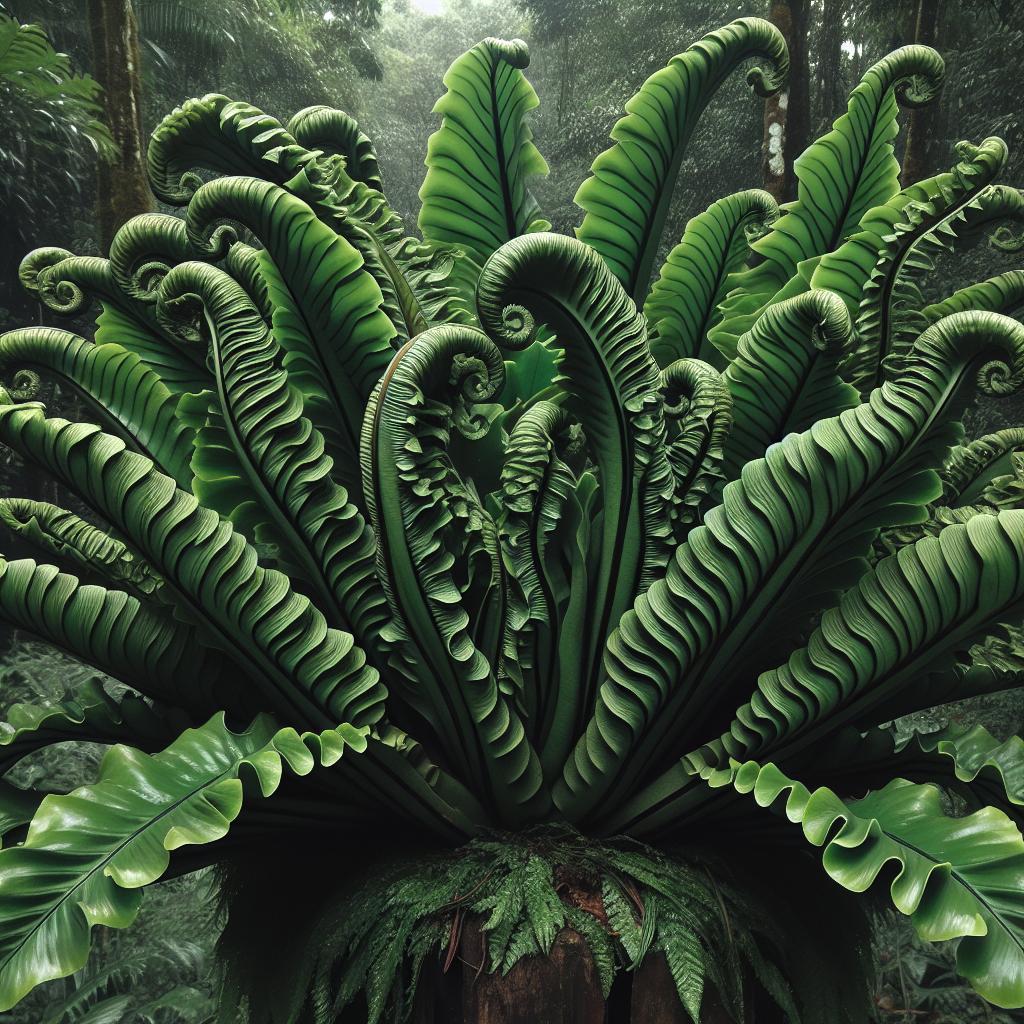
About Asplenium nidus
### Safety Information for Pets **Toxicity**: Asplenium nidus (Bird's-nest fern) is considered non-toxic to pets. This makes it a suitable houseplant for homes with cats, dogs, and other animals, as it does not pose a poisoning risk if ingested. ### Detailed Plant Information - **Scientific Name**: Asplenium nidus - **Common Names**: Asplénie nid-d'oiseau, Nid d'oiseau, ’ö’aha, ’öta’a, ’ö’aha, kökaha, nest fern, Fougère nid d’oiseau, Hawai'I Birdnest Fern, Katafa, fågelbobräken, bird's-nest fern, Hawai'i birdnest fern, 파초일엽, Bird's-nest or Crow's-nest fern - **Family**: Aspleniaceae - **Plant Type**: Fern #### Description The Bird's-nest fern is an evergreen perennial that is native to tropical regions, often found in rainforests. It is characterized by its rosette of large, simple, undivided fronds that resemble bird nests, hence the common name. The fronds are glossy, bright green, and can grow up to 2-5 feet in length. They have a central midrib that is dark brown to black, providing a striking contrast with the green leaf tissue. #### Growth Habit Asplenium nidus typically grows in a rosette formation, with fronds emerging from a central point. This plant is epiphytic in its natural habitat, meaning it often grows on other plants or trees, deriving moisture and nutrients from the air and surrounding debris. However, it can also be grown in soil in a pot. #### Light Requirements Bird's-nest ferns thrive in indirect light to moderate shade. Direct sunlight can cause the fronds to scorch, so it’s best to place them in a location where they receive filtered light or partial shade. They can tolerate lower light conditions, making them suitable for indoor environments where direct sunlight is limited. #### Watering This fern prefers consistently moist soil but does not appreciate waterlogged conditions. It's essential to water the plant regularly, allowing the soil to dry slightly between waterings. Overwatering can lead to root rot. Using a well-draining potting mix helps prevent water from accumulating at the roots. #### Humidity and Temperature Asplenium nidus thrives in high humidity environments, mimicking its natural tropical habitat. It benefits from regular misting or the use of a humidity tray. Ideal temperature ranges are between 60-80°F (15-27°C). It is sensitive to cold drafts and should be kept away from cold windows or air conditioning vents. #### Soil and Fertilization A well-draining, peat-based potting mix is ideal for Bird's-nest ferns. They do not require heavy feeding; a balanced, diluted liquid fertilizer applied monthly during the growing season (spring and summer) is sufficient. Over-fertilization can lead to leaf burn and should be avoided. #### Repotting Repotting is typically needed every 2-3 years or when the plant outgrows its current pot. Choose a container that allows for adequate drainage and is slightly larger than the previous one. #### Pests and Diseases Bird's-nest ferns are relatively pest-resistant but can occasionally be affected by scale insects, mealybugs, or aphids. Regular inspection and prompt treatment with insecticidal soap or neem oil can help manage any infestations. Proper watering practices help prevent fungal infections and root rot. #### Pruning and Maintenance Minimal pruning is needed. Remove any dead or damaged fronds to maintain the plant’s appearance and health. Avoid cutting into the central rosette as this is where new fronds emerge. The Bird's-nest fern is a beautiful, low-maintenance plant that brings a touch of the tropics to any indoor space. Its non-toxic nature and striking appearance make it a popular choice for plant enthusiasts, especially those with pets.
Be honest — you won't remember this article at 2am when your pet eats something.
Skip the Googling next time. Scan Asplenium nidus (or anything else) in ToxiPets and get an instant answer personalized to your pet's weight and breed.