
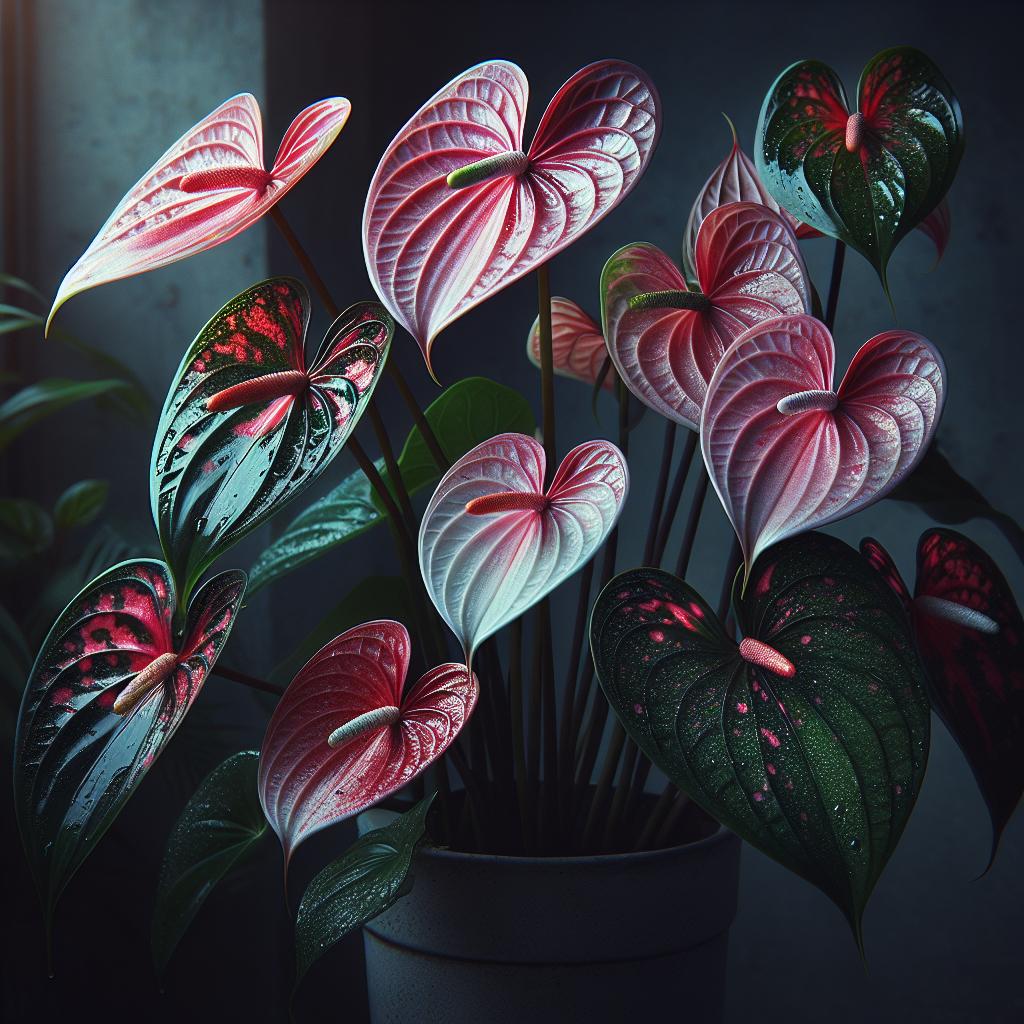
About Anthurium andraeanum
### **Anthurium andraeanum** **Common Names**: Flamingo-lily, oilcloth-flower, flamingo-flower, große Flamingoblume, Anthure d'André, Anthurium, Anthurium d'André, Flamingo-Lily **Family**: Araceae **Plant Type**: Flower --- #### **Safety Information for Pets** **Toxicity**: Anthurium andraeanum is toxic to both cats and dogs. The plant contains insoluble calcium oxalate crystals, which can cause significant health issues if ingested. **Symptoms of Poisoning**: - **Oral irritation**: Burning sensation in the mouth, tongue, and lips. - **Excessive drooling**: Increased saliva production. - **Vomiting**: Gastrointestinal upset can lead to vomiting. - **Difficulty Swallowing**: Swelling can make swallowing painful or difficult. **Precautions**: - Place the plant out of reach of pets. - Educate household members about the plant's toxicity. - In case of ingestion, contact a veterinarian immediately. --- #### **Other Relevant Details** **Origin and Habitat**: - Native to Colombia and Ecuador, Anthurium andraeanum thrives in tropical rainforests. - Prefers humid, warm climates and can often be found growing in shaded areas. **Description**: - **Leaves**: The plant features large, glossy, dark green leaves that are heart-shaped. - **Flowers**: The 'flower' is actually a spathe, a modified leaf, usually bright red but can also be found in shades of pink, white, or orange. The spadix, a spike where the tiny flowers grow, is usually yellow or white. - **Height**: Typically grows up to 18 inches (45 cm) tall. - **Width**: Can spread up to 12 inches (30 cm) wide. **Care Instructions**: - **Light**: Prefers bright, indirect light. Direct sunlight can scorch the leaves. - **Watering**: Keep the soil consistently moist but not waterlogged. Allow the top inch of soil to dry out between waterings. - **Humidity**: Thrives in high humidity. Mist the plant regularly or use a humidifier. - **Temperature**: Ideal temperature range is between 70-85°F (21-29°C). Protect from cold drafts and temperatures below 60°F (15°C). - **Soil**: Use a well-draining potting mix. A mix designed for orchids or one that includes perlite and peat moss is ideal. - **Fertilization**: Feed with a balanced, water-soluble fertilizer every 6-8 weeks during the growing season (spring and summer). **Propagation**: - **Division**: The most common method. Divide the root clumps during repotting. - **Cuttings**: Stem cuttings can also be used. Ensure the cutting has at least two nodes and plant it in a moist, well-draining medium. **Common Problems**: - **Yellowing Leaves**: Often due to overwatering or poor drainage. - **Brown Leaf Tips**: Can be caused by low humidity or insufficient watering. - **Pests**: Watch for common houseplant pests like spider mites, aphids, and mealybugs. Treat infestations promptly with insecticidal soap or neem oil. **Uses**: - **Decorative**: Popular as a houseplant due to its striking appearance and relatively easy care. - **Floral Arrangements**: Often used in floral arrangements and bouquets due to the long-lasting nature of its spathes. **Benefits**: - **Air Purification**: Known to help purify indoor air by removing toxins such as formaldehyde, ammonia, and xylene. **Note**: Always handle with care and wash hands after handling to avoid skin irritation.
Be honest — you won't remember this article at 2am when your pet eats something.
Skip the Googling next time. Scan Anthurium andraeanum (or anything else) in ToxiPets and get an instant answer personalized to your pet's weight and breed.