
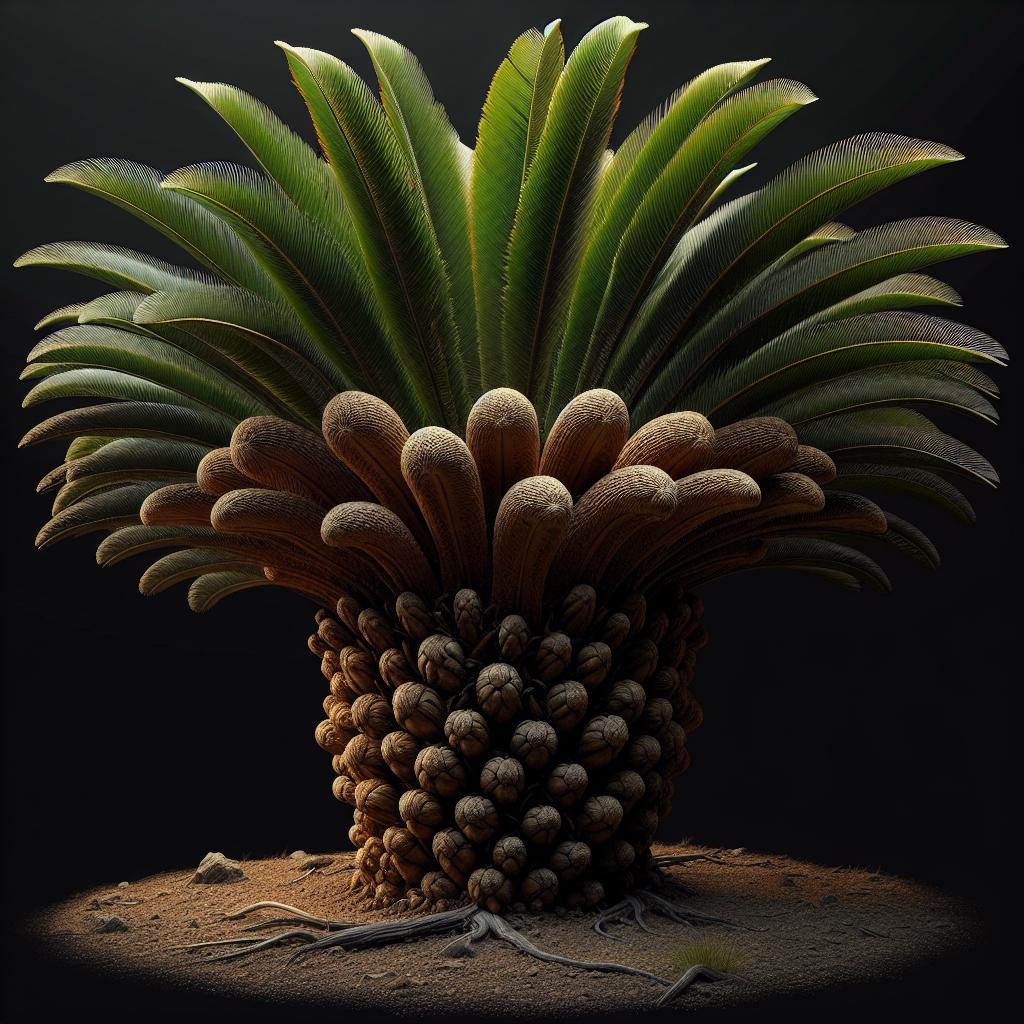
About Cycas revoluta
### Safety Information for Pets **Cycas revoluta**, commonly known as the Sago Palm, is highly toxic to pets, including dogs, cats, and horses. Every part of the plant, especially the seeds (nuts), contains cycasin, which can cause severe liver failure and even death if ingested. Symptoms of poisoning include vomiting, diarrhea, lethargy, seizures, and jaundice. Immediate veterinary attention is crucial if ingestion is suspected. ### Detailed Plant Information - **Scientific Name**: Cycas revoluta - **Common Names**: Sago palm, King sago, Sago cycad, Japanese sago palm, ban shou, Fern Palm, japansk kottepalm, su tie, Sago palm, sotesu-nut, hichichi, Sago Palm, sago palm, 소철, sotetsu, Rameau, cica, Sagoutier, Sagou du Japon, Cycas du Japon, Cycas, feng-wei-jiao-ye, sagu, palmeira-sagu, sago cycas - **Family**: Cycadaceae - **Plant Type**: Shrub ### Physical Description **Cycas revoluta** is an attractive, slow-growing plant that is often mistaken for a palm, but it is actually a cycad. It features a thick, shaggy trunk and a crown of dark green, feathery, and glossy fronds. - **Leaves**: The fronds are pinnate and can grow up to 3-5 feet long. Each frond consists of numerous stiff, narrow leaflets that are pointed and can be quite sharp. - **Trunk**: The trunk is cylindrical, covered with old leaf bases, and can grow up to several feet tall over many years. - **Flowers**: Cycas revoluta is dioecious, meaning it has separate male and female plants. Males produce cone-like structures, while females produce a rosette of modified leaves that house the seeds. ### Growing Conditions - **Light**: Prefers bright, indirect light but can tolerate some direct sunlight. It can also adapt to lower light conditions, making it suitable for indoor growth. - **Soil**: Well-draining soil is essential. A mix designed for cacti and succulents works well. - **Watering**: Allow the soil to dry out completely between waterings. Overwatering can lead to root rot. - **Temperature**: Thrives in warm conditions with temperatures between 65-75°F (18-24°C). It is not frost-tolerant and should be protected from temperatures below 50°F (10°C). - **Humidity**: Prefers moderate humidity but can tolerate lower levels typical of indoor environments. ### Care and Maintenance - **Fertilizing**: Feed with a balanced, water-soluble fertilizer during the growing season (spring and summer). Reduce feeding in fall and winter. - **Pruning**: Remove yellow or dead fronds at the base to maintain appearance and health. - **Repotting**: Repot every 3-4 years or when the plant outgrows its pot. Handle with care, as the root system is sensitive. ### Propagation Propagation is typically done through seeds or offsets (pups). Seeds require a long germination period and specific conditions, while offsets can be removed from the base of the parent plant and potted separately. ### Uses Cycas revoluta is primarily used as an ornamental plant in landscapes and as a houseplant. It is valued for its aesthetic appeal and low maintenance requirements. ### Special Notes Due to its toxicity, Cycas revoluta should be planted with caution in areas accessible to pets and children. It is often grown as a statement piece in gardens but should be handled with care due to its sharp leaflets and potential health hazards. By understanding these details, you can ensure the safe and effective cultivation of Cycas revoluta while protecting pets and family members from its toxic properties.
Be honest — you won't remember this article at 2am when your pet eats something.
Skip the Googling next time. Scan Cycas revoluta (or anything else) in ToxiPets and get an instant answer personalized to your pet's weight and breed.