
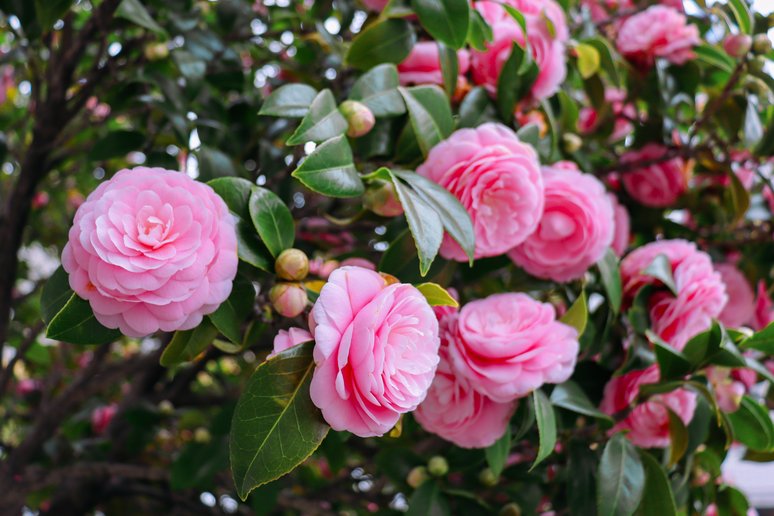
About Camellia japonica
### Safety Information for Pets Camellia japonica, commonly known as the Common Camellia, is generally considered non-toxic to pets, including cats and dogs. However, while it is not classified as poisonous, ingestion of large amounts of any plant material can still cause gastrointestinal upset in pets. It is always recommended to monitor your pets around plants and consult a veterinarian if you notice any signs of distress or illness. ### Detailed Information #### **Scientific Name** - **Camellia japonica** #### **Common Names** - Camélia - Shan cha - 동백나무 (Dongbaek-namu in Korean) - Kamelie - Kamelia - Common camellia - Common camellia - Camélia - Camélia du Japon - Thé du japon - Rosa-do-japão - Camellia - Camellia #### **Family** - **Theaceae** #### **Plant Type** - Shrub #### **Origin and Habitat** Camellia japonica is native to East Asia, particularly Japan, Korea, and China. It thrives in woodland environments where it receives dappled sunlight and grows in well-drained, acidic soils rich in organic matter. #### **Description** - **Leaves**: The leaves of Camellia japonica are glossy, dark green, and elliptic to oblong in shape. They are simple, alternate, and have finely serrated margins. The leaves are typically 5-10 cm long and 2-5 cm wide. - **Flowers**: The flowers are one of the most striking features of this plant. They bloom in late winter to early spring and come in various colors, including white, pink, red, and sometimes yellow. The flowers can be single, semi-double, or double, with a diameter ranging from 5 to 12 cm. They are often fragrant and have a prominent cluster of golden stamens in the center. - **Growth Habit**: This evergreen shrub typically grows to a height of 1.5 to 6 meters (5-20 feet) and has a spread of 1-3 meters (3-10 feet). It has a dense, upright growth habit. #### **Cultivation and Care** - **Light**: Camellia japonica prefers partial shade to full shade, though it can tolerate morning sun. It should be protected from harsh afternoon sunlight to prevent leaf scorch. - **Soil**: The plant thrives in well-drained, acidic soil with a pH of 5.5 to 6.5. It benefits from a soil rich in organic matter. - **Watering**: Regular watering is essential, especially during dry periods. The soil should be kept consistently moist but not waterlogged. - **Temperature**: Camellia japonica is hardy in USDA zones 7-9. It prefers cool, temperate climates and can be sensitive to extreme heat or cold. - **Pruning**: Minimal pruning is required. Any necessary pruning should be done after flowering to maintain shape and remove any dead or damaged branches. - **Fertilization**: Use a balanced, acid-forming fertilizer in early spring and again in mid-summer. #### **Propagation** Camellia japonica can be propagated through seeds, cuttings, or grafting. Cuttings are the most common method, taken from semi-hardwood stems in late summer. #### **Pests and Diseases** - **Pests**: Common pests include aphids, scale insects, and spider mites. - **Diseases**: The plant can suffer from root rot, leaf gall, and petal blight. Proper care and maintenance can mitigate many of these issues. #### **Uses** - **Ornamental**: Camellia japonica is widely cultivated for its beautiful flowers and glossy foliage, making it a popular choice for gardens, parks, and landscapes. - **Cultural Significance**: In Japan and Korea, Camellia japonica has cultural and historical significance, often symbolizing longevity and faithfulness. By following the care guidelines and understanding the plant's needs, Camellia japonica can be a stunning addition to any garden, offering beauty and elegance for many years.
Be honest — you won't remember this article at 2am when your pet eats something.
Skip the Googling next time. Scan Camellia japonica (or anything else) in ToxiPets and get an instant answer personalized to your pet's weight and breed.