
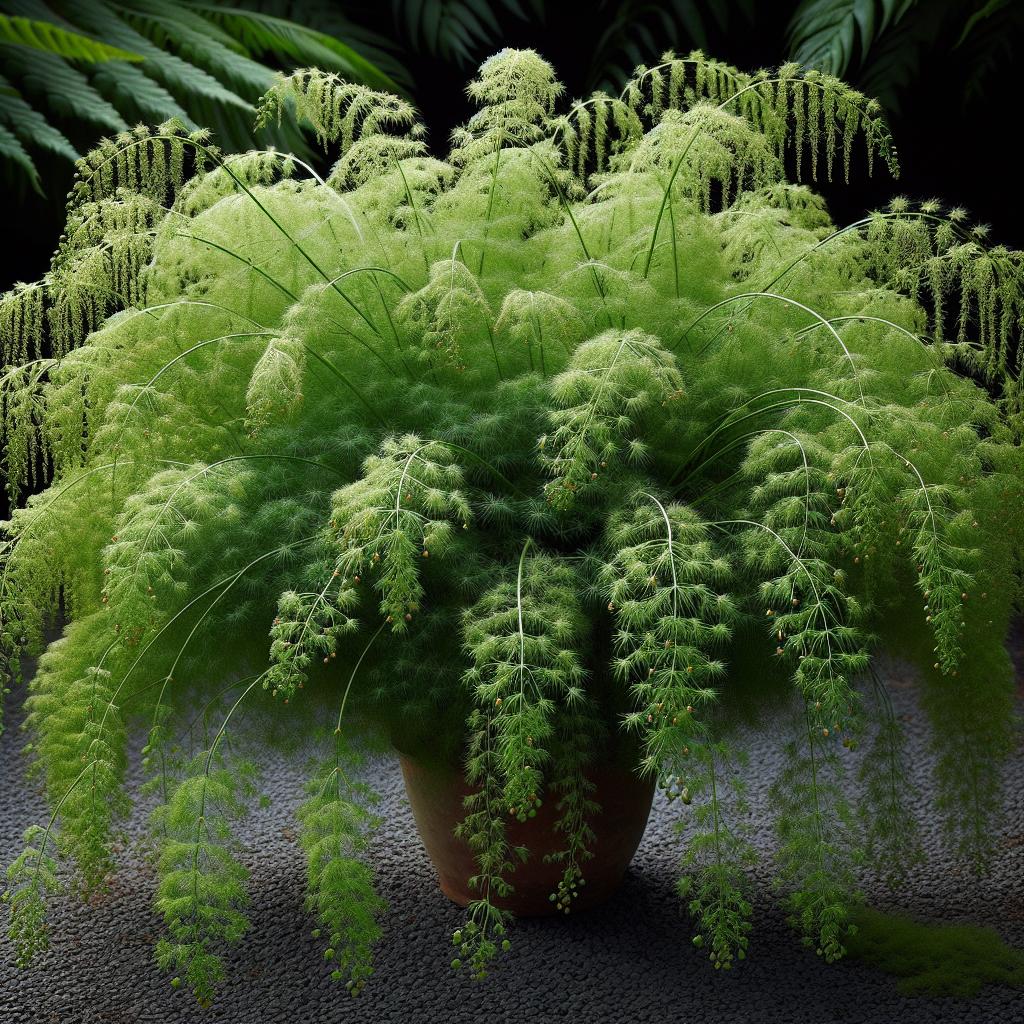
About Asparagus aethiopicus
**Scientific Name**: Asparagus aethiopicus **Common Names**: Sprenger's asparagus fern, asperge de Sprenger, emerald-fern, Asperge d'Éthiopie, Asperge de Sprenger, Haakdoring, asparagus-fern, sprengeris-fern, aspargo, Asperge d’Éthiopie, Sprenger's-fern, Sprenger's Asparagus Fern, Sprengers Zier-Spargel, emerald-feather, fei zhou tian men dong, natalsparris **Family**: Liliaceae **Plant Type**: Herb ### Safety Information for Pets - **Toxicity**: Asparagus aethiopicus is toxic to pets, including cats and dogs. If ingested, it can cause gastrointestinal upset, such as vomiting, diarrhea, and abdominal pain. The berries are particularly toxic and can cause more severe symptoms. - **Precaution**: If you have pets that tend to chew on plants, it's advisable to keep this plant out of their reach. If ingestion occurs, seek veterinary assistance immediately. ### Plant Description - **Origin**: Native to southern Africa, specifically South Africa. - **Growth Habit**: Asparagus aethiopicus is a perennial, evergreen herb that grows in a sprawling, vine-like manner. It can be grown both indoors and outdoors depending on the climate. - **Size**: This plant can grow up to 2 feet (60 cm) in height and spread up to 6 feet (180 cm) wide. - **Stems and Leaves**: The stems are long, arching, and clad in small, needle-like leaves that give the plant a delicate, feathery appearance. These "leaves" are actually cladodes, which are modified stems that perform the function of leaves. - **Flowers**: Small, white to pale pink flowers bloom in clusters. These flowers are not particularly showy but they add a delicate charm to the plant. - **Fruit**: Following the flowering period, the plant produces small, round, green berries that turn red when they mature. These berries are toxic if ingested. - **Roots**: The root system is robust and tuberous, which helps the plant to store water and nutrients. ### Growing Conditions - **Light**: Prefers bright, indirect light but can tolerate some direct sunlight. It can also adapt to lower light conditions, though its growth may be slower. - **Soil**: Thrives in well-draining, sandy, or loamy soil. A pH range of 6.0 to 7.0 is ideal. - **Watering**: Keep the soil consistently moist but not waterlogged. Water thoroughly and let the top inch of the soil dry out between waterings. - **Temperature**: Ideal temperatures range from 60°F to 75°F (15°C to 24°C). It is not frost-tolerant and should be brought indoors if temperatures drop below 50°F (10°C). - **Humidity**: Prefers a humid environment. Misting the plant occasionally can help maintain the required humidity levels, especially in drier indoor conditions. - **Fertilization**: Feed with a balanced, water-soluble fertilizer every 4-6 weeks during the growing season (spring and summer). Reduce feeding during the dormant period (fall and winter). ### Maintenance - **Pruning**: Regular pruning helps maintain the plant's shape and encourages denser growth. Dead or yellowing stems should be removed promptly. - **Repotting**: Repot every 2-3 years or when the plant becomes root-bound. Choose a pot that is one size larger than the current one. - **Pests and Diseases**: Generally resistant to pests, but can occasionally be affected by spider mites, aphids, or mealybugs. Overwatering can lead to root rot. ### Uses - **Decorative**: Often used as an ornamental plant in hanging baskets, containers, or as ground cover in gardens. - **Air Purification**: Known to have air-purifying qualities, making it a good plant for improving indoor air quality. ### Invasiveness - **Invasive Potential**: In some regions, particularly in parts of Australia and the southeastern United States, Asparagus aethiopicus is considered invasive. It can spread rapidly and outcompete native vegetation. Always check local guidelines before planting it outdoors. By following these guidelines and taking appropriate precautions, you can enjoy the beauty of Asparagus aethiopicus while ensuring the safety of your pets and the environment.
Be honest — you won't remember this article at 2am when your pet eats something.
Skip the Googling next time. Scan Asparagus aethiopicus (or anything else) in ToxiPets and get an instant answer personalized to your pet's weight and breed.