
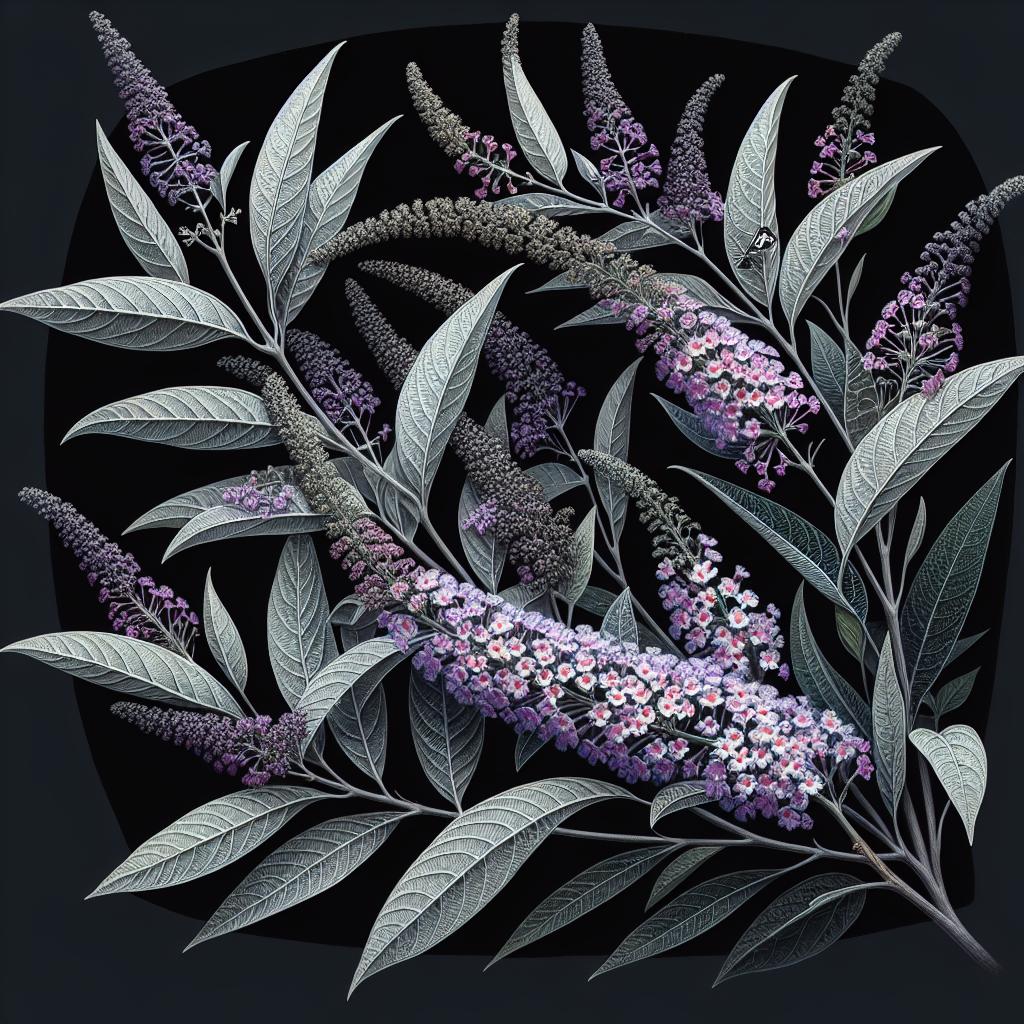
About Buddleja davidii
### Safety Information for Pets **Buddleja davidii** (Butterfly Bush) is generally considered non-toxic to cats, dogs, and other common household pets. However, while it is not classified as highly toxic, ingestion of large amounts of any plant material can potentially cause mild gastrointestinal upset in some pets. Therefore, it's best to monitor your pets and discourage them from chewing on the plant. ### General Description #### **Scientific Name**: Buddleja davidii #### **Common Names**: - Buddleia de David - Buddleia du père David - Arbre-à-papillon - Arbre-aux-papillons - Butterfly-Bush - Buddleja du père David - Arbre à papillon - Buddléa de David - Butterfly-bush - Buddleja - Fliederspeer - Almindelig sommerfuglebusk - Buddleia de David - Arbre aux papillons - Butterfly Bush - Butterfly bush #### **Family**: Buddlejaceae #### **Plant Type**: Shrub ### Detailed Description #### **Origin and Habitat**: Buddleja davidii is native to central China but is widely cultivated in gardens and landscapes around the world due to its ornamental value and attractiveness to butterflies. #### **Growth Habit**: This species is a deciduous, multi-stemmed shrub that can grow rapidly to a height of 6-12 feet (1.8-3.6 meters) and a spread of 4-15 feet (1.2-4.5 meters). It has an arching growth habit with long, lance-shaped leaves that are gray-green and can be up to 10 inches (25 cm) long. #### **Flowers**: The Butterfly Bush is famous for its showy, fragrant flower spikes that bloom from summer to fall. The flowers are typically purple, but they can also be pink, white, yellow, or red, depending on the cultivar. The blooms are densely packed and form large, cone-shaped clusters that can be 6-18 inches (15-45 cm) long. These flowers are highly attractive to butterflies and other pollinators, hence the common name "Butterfly Bush." #### **Light Requirements**: Buddleja davidii thrives in full sun but can tolerate partial shade. It requires at least 6 hours of direct sunlight per day for optimal flowering. #### **Soil Requirements**: The plant prefers well-drained soil but is quite adaptable to various soil types, including clay, loam, and sandy soils. It is also drought-tolerant once established, making it suitable for xeriscaping. #### **Watering**: Regular watering is necessary during the establishment phase (the first growing season). Once established, it becomes more drought-tolerant, although it will perform best with moderate watering, especially during dry spells. #### **Pruning**: Pruning is essential to maintain the shape and encourage more prolific blooming. It is typically done in late winter or early spring before new growth starts. Hard pruning (cutting back to 1-2 feet from the ground) can rejuvenate the plant and promote vigorous new growth. #### **Propagation**: Buddleja davidii can be propagated by seeds, cuttings, or division. Softwood cuttings taken in late spring or early summer root easily and can be a reliable method for propagation. #### **Invasiveness**: In some regions, particularly in parts of the United States and Europe, Buddleja davidii is considered invasive. It can spread rapidly and outcompete native vegetation. Gardeners are encouraged to check local guidelines and consider planting sterile or less aggressive cultivars to prevent unwanted spread. #### **Uses in Landscaping**: - Attracting butterflies and other pollinators - Ornamental shrub in gardens and landscapes - Hedging and screening - Container planting (for smaller cultivars) ### Conclusion Buddleja davidii, or Butterfly Bush, is a versatile and attractive shrub well-loved for its vibrant, fragrant flowers that attract butterflies and pollinators. While it is generally safe for pets, it is always wise to monitor pet interactions with the plant. Gardeners should also be aware of its potential invasiveness and manage it responsibly.
Be honest — you won't remember this article at 2am when your pet eats something.
Skip the Googling next time. Scan Buddleja davidii (or anything else) in ToxiPets and get an instant answer personalized to your pet's weight and breed.