
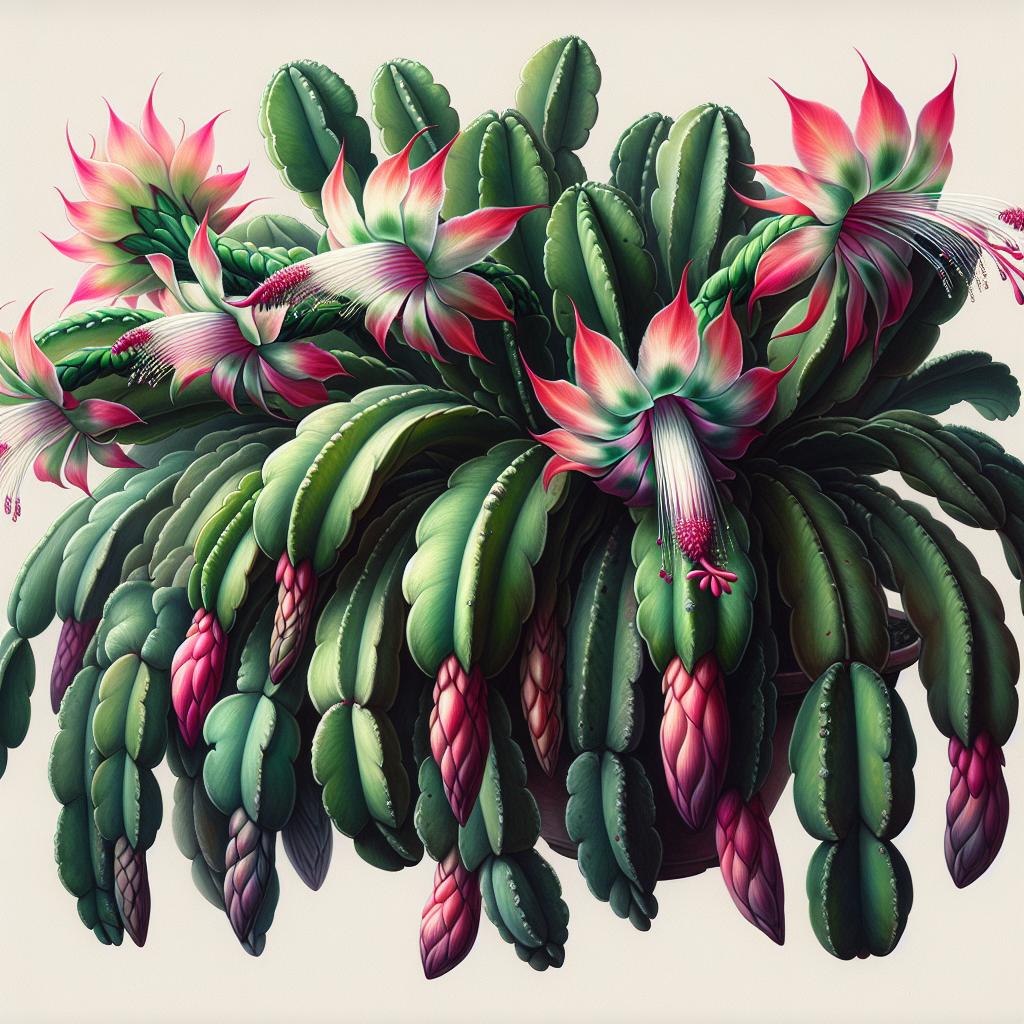
About Schlumbergera truncata
### Safety Information for Pets **Schlumbergera truncata**, commonly known as the Thanksgiving cactus, is generally considered non-toxic to pets, including cats and dogs. However, ingestion of large quantities of any plant material can potentially cause gastrointestinal upset in pets, leading to symptoms like vomiting or diarrhea. It's always wise to monitor pets around houseplants and consult a veterinarian if you notice any adverse reactions. ### Detailed Plant Description **Scientific Name**: Schlumbergera truncata **Common Names**: Thanksgiving cactus, crab cactus, Crab Cactus, false Christmas cactus, yoke cactus, claw cactus, linkleaf, cactus de Noël, False Christmas Cactus, novemberkaktus, Thanksgiving Cactus **Family**: Cactaceae **Plant Type**: Succulent ### Origin and Habitat Schlumbergera truncata is native to the coastal mountains of southeast Brazil, where it grows on trees or rocks in shady, humid environments, a habitat known as an epiphyte or lithophyte. These conditions are quite different from the arid environments typically associated with cacti. ### Physical Characteristics - **Stems**: The plant features flattened, segmented stems called cladodes, which are green and serve the function of leaves. These segments have serrated or scalloped edges, giving the plant its crab-like appearance, hence the name "crab cactus." - **Flowers**: The Thanksgiving cactus is known for its vibrant, tubular flowers that bloom in late fall, around Thanksgiving. The flowers can come in a variety of colors, including red, pink, white, and purple. They have a distinctive, zygomorphic (bilaterally symmetrical) shape. - **Size**: Typically, the plant grows to about 12-24 inches (30-60 cm) in height and can spread to about the same width. ### Growth and Care Requirements - **Light**: Prefers bright, indirect light. Direct sunlight can scorch the leaves, while too little light can inhibit flowering. - **Temperature**: Thrives in temperatures between 60-70°F (15-21°C) during the day and slightly cooler at night. It is not frost-tolerant. - **Watering**: Requires more frequent watering compared to other cacti, especially during the growing and flowering seasons. Allow the top inch of soil to dry out between waterings. Overwatering can lead to root rot. - **Humidity**: Prefers higher humidity levels, similar to its native rainforest environment. Mist the plant occasionally or place it on a humidity tray. - **Soil**: Requires well-draining soil, such as a cactus or succulent mix. Adding perlite or coarse sand can improve drainage. - **Fertilizing**: During the growing season (spring and summer), feed with a balanced, water-soluble fertilizer every 2-4 weeks. Reduce feeding in the fall and winter. ### Propagation Schlumbergera truncata can be easily propagated through stem cuttings. Cut segments of the stem, allow them to callous over for a day or two, and then plant them in well-draining soil. Keep the soil slightly moist until the cuttings establish roots. ### Pests and Problems - **Common Pests**: Mealybugs, spider mites, and aphids can infest the plant. Regular inspection and appropriate pest control measures, such as insecticidal soap, can help manage these issues. - **Common Problems**: Overwatering can lead to root rot, while under-watering can cause the plant to shrivel. Poor light conditions can result in poor flowering. ### Blooming Cycle To encourage blooming, the plant needs a period of darkness (about 12-14 hours) and cooler temperatures (around 50-55°F or 10-13°C) for about 6 weeks in the fall. This mimics its natural environment and encourages the formation of flower buds. By following these care guidelines, Schlumbergera truncata can be a rewarding and relatively low-maintenance houseplant, offering vibrant blooms and unique foliage.
Be honest — you won't remember this article at 2am when your pet eats something.
Skip the Googling next time. Scan Schlumbergera truncata (or anything else) in ToxiPets and get an instant answer personalized to your pet's weight and breed.