
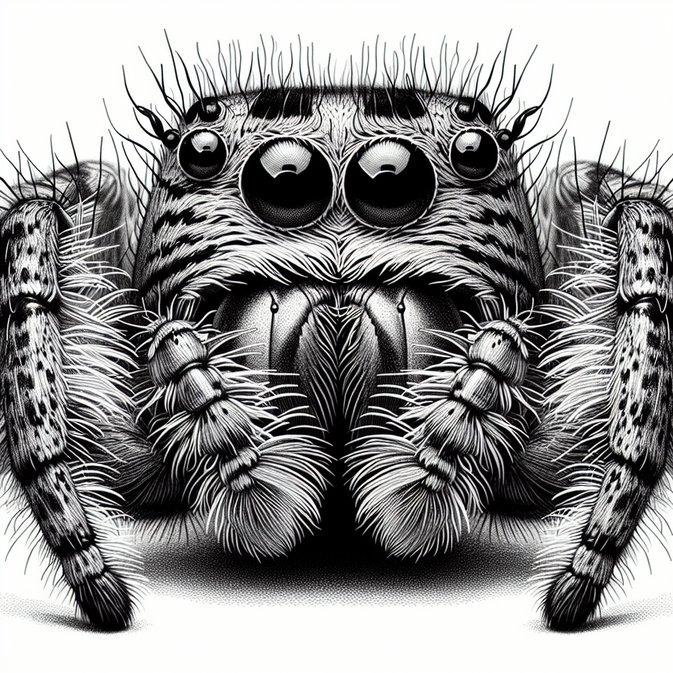
About Jumping Spider
### Jumping Spiders: Detailed Information Jumping spiders belong to the family Salticidae and are known for their excellent vision and unique locomotive capabilities. Let's explore various aspects of these fascinating arachnids: #### Habitat Jumping spiders are versatile and can be found in diverse habitats across the world, including: - **Forests:** From tropical rainforests to temperate woodlands. - **Grasslands:** Including savannas and meadows. - **Deserts:** Adaptable species thrive even in arid conditions. - **Urban Areas:** Gardens, homes, and buildings where they find prey. They typically prefer environments that offer abundant sunlight, which aids in their hunting tactics. #### Behavior - **Hunting:** Jumping spiders are active hunters and do not rely on webs to catch prey. They use their acute vision to stalk and ambush insects, pouncing on them with remarkable precision. - **Eyesight:** They have four pairs of eyes, with the principal pair providing excellent binocular vision and depth perception. - **Communication:** They use visual signals, body postures, and vibrations to communicate, especially during mating rituals. - **Movement:** Known for their agility, they can leap several times their body length to catch prey or evade predators. #### Toxicity and Safety for Pets - **Venom:** Jumping spiders possess venom that helps them subdue their prey. However, their venom is mild and not harmful to humans or pets in small quantities. - **Safety for Pets:** - **Dogs and Cats:** Generally safe for pets if they encounter jumping spiders. - **Ingestion:** If a cat or dog eats a jumping spider, it’s usually harmless. Pets might experience mild gastrointestinal upset, such as vomiting or diarrhea, but this is typically rare and not severe. - **Bites:** If a jumping spider bites a pet, it usually results in mild irritation. Pets with allergic reactions may need attention, but such instances are uncommon. #### What Happens If Cats and Dogs Eat Them or Get Bitten? - **Eating Jumping Spiders:** - **Ingestion:** Most pets will not suffer significant harm from eating a jumping spider. The spider’s venom, while effective on their insect prey, is not potent enough to cause serious issues in larger animals like cats and dogs. - **Symptoms:** At most, you might see minor gastrointestinal disturbances such as drooling, vomiting, or diarrhea. These symptoms should resolve on their own. - **Getting Bitten by Jumping Spiders:** - **Reaction:** Jumping spider bites are typically mild and cause local irritation or minor swelling. - **Symptoms:** Pets might lick or scratch at the bite site, which can lead to secondary infections if not monitored. - **Treatment:** Washing the bite with soap and water and applying a cold compress can help. If your pet shows signs of an allergic reaction (e.g., difficulty breathing, excessive swelling), seek veterinary care. #### General Precautionary Advice - **Monitoring:** If you notice that your pet has eaten a spider or has been bitten, monitor for any adverse reactions. - **Veterinary Consultation:** If you observe significant discomfort or unusual symptoms, seeking professional veterinary advice is recommended. - **Pest Control:** Ensuring a clean environment can minimize encounters with spiders and other insects. Regular pest control measures in and around your home can help. ### Conclusion Jumping spiders are fascinating creatures with intriguing behaviors and remarkable hunting strategies. They are generally safe for pets; their venom is mild, and encounters typically do not result in significant harm. However, monitoring and basic first aid are advisable if your pet interacts with these spiders.
Be honest — you won't remember this article at 2am when your pet eats something.
Skip the Googling next time. Scan Jumping Spider (or anything else) in ToxiPets and get an instant answer personalized to your pet's weight and breed.