
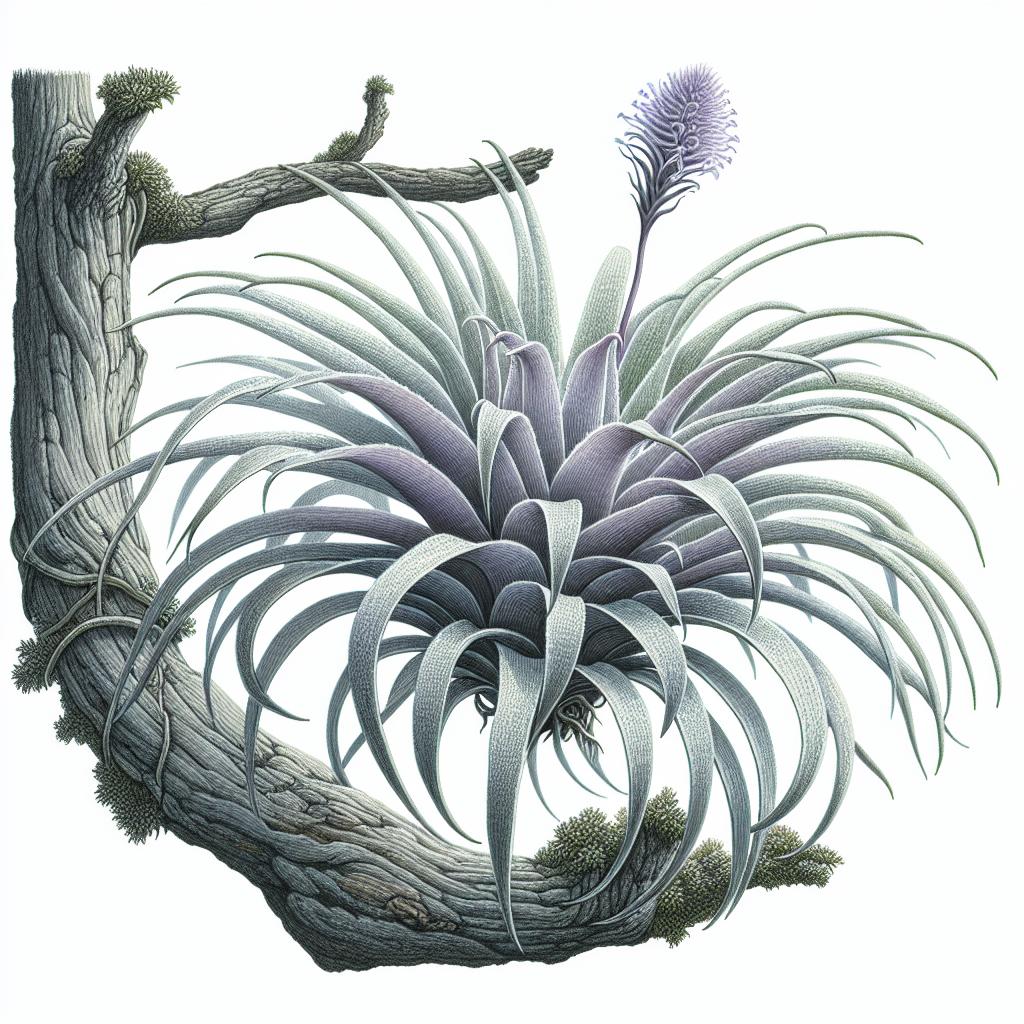
About Tillandsia paucifolia
Certainly! Here is detailed information about **Tillandsia paucifolia**, also known as the **potbelly airplant**: ### Safety Information for Pets **Tillandsia paucifolia (potbelly airplant)** is generally considered non-toxic to pets, including cats and dogs. However, while it is not harmful if ingested in small quantities, it’s always best to prevent pets from chewing on or ingesting any houseplants, as this can cause gastrointestinal upset or other issues. ### General Description - **Scientific Name**: Tillandsia paucifolia - **Common Names**: Potbelly airplant - **Family**: Bromeliaceae - **Plant Type**: Epiphyte (a plant that grows on another plant but is not parasitic) ### Physical Characteristics - **Leaves**: The leaves of Tillandsia paucifolia are narrow, elongated, and covered in trichomes (tiny scale-like structures) that give the plant a silvery appearance. These trichomes help the plant absorb moisture and nutrients from the air. - **Size**: Typically, this airplant grows to about 2-6 inches in height and has a somewhat bulbous base, which is why it is often referred to as the "potbelly" airplant. - **Flowers**: The plant produces tubular flowers that are usually blue or purple, emerging from the center of the rosette. Flowering can occur at different times of the year, depending on the growing conditions. - **Roots**: As an epiphyte, Tillandsia paucifolia has minimal roots, which are used primarily for anchoring to a host, rather than for nutrient uptake. ### Habitat and Growing Conditions - **Native Range**: This species is native to regions of Central America, the Caribbean, and the southeastern United States. - **Light Requirements**: It prefers bright, indirect light but can tolerate some direct sunlight. Too much direct sunlight can cause the leaves to scorch. - **Watering**: As an airplant, it absorbs water through its leaves. It should be misted regularly, and a thorough soaking once a week is beneficial. Ensure that the plant dries completely within a few hours to prevent rot. - **Temperature**: Tillandsia paucifolia thrives in temperatures ranging from 50°F to 90°F (10°C to 32°C). It does not tolerate frost and should be kept indoors or protected during cold weather. - **Humidity**: High humidity levels are ideal, mimicking its natural tropical environment. However, it can adapt to lower humidity with more frequent misting. ### Care and Maintenance - **Mounting**: This airplant can be mounted on various substrates such as driftwood, cork, or even placed in decorative glass containers. When mounting, ensure that the plant is secure but not too tightly bound, allowing for air circulation. - **Fertilization**: A diluted, balanced liquid fertilizer can be applied once a month during the growing season. Use a fertilizer specifically formulated for airplants or bromeliads. - **Air Circulation**: Good air circulation is crucial to prevent rot and ensure the plant dries out properly after watering. ### Propagation - **Offsets**: Tillandsia paucifolia propagates by producing offsets or "pups" at the base of the mother plant. These can be gently removed once they are about one-third the size of the parent plant and grown separately. - **Seeds**: While less common in home cultivation, propagation from seeds is possible but requires more time and specific conditions to germinate and grow. ### Common Issues - **Rot**: Overwatering or poor air circulation can lead to rot. Ensure the plant dries completely after watering. - **Pests**: While generally pest-free, it can occasionally be affected by mealybugs or scale. These can be treated with insecticidal soap or by manually removing the pests. ### Conclusion Tillandsia paucifolia, or potbelly airplant, is a fascinating and easy-to-care-for epiphyte that can add a unique touch to any plant collection. Its non-toxic nature makes it a safe choice for homes with pets, and with proper care, it can thrive and even produce beautiful blooms.
Be honest — you won't remember this article at 2am when your pet eats something.
Skip the Googling next time. Scan Tillandsia paucifolia (or anything else) in ToxiPets and get an instant answer personalized to your pet's weight and breed.