
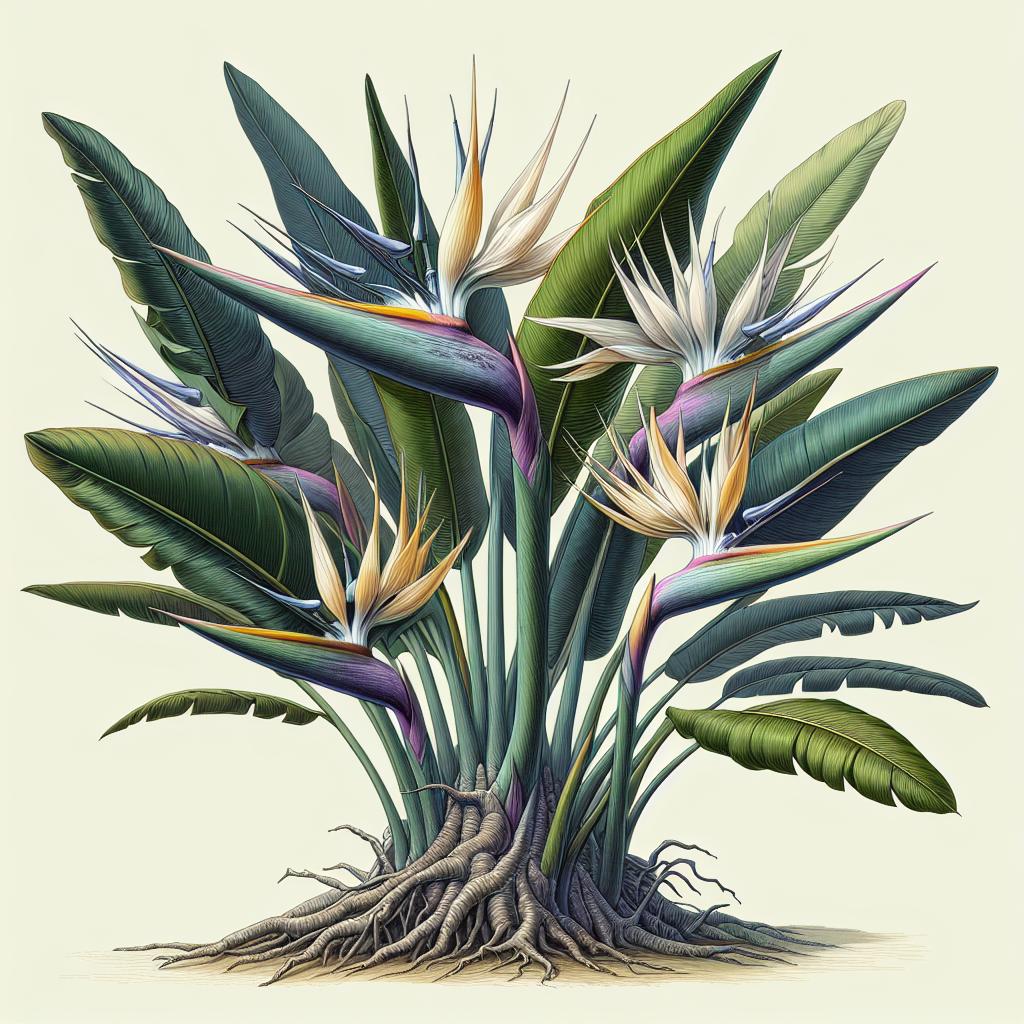
About Strelitzia nicolai
### Safety Information for Pets The Strelitzia nicolai, commonly known as the bird-of-paradise tree, is considered toxic to pets, including cats and dogs. The plant contains prussic acid (hydrocyanic acid), which can cause mild to moderate toxicity if ingested. Symptoms of poisoning may include: - Drooling - Vomiting - Diarrhea - Lethargy If you suspect your pet has ingested any part of the plant, it is advisable to consult a veterinarian immediately. ### Detailed Plant Information - **Scientific Name**: Strelitzia nicolai - **Common Names**: Bird-of-paradise tree, Giant bird-of-paradise, White bird-of-paradise - **Family**: Strelitziaceae - **Plant Type**: Perennial flowering plant #### Description Strelitzia nicolai is a large, evergreen perennial that can grow up to 20-30 feet tall and 10-15 feet wide. It is characterized by its striking, tropical appearance. - **Leaves**: The leaves are large, banana-like, up to 6 feet long and 1-2 feet wide. They are leathery, dark green, and arranged in a fan-like pattern. - **Flowers**: The flowers are less colorful compared to the more famous Strelitzia reginae (orange bird-of-paradise). They feature white sepals and a bluish-purple "tongue," emerging from a dark, beak-like spathe. - **Stems**: The plant has thick, trunk-like stems that contribute to its tree-like appearance. #### Habitat and Distribution - **Native Range**: Strelitzia nicolai is native to the subtropical coastal regions of southeastern Africa, including South Africa, Mozambique, and Zimbabwe. - **Preferred Climate**: It thrives in warm, frost-free climates and is commonly found in USDA hardiness zones 10-12. The plant prefers full sun to partial shade and well-drained soil. #### Cultivation and Care - **Watering**: Requires regular watering, especially during the growing season (spring and summer). However, it is somewhat drought-tolerant once established. - **Soil**: Prefers well-drained, fertile soil. - **Fertilization**: Benefit from a balanced, slow-release fertilizer during the growing season. - **Pruning**: Remove dead leaves and spent flowers to maintain appearance and encourage new growth. - **Propagation**: Can be propagated via seed or division of clumps. #### Uses - **Ornamental**: Widely grown as an ornamental plant in gardens and landscapes for its dramatic foliage and architectural form. - **Indoor Plant**: Can be grown indoors in large containers, provided it has sufficient light and space. ### Conclusion Strelitzia nicolai is a visually striking plant that adds a tropical feel to gardens and indoor spaces. However, pet owners should exercise caution due to its toxicity to animals. Proper care and maintenance can help this plant thrive in suitable climates or as a houseplant.
Be honest — you won't remember this article at 2am when your pet eats something.
Skip the Googling next time. Scan Strelitzia nicolai (or anything else) in ToxiPets and get an instant answer personalized to your pet's weight and breed.