
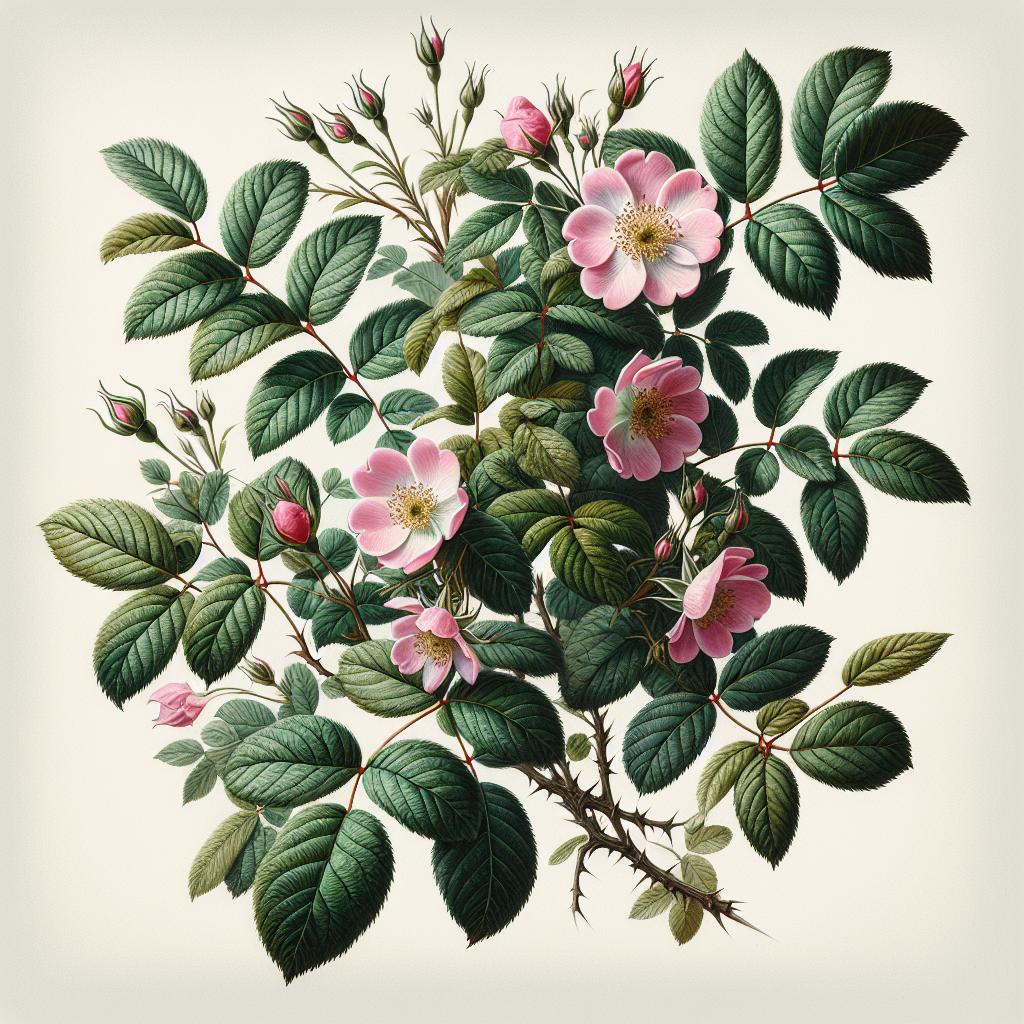
About Rosa rubiginosa
### Safety Information for Pets **Rosa rubiginosa** (Sweet-briar) is generally considered non-toxic to pets, including cats and dogs. However, it's always wise to monitor pets around plants to prevent any potential issues such as gastrointestinal upset from consuming large quantities. Additionally, the plant has thorns which can cause physical injuries, so it's advisable to keep pets away from the shrub to avoid scratches or puncture wounds. ### Detailed Plant Description #### **Scientific Name**: Rosa rubiginosa #### **Common Names**: - Sweet-briar - Wein-Rose - Sweet-Briar Rose - Eglantine - Rosa balsamina - Rosier eglantier - Sweetbriar - Sweetbrier - Rosier rouillé - Rosier rubigineux - Rosier à odeur de pomme - Sweetbriar Rose #### **Family**: Rosaceae #### **Plant Type**: Shrub ### Morphology - **Height and Spread**: Rosa rubiginosa typically grows to a height of 2-3 meters (6.5-10 feet) and spreads around 1.5-2.5 meters (5-8 feet). - **Leaves**: The leaves are pinnate with five to seven leaflets. They are dark green and have a distinctive apple-like fragrance, especially when crushed. - **Stems**: The stems are covered with numerous small, hooked thorns which can make handling the plant challenging. ### Flowers - **Bloom Time**: The plant flowers in late spring to early summer. - **Flower Description**: The flowers are usually pink, sometimes with a white center, and are about 2-3 cm (0.8-1.2 inches) in diameter. They have a sweet, pleasant fragrance. - **Flower Structure**: The flowers are single with five petals and numerous stamens, typical of the Rosaceae family. ### Fruits - **Type**: The plant produces small, red to orange hips (fruit), which are rich in vitamin C. - **Appearance**: The hips are oval to round, about 1-2 cm (0.4-0.8 inches) in diameter. - **Uses**: Hips can be used to make syrups, jellies, and teas. ### Growing Conditions - **Sunlight**: Prefers full sun but can tolerate partial shade. - **Soil**: Thrives in well-drained soil. It is adaptable to a range of soil types, including clay, loam, and sandy soils. - **Watering**: Requires moderate watering; drought-tolerant once established. - **Hardiness Zones**: USDA zones 4-8. ### Care and Maintenance - **Pruning**: Prune annually to maintain shape and encourage new growth. Remove dead or diseased wood and thin out congested stems to improve air circulation. - **Fertilization**: Apply a balanced fertilizer in early spring to promote healthy growth and abundant flowering. - **Pests and Diseases**: Susceptible to common rose pests and diseases such as aphids, black spot, and powdery mildew. Regular monitoring and appropriate treatments can help manage these issues. ### Ecological and Ethnobotanical Information - **Wildlife**: The flowers attract pollinators such as bees and butterflies. The hips are a food source for birds and small mammals. - **Ethnobotanical Uses**: Historically, the plant has been used for its medicinal properties. The hips are rich in vitamins and have been used to treat colds and flu. ### Miscellaneous - **Cultural Significance**: The Sweet-briar rose has been celebrated in literature and poetry, often symbolizing beauty and wild nature. Its fragrant leaves and lovely flowers have made it a favorite in cottage gardens and naturalized settings. In summary, Rosa rubiginosa is a beautiful and fragrant shrub that offers aesthetic and practical benefits. While safe for pets in terms of toxicity, caution should be taken to prevent physical injuries from its thorns. It is a relatively low-maintenance plant that can thrive in various environments, making it a versatile addition to many types of gardens.
Be honest — you won't remember this article at 2am when your pet eats something.
Skip the Googling next time. Scan Rosa rubiginosa (or anything else) in ToxiPets and get an instant answer personalized to your pet's weight and breed.