
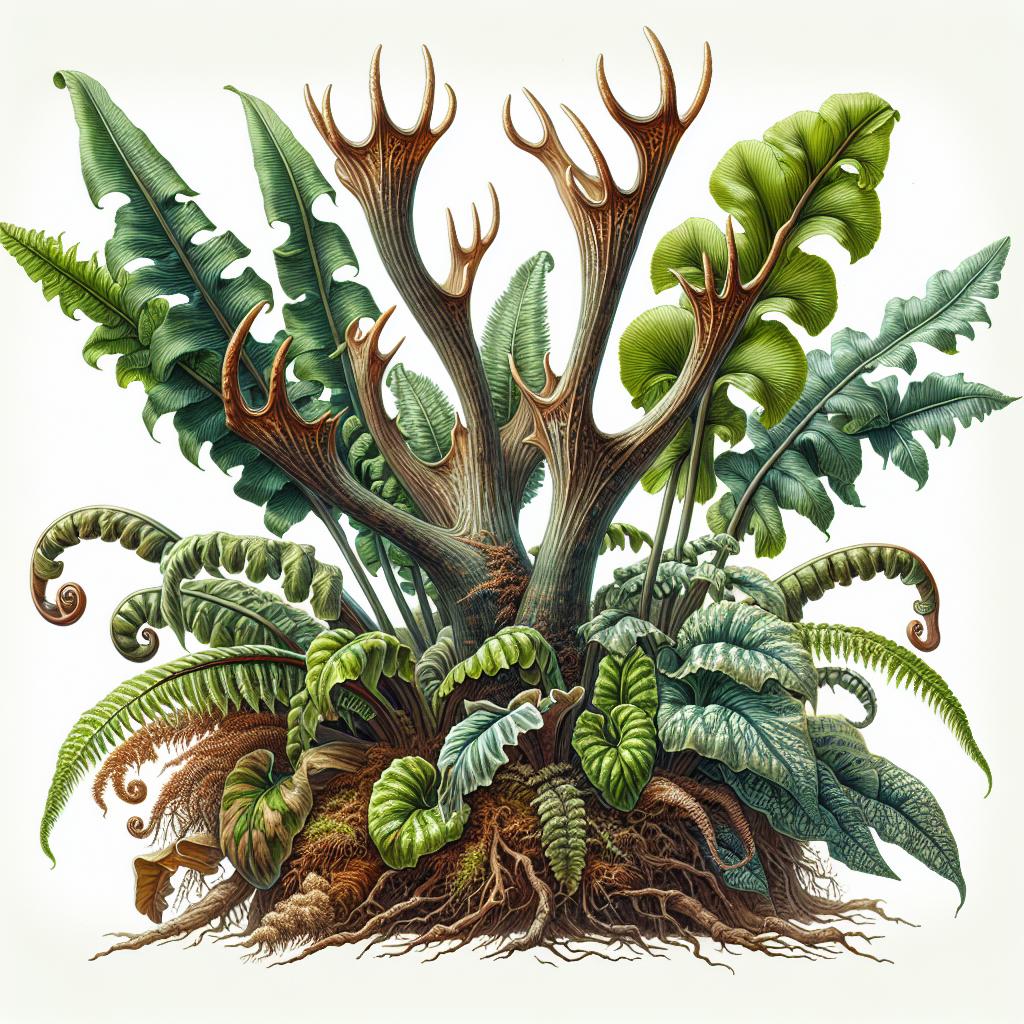
About Platycerium bifurcatum
### Safety Information for Pets **Platycerium bifurcatum**, commonly known as the common staghorn fern, is generally considered non-toxic to pets such as cats and dogs. However, while it is not poisonous, it is still advisable to prevent pets from ingesting any part of the plant, as consuming large quantities of plant material can lead to gastrointestinal upset in some animals. ### Detailed Information #### **General Description** **Platycerium bifurcatum** is an epiphytic fern renowned for its distinctive, bifurcated fronds that resemble the antlers of a stag or elk, which is reflected in its common names such as "staghorn fern" and "elkhorn fern." #### **Morphology** - **Fronds**: The plant produces two types of fronds: - **Sterile Fronds**: These fronds are rounded, flat, and shield-like, serving to anchor the fern to its substrate and collect organic debris and moisture. - **Fertile Fronds**: These are the more visually striking, antler-like fronds that fork into multiple segments. They are responsible for reproduction and photosynthesis. - **Rhizomes**: The fern has creeping rhizomes that allow it to attach to trees or other structures. #### **Habitat** - **Native Range**: Platycerium bifurcatum is native to the rainforests of Australia, New Guinea, and some parts of Southeast Asia. - **Growing Conditions**: It thrives in tropical and subtropical climates. As an epiphyte, it commonly grows on trees in its natural habitat but can be cultivated on a variety of supports, including wood or wire frames, in home gardens. #### **Cultivation** - **Light**: Prefers bright, indirect light. Direct sunlight can scorch the fronds. - **Watering**: Requires regular watering to maintain moisture, especially during the growing season. Over-watering can lead to root rot, so proper drainage is essential. In its natural habitat, it relies on humidity and rainfall. - **Humidity**: High humidity levels are ideal, mimicking its tropical origins. Misting the plant can help maintain adequate humidity. - **Temperature**: Thrives in temperatures ranging from 60°F to 80°F (15°C to 27°C). It is not frost-tolerant. - **Soil**: As an epiphyte, it does not require soil. Instead, it can be mounted on a substrate like a piece of bark or a wooden board. If grown in a pot, a mixture designed for orchids or other epiphytic plants is suitable. #### **Propagation** - **Spores**: Can be propagated via spores, although this method is more complex and time-consuming. - **Division**: More commonly propagated by dividing the plant at the rhizomes, ensuring each section has a portion of both sterile and fertile fronds. #### **Pests and Problems** - **Pests**: Generally resistant to pests, but can occasionally be affected by scale insects or mealybugs. - **Diseases**: Overwatering can lead to root rot. Ensuring proper air circulation and avoiding waterlogged conditions can prevent fungal infections. #### **Uses** - **Ornamental**: Widely grown as an ornamental plant for its unique and attractive appearance. Often used in hanging baskets, mounted displays, or as a dramatic focal point in indoor gardens. #### **Care Tips** - **Mounting**: When mounting on a board or tree, secure the base with sphagnum moss and tie it with fishing line or a similar material until it naturally attaches itself. - **Feeding**: During the growing season, apply a balanced, water-soluble fertilizer monthly at half strength. ### Conclusion Platycerium bifurcatum is a striking and relatively low-maintenance fern that can add a unique aesthetic to any plant collection. While it poses minimal risk to pets, general plant safety precautions should still be observed. With proper care, it can thrive and become a long-lasting part of your indoor or outdoor garden.