
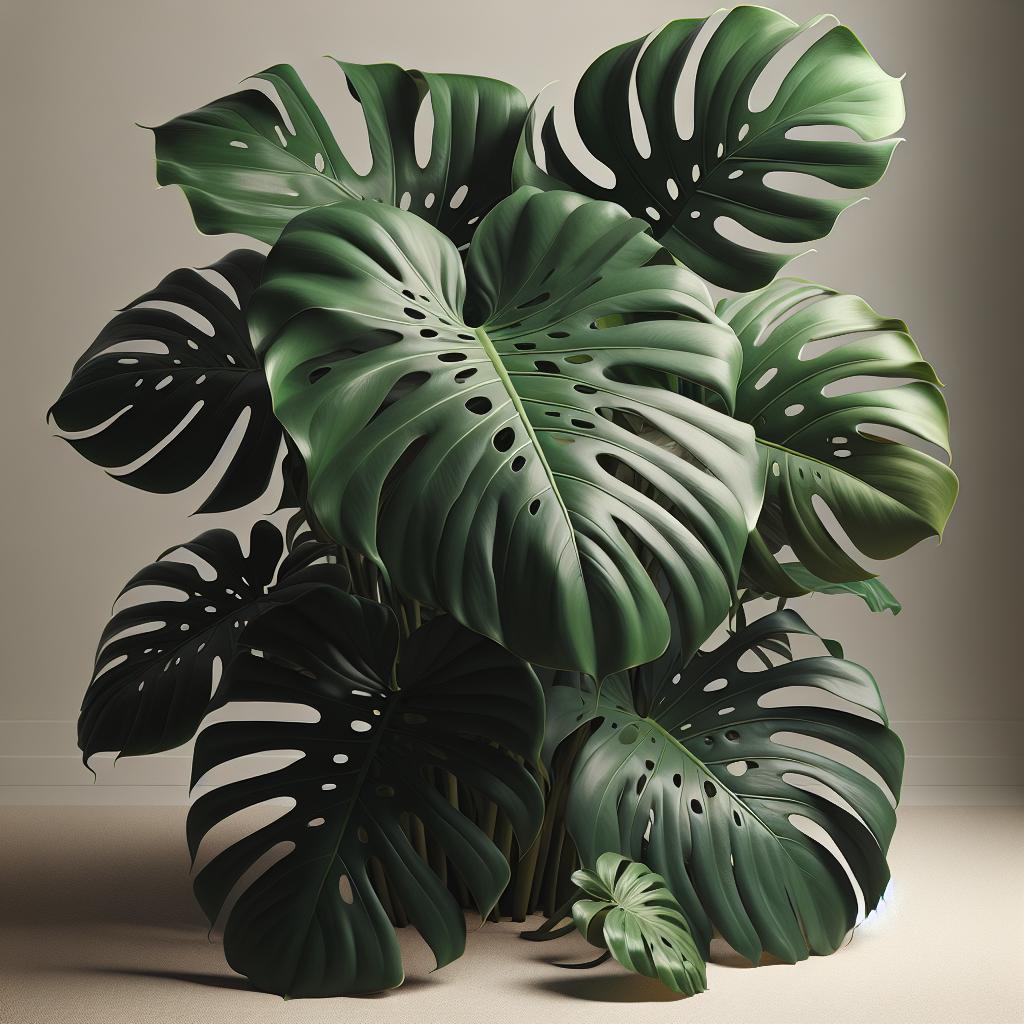
About Monstera
### Monstera Plant Overview #### Safety Information for Pets - **Toxicity**: Monstera plants are toxic to pets, including cats and dogs. The plant contains insoluble calcium oxalate crystals, which can cause irritation and swelling in the mouth, tongue, and throat if ingested. Symptoms of toxicity may include drooling, difficulty swallowing, vomiting, and a decreased appetite. - **Precautions**: It's advisable to keep Monstera plants out of reach of pets to prevent accidental ingestion. If you suspect your pet has ingested any part of a Monstera plant, contact your veterinarian immediately. #### Detailed Plant Information - **Scientific Name**: Monstera deliciosa (most common species) - **Common Names**: Monstera, Swiss Cheese Plant, Split-Leaf Philodendron - **Family**: Araceae - **Plant Type**: Climbing vine #### Description - **Origin**: Native to tropical rainforests of Central America. - **Growth Habit**: Monstera is a climbing vine that can grow quite large, often reaching heights of 10 to 15 feet indoors with proper support. - **Leaves**: The leaves are large, glossy, and heart-shaped when young. As they mature, they develop characteristic splits and holes, giving them a "Swiss cheese" appearance. Mature leaves can grow up to 3 feet long. - **Stems**: The stems are thick and sturdy, with aerial roots that help the plant anchor itself to trees or other structures in its natural habitat. #### Growing Conditions - **Light**: Prefers bright, indirect light but can tolerate lower light conditions. Direct sunlight can scorch the leaves. - **Water**: Requires moderate watering. Allow the top inch of soil to dry out between waterings. Overwatering can lead to root rot. - **Soil**: Thrives in well-draining potting mix. A mixture of peat, pine bark, and perlite or coarse sand is ideal. - **Humidity**: Prefers high humidity, typical of its native tropical environment. Regular misting or a humidity tray can help maintain the required moisture levels. - **Temperature**: Optimal temperature range is between 65°F and 85°F (18°C - 29°C). The plant is not frost-tolerant and should be kept away from cold drafts and temperatures below 50°F (10°C). #### Maintenance - **Pruning**: Prune to control size and shape. Cutting back stems can encourage bushier growth. - **Repotting**: Repot every 1-2 years, or when the plant becomes root-bound. Spring is the best time for repotting. - **Fertilizing**: Feed with a balanced, water-soluble fertilizer every month during the growing season (spring and summer). Reduce feeding in the fall and winter. #### Propagation - **Methods**: Monstera can be propagated through stem cuttings. Cut a section of the stem with at least one node and a leaf, and place it in water or moist soil until roots develop. #### Pests and Problems - **Common Pests**: Susceptible to spider mites, mealybugs, and scale insects. Regularly inspect the plant and treat infestations promptly with insecticidal soap or neem oil. - **Common Problems**: Yellowing leaves can indicate overwatering or poor drainage, while brown leaf tips might suggest low humidity or underwatering. #### Additional Notes - **Aerial Roots**: These roots can be directed into the soil to provide additional nutrients and stability for the plant. They can also be trimmed if they become too unruly. - **Cultural Significance**: Monstera plants are popular in interior design due to their striking foliage and relatively easy care requirements. They are often used as statement pieces in homes and offices. By following the proper care guidelines, Monstera plants can thrive and add a touch of tropical elegance to any indoor space. However, always remain vigilant about their potential toxicity to pets.
Be honest — you won't remember this article at 2am when your pet eats something.
Skip the Googling next time. Scan Monstera (or anything else) in ToxiPets and get an instant answer personalized to your pet's weight and breed.