
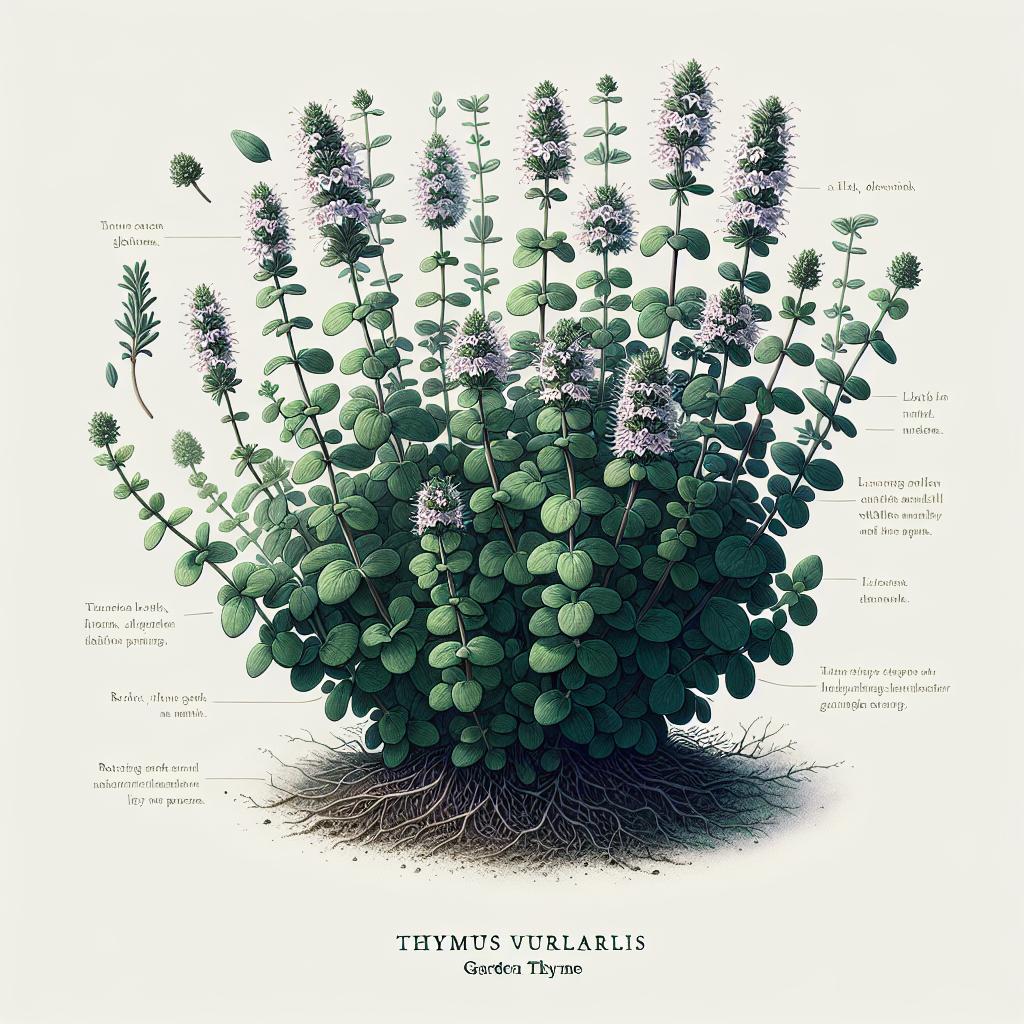
About Thymus vulgaris
### Thymus vulgaris (Garden Thyme) #### Safety Information for Pets Thymus vulgaris, commonly known as garden thyme, is generally considered non-toxic to pets, including cats and dogs. However, while it is safe in small amounts, ingestion of large quantities might cause gastrointestinal upset in some animals due to its essential oil content. Always consult your veterinarian if your pet shows signs of distress after consuming any plant material. ### Detailed Plant Information #### Botanical Description - **Scientific Name**: Thymus vulgaris - **Common Names**: Garden thyme, common thyme, English thyme - **Family**: Lamiaceae (Mint family) - **Plant Type**: Herbaceous perennial #### Morphological Characteristics - **Height**: Typically grows to about 15-30 cm (6-12 inches) tall. - **Spread**: Can spread 30-45 cm (12-18 inches) wide. - **Leaves**: Small, aromatic, and linear to ovate in shape. The leaves are usually 5-10 mm long, grayish-green, and covered with fine hairs. - **Flowers**: Tiny, tubular, and usually pink to lilac in color. They grow in dense clusters and are highly attractive to pollinators like bees. - **Stems**: Woody at the base and become more herbaceous towards the tips. The stems can be upright or slightly sprawling. #### Growing Conditions - **Light**: Prefers full sun but can tolerate partial shade. - **Soil**: Thrives in well-drained, sandy, or loamy soils. It is tolerant of poor soils but does best in moderately fertile ground. - **Water**: Requires moderate watering; drought-tolerant once established. Overwatering can lead to root rot. - **pH**: Prefers slightly alkaline to neutral soils (pH 6.0-8.0). #### Hardiness - **USDA Hardiness Zones**: 5-9. It can withstand some frost but may need protection in harsher climates. #### Uses - **Culinary**: Widely used as a culinary herb. The leaves are used fresh or dried to flavor soups, stews, meats, and sauces. It is a staple in Mediterranean cuisine. - **Medicinal**: Traditionally used for its antiseptic and preservative properties. Thyme oil is known for its antibacterial, antifungal, and antiviral activities. - **Ornamental**: Also used as an ornamental plant in gardens for its attractive foliage and flowers. It serves well in rock gardens, borders, and as ground cover. #### Propagation - **Seed**: Can be grown from seeds, but germination can be slow and erratic. It is often easier to propagate from cuttings or by division. - **Cuttings**: Take cuttings in late spring or early summer. Place them in a sandy, well-draining medium to root. - **Division**: Mature plants can be divided in the spring or fall. #### Care and Maintenance - **Pruning**: Regular pruning encourages bushier growth and prevents the plant from becoming woody. Trim back after flowering to maintain shape. - **Pests and Diseases**: Generally resistant to pests and diseases but can be susceptible to root rot if overwatered. Keep an eye out for aphids and spider mites. #### Ecological Benefits - **Pollinators**: Attracts bees, butterflies, and other beneficial insects, making it a good choice for environmentally friendly gardens. - **Companion Planting**: Known to repel certain pests, making it a good companion plant for vegetables like tomatoes, cabbages, and eggplants. ### Conclusion Thymus vulgaris, or garden thyme, is a versatile and beneficial herb that is relatively easy to grow and maintain. It offers a range of uses from culinary to medicinal, and its aromatic presence can enhance both the garden and the kitchen. Ensure proper care and moderate consumption to keep both plants and pets safe and healthy.
Be honest — you won't remember this article at 2am when your pet eats something.
Skip the Googling next time. Scan Thymus vulgaris (or anything else) in ToxiPets and get an instant answer personalized to your pet's weight and breed.