
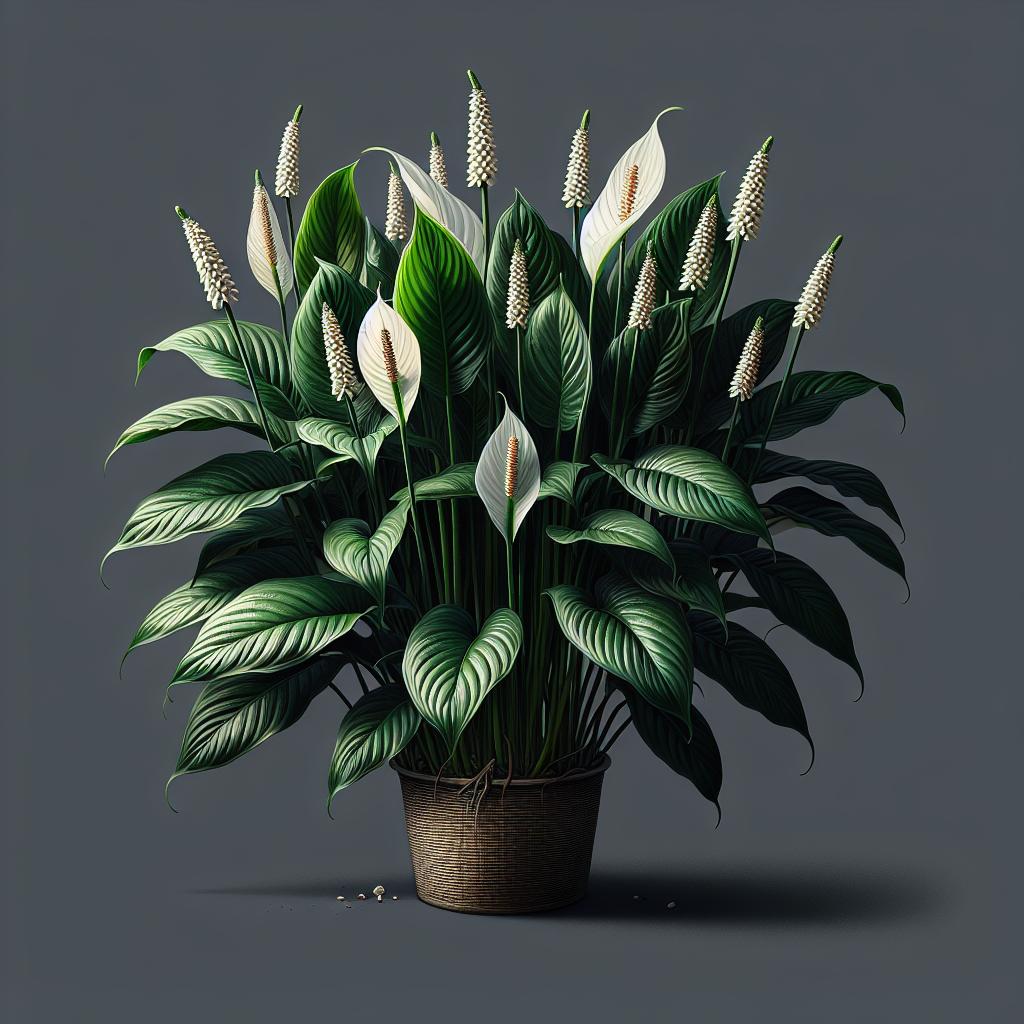
About Spathiphyllum wallisii
### Safety Information for Pets - **Toxicity**: Spathiphyllum wallisii, commonly known as the peace lily, is toxic to pets, including cats and dogs. The plant contains calcium oxalate crystals, which can cause oral irritation, excessive drooling, vomiting, difficulty swallowing, and intense burning and irritation of the mouth, lips, and tongue if ingested by pets. Immediate veterinary attention is recommended if ingestion occurs. ### Detailed Plant Information - **Scientific Name**: Spathiphyllum wallisii - **Common Names**: Peace lily, White sail plant - **Family**: Araceae - **Plant Type**: Flowering perennial #### Description - **Leaves**: The peace lily features shiny, dark green leaves that are lance-shaped and grow from the base of the plant. These leaves can grow up to 12 inches long and 6 inches wide. - **Flowers**: The plant produces elegant white blooms, known as spathes, which are actually modified leaves. The true flowers are tiny and located on the spadix, a spike that rises from the center of the spathe. The spadix is typically creamy white to yellow. - **Height**: It generally grows to about 1-3 feet tall, but some varieties can reach up to 6 feet under optimal conditions. #### Growing Conditions - **Light**: Peace lilies thrive in low to medium light conditions. They can tolerate fluorescent lighting, making them ideal for indoor environments such as offices and homes. Direct sunlight should be avoided as it can scorch the leaves. - **Water**: These plants prefer consistently moist soil but are sensitive to overwatering. Allow the top inch of soil to dry out between waterings. They are also known to wilt when thirsty but recover quickly after watering. - **Soil**: A well-draining, peat-based potting mix is ideal. The soil should be rich in organic matter to retain moisture while still allowing excess water to drain away. - **Humidity**: High humidity levels are beneficial, mimicking their natural tropical habitat. Regular misting or placing the plant on a humidity tray can help maintain the required moisture levels. - **Temperature**: Peace lilies prefer temperatures between 65-80°F (18-27°C). They should be kept away from drafts, sudden temperature changes, and cold environments below 45°F (7°C). #### Care Tips - **Fertilization**: Feed with a balanced, water-soluble fertilizer every 6-8 weeks during the growing season (spring and summer). Avoid over-fertilizing as it can lead to brown leaf tips. - **Pruning**: Remove spent blooms and yellowing leaves to encourage new growth and maintain plant health. - **Repotting**: Repot every 1-2 years or when the plant outgrows its container. Choose a pot that is 1-2 inches larger in diameter than the current one. #### Common Problems - **Pest Issues**: Peace lilies can be susceptible to pests such as spider mites, aphids, and mealybugs. Regularly inspect the plant and treat infestations promptly with insecticidal soap or neem oil. - **Disease**: Overwatering can lead to root rot, while insufficient humidity can cause brown leaf tips. Ensure proper watering practices and maintain adequate humidity levels to prevent these issues. ### Uses - **Indoor Plant**: Peace lilies are popular indoor plants due to their attractive foliage and flowers, as well as their ability to improve indoor air quality by filtering pollutants such as formaldehyde and benzene. - **Decorative**: They are often used in homes, offices, and public spaces for their aesthetic appeal and minimal care requirements. ### Notes - **Flowering Cycle**: Peace lilies are known to bloom multiple times throughout the year, especially when grown in optimal conditions. - **Air Quality**: According to NASA's Clean Air Study, peace lilies are effective at removing airborne toxins, making them beneficial for indoor environments. By following proper care guidelines and keeping the plant out of reach of pets, Spathiphyllum wallisii can be a beautiful and beneficial addition to any indoor space.
Be honest — you won't remember this article at 2am when your pet eats something.
Skip the Googling next time. Scan Spathiphyllum wallisii (or anything else) in ToxiPets and get an instant answer personalized to your pet's weight and breed.