
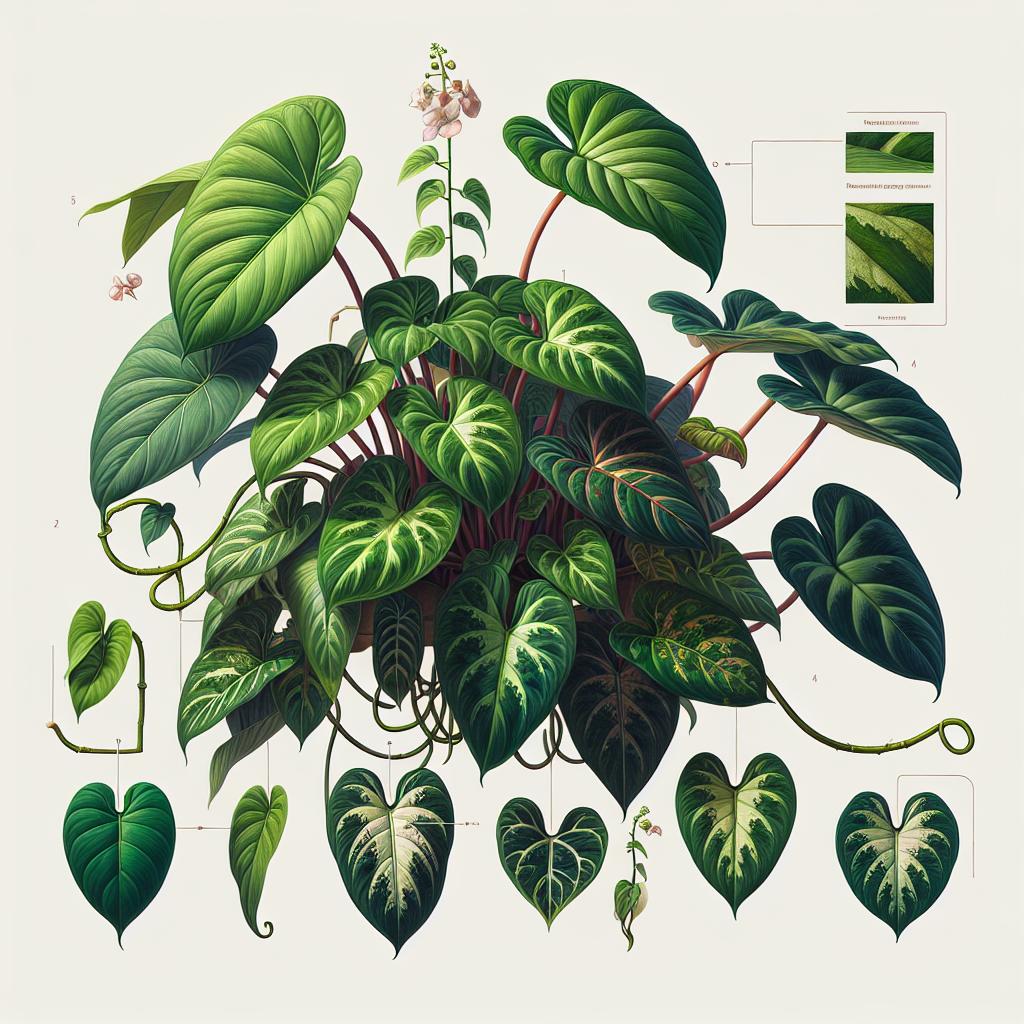
About Philodendron
### Safety Information for Pets **Philodendron** is toxic to both cats and dogs. The plant contains insoluble calcium oxalates, which can cause severe irritation and swelling in the mouth, tongue, and throat if ingested. Symptoms of poisoning may include drooling, vomiting, difficulty swallowing, and oral pain. If a pet is suspected of ingesting philodendron, immediate veterinary attention is recommended. ### Detailed Plant Information - **Scientific Name**: Philodendron - **Common Names**: Philodendron - **Family**: Araceae - **Plant Type**: Vine #### Description **Philodendron** is a diverse genus of flowering plants commonly grown as ornamental houseplants. It encompasses a wide variety of species, but they generally share some common characteristics: - **Leaves**: The leaves of philodendrons are typically large, glossy, and heart-shaped, although they can vary considerably in size, shape, and color depending on the species. Some leaves are deeply lobed, while others may be smooth-edged. The color ranges from deep green to variegated patterns with shades of white, yellow, or red. - **Growth Habit**: As a vine, the philodendron is known for its climbing or trailing growth habit. It can be trained to grow on trellises, poles, or other support structures. In its natural habitat, it often climbs trees in tropical forests. - **Stems**: The stems of philodendrons are typically sturdy and may produce aerial roots, which help the plant to climb and absorb moisture from the air. These roots can also develop in soil and water. - **Flowers**: Philodendrons rarely flower when grown indoors. When they do, the flowers are usually small and inconspicuous, producing a spadix surrounded by a spathe. #### Care Requirements - **Light**: Philodendrons prefer bright, indirect light but can tolerate lower light conditions. Direct sunlight can scorch the leaves, while too little light can cause the plant to become leggy. - **Water**: The soil should be kept consistently moist but not waterlogged. Allow the top inch of the soil to dry out between waterings. Overwatering can lead to root rot, while underwatering can cause the leaves to wilt. - **Humidity**: Philodendrons thrive in high humidity environments, which mimic their native tropical habitats. Regular misting or placing the plant on a humidity tray can help maintain adequate moisture levels. - **Temperature**: These plants prefer temperatures between 65-80°F (18-27°C). They are not frost-tolerant and should be kept away from cold drafts. - **Soil**: A well-draining potting mix rich in organic matter is ideal. A mix containing peat, perlite, and pine bark works well. - **Feeding**: During the growing season (spring and summer), philodendrons benefit from regular feeding with a balanced, water-soluble fertilizer every 4-6 weeks. Reduce feeding during the fall and winter months. - **Pruning**: Regular pruning helps to control the size and shape of the plant. Remove any yellow or dead leaves, and trim back stems to encourage bushier growth. - **Propagation**: Philodendrons can be easily propagated through stem cuttings. Cut a healthy stem with at least one node and a few leaves, and place it in water or directly into soil. Roots will typically develop within a few weeks. #### Pests and Problems - **Pests**: Common pests include spider mites, aphids, and mealybugs. Regularly inspect the plant for signs of infestation and treat with insecticidal soap or neem oil as needed. - **Diseases**: Overwatering can lead to root rot, a common issue with philodendrons. Ensure proper watering practices and good drainage to prevent this problem. By understanding and following these guidelines, you can maintain a healthy and thriving philodendron plant while ensuring the safety of your pets.
Be honest — you won't remember this article at 2am when your pet eats something.
Skip the Googling next time. Scan Philodendron (or anything else) in ToxiPets and get an instant answer personalized to your pet's weight and breed.