
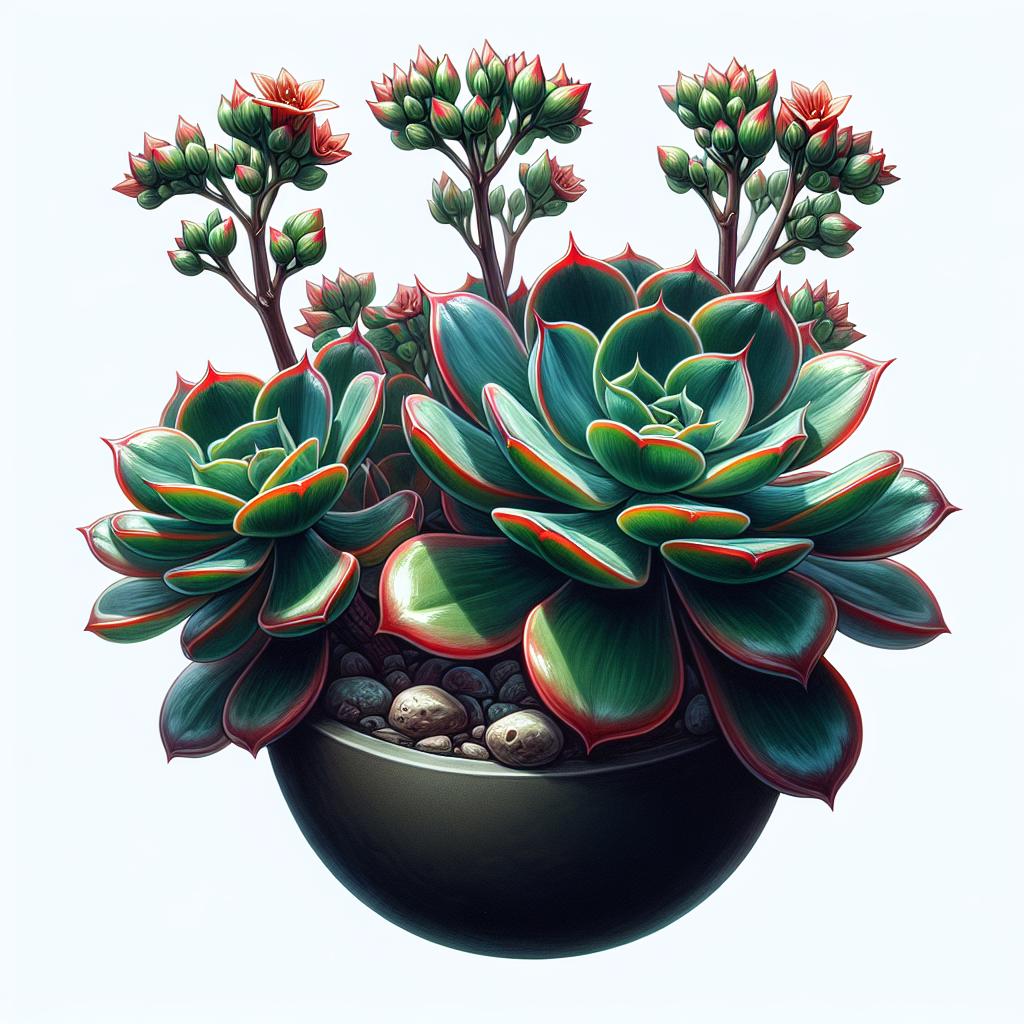
About Kalanchoe
### Kalanchoe (Widow's-thrill) #### Safety Information for Pets - **Toxicity**: Kalanchoe species are toxic to pets, including cats, dogs, and birds. - **Toxic Compounds**: The plant contains compounds called bufadienolides, which can cause gastrointestinal upset and more severe symptoms in pets. - **Symptoms of Ingestion**: If ingested by pets, symptoms may include vomiting, diarrhea, drooling, lethargy, and in severe cases, abnormal heart rhythms, seizures, and even death. - **Precautions**: It is advisable to keep Kalanchoe plants out of reach of pets and to contact a veterinarian immediately if you suspect your pet has ingested any part of the plant. #### General Description - **Scientific Name**: Kalanchoe - **Common Names**: Widow's-thrill - **Family**: Crassulaceae - **Plant Type**: Succulent #### Appearance - **Leaves**: Kalanchoe plants typically have thick, fleshy leaves that store water. The leaves can be ovate to elongated and are often scalloped or serrated along the edges. Some varieties may have a waxy or slightly hairy surface. - **Flowers**: The plant is known for its vibrant and long-lasting flowers. The blooms can be single or double and come in a variety of colors including red, pink, yellow, orange, and white. The flowers are usually clustered in dense groups atop tall stems. - **Size**: Kalanchoe plants can vary in size from small, compact varieties that grow to about 6 inches (15 cm) tall to larger species that can reach up to 3 feet (1 meter) in height. #### Growing Conditions - **Light**: Kalanchoe plants thrive in bright, indirect light. They can tolerate some direct sunlight, particularly in the morning or late afternoon, but too much direct sun can scorch the leaves. - **Water**: As succulents, Kalanchoe plants are drought-tolerant and require infrequent watering. Allow the soil to dry out completely between waterings to prevent root rot. Overwatering is a common cause of plant stress and disease. - **Soil**: They prefer well-draining soil, such as a cactus or succulent mix. Good drainage is crucial to prevent water from sitting around the roots. - **Temperature**: Kalanchoe plants prefer warm temperatures and are sensitive to cold. Ideal temperatures range from 60-85°F (15-29°C). They should be protected from frost and cold drafts. - **Humidity**: They do well in average household humidity levels but can tolerate lower humidity since they are adapted to arid conditions. #### Care and Maintenance - **Fertilization**: Feed Kalanchoe plants with a balanced, water-soluble fertilizer diluted to half strength during the growing season (spring and summer). Reduce feeding during the fall and winter months when the plant's growth slows. - **Pruning**: Remove spent flowers and dead or damaged leaves to encourage new growth and maintain the plant's appearance. Pruning can also help control the size and shape of the plant. - **Propagation**: Kalanchoe plants can be easily propagated from leaf or stem cuttings. Allow the cuttings to dry and callous over for a few days before planting them in well-draining soil. #### Uses - **Ornamental**: Kalanchoe plants are popular as ornamental houseplants due to their attractive foliage and vibrant flowers. They are often used in decorative pots and arrangements. - **Gifting**: The plant's long-lasting blooms make it a popular choice for gifting, particularly during holidays and special occasions. #### Potential Issues - **Pests**: Common pests include aphids, mealybugs, and spider mites. Regular inspections and prompt treatment with insecticidal soap or neem oil can help control infestations. - **Diseases**: Overwatering can lead to root rot and other fungal issues. Ensuring proper watering practices and good air circulation can help prevent these problems. By following these guidelines, you can successfully grow and maintain a healthy Kalanchoe plant while ensuring the safety of your pets.
Be honest — you won't remember this article at 2am when your pet eats something.
Skip the Googling next time. Scan Kalanchoe (or anything else) in ToxiPets and get an instant answer personalized to your pet's weight and breed.