
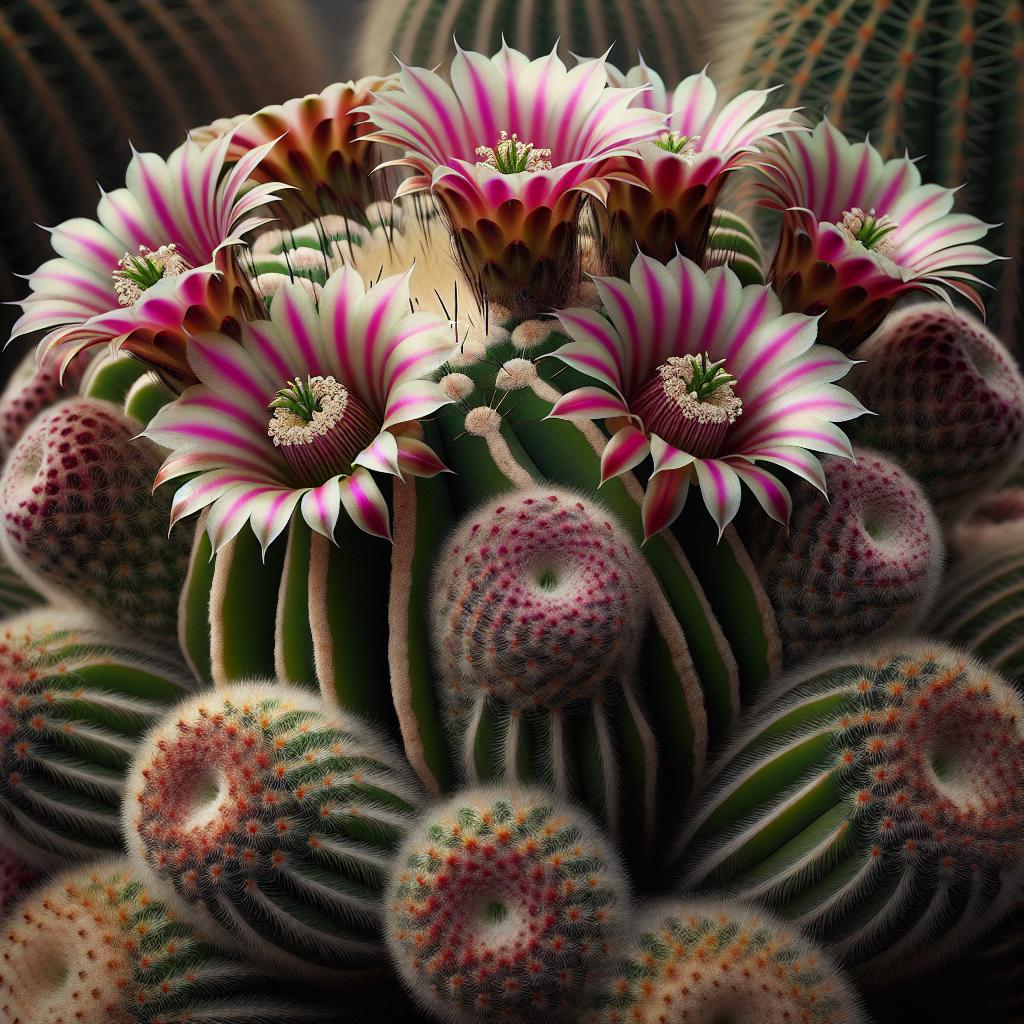
About Echinocereus engelmannii
### Safety Information for Pets Echinocereus engelmannii, commonly known as Strawberry Cactus, is generally considered non-toxic to pets, including cats and dogs. However, the plant has sharp spines that pose a physical hazard. Pets that come into contact with the cactus may suffer from puncture wounds, which can lead to infections or other complications. It is advisable to keep this plant out of reach of curious pets to prevent accidental injuries. ### Detailed Plant Information - **Scientific Name**: Echinocereus engelmannii - **Common Names**: Strawberry Cactus, Strawberry Hedgehog Cactus, Órgano-pequeño Fresa, Engelmann's Hedgehog Cactus - **Family**: Cactaceae - **Plant Type**: Cactus #### Description Echinocereus engelmannii is a perennial cactus known for its cylindrical, sometimes clumping stems that are densely covered in spines. The stems can grow up to 60 cm (24 inches) in height and 10 cm (4 inches) in diameter. The spines are generally straight, sharp, and come in various colors, including yellow, brown, and white. #### Flowers and Fruits The Strawberry Cactus is notable for its vibrant and showy flowers, which bloom in spring. The flowers are typically magenta, pink, or purple and can be up to 10 cm (4 inches) in diameter. Following the flowering period, the plant produces edible, red, strawberry-like fruits, which give it its common name. These fruits are not only safe but also considered tasty by humans. #### Habitat and Distribution Echinocereus engelmannii is native to the southwestern United States and northern Mexico. It thrives in arid, desert environments, often found growing in rocky or sandy soils. The plant is well-adapted to withstand high temperatures and minimal rainfall. #### Cultivation - **Light**: Full sun is essential for optimal growth and flowering. It requires at least 6 hours of direct sunlight daily. - **Watering**: Like most cacti, it is drought-tolerant and requires minimal watering. Water the plant thoroughly, allowing the soil to dry out completely between waterings. Overwatering can lead to root rot. - **Soil**: Well-draining soil is crucial. A cactus or succulent mix is ideal, often amended with sand or small gravel to improve drainage. - **Temperature**: Prefers warm temperatures and can tolerate extreme heat. It is hardy to USDA zones 8-11 and can withstand temperatures down to -12°C (10°F) for short periods. - **Propagation**: Can be propagated from seeds or offsets. Offsets can be removed and planted separately once they have developed a small root system. #### Care Tips - **Pests and Diseases**: Generally pest-resistant but can occasionally attract mealybugs or spider mites. Regular inspection and prompt treatment with insecticidal soap or neem oil can help manage these issues. - **Pruning**: Minimal pruning is required, primarily to remove dead or damaged sections. - **Repotting**: Repotting is rarely needed, but if the plant outgrows its container, it can be repotted in the spring or early summer. Handle with care to avoid injury from the spines. ### Summary Echinocereus engelmannii, or the Strawberry Cactus, is an attractive and low-maintenance plant, perfect for desert-themed gardens or as a striking indoor specimen. While it is non-toxic to pets, its sharp spines necessitate cautious placement to prevent injuries. With proper care, it can thrive and produce beautiful flowers and edible fruits, adding both color and interest to your plant collection.