
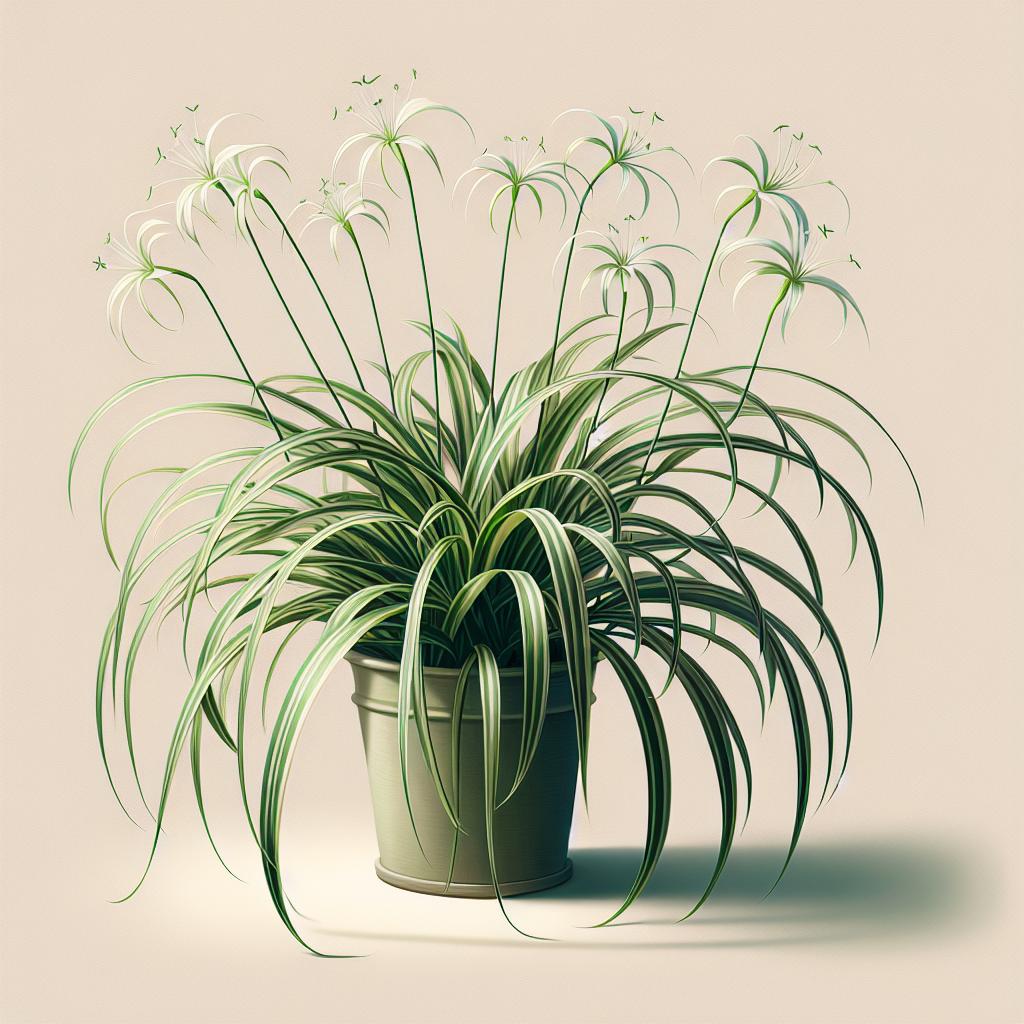
About Chlorophytum comosum
### Safety Information for Pets **Chlorophytum comosum**, commonly known as the spider plant, is considered **non-toxic to pets**. According to the American Society for the Prevention of Cruelty to Animals (ASPCA), spider plants are safe for both cats and dogs. However, it is worth noting that while the plant is nontoxic, some pets may be attracted to the plant and may chew on its leaves. This can sometimes cause mild gastrointestinal upset such as vomiting or diarrhea due to the fibrous nature of the leaves and the presence of compounds that may have a mild hallucinogenic effect similar to catnip in cats. ### Detailed Plant Information #### Common Names - **Common Names**: Spiderplant, spider plant, ribbonplant, Chlorophyton chevelu, Chlorophytum, spider-ivy, ampellilja, 접란 (Korean), gravatinha (Portuguese), clorofito (Spanish). #### Family - **Family**: Liliaceae #### Plant Type - **Plant Type**: Herb #### Origin and Distribution - **Origin**: Spider plants are native to tropical and southern Africa. - **Distribution**: Due to their hardiness and adaptability, they are now found in homes and gardens worldwide. #### Description - **Leaves**: The spider plant has long, slender, arching leaves that are typically green with white or yellow variegation. The leaves grow in a rosette pattern from a central point. - **Flowers**: The plant produces small white flowers on long stems (called stolons) that also carry plantlets or "pups," which can be used for propagation. - **Height**: Typically grows to a height of 12-24 inches (30-60 cm). - **Width**: The spread of the plant can be similar to its height, making it quite bushy and full. #### Growth Conditions - **Light Requirements**: Prefers bright, indirect light but can tolerate low light conditions. Direct sunlight can scorch the leaves. - **Watering**: Likes to be kept evenly moist but not waterlogged. Allow the top inch of soil to dry out between waterings. - **Soil**: Prefers well-draining potting soil. - **Temperature**: Thrives in temperatures between 55°F and 80°F (13°C to 27°C). It does not tolerate frost. - **Humidity**: Prefers moderate humidity but can adapt to lower humidity levels typical of indoor environments. #### Care Tips - **Fertilization**: Feed with a balanced, water-soluble fertilizer every 2-4 weeks during the growing season (spring and summer). Reduce feeding in the fall and winter. - **Repotting**: Spider plants grow quickly and may need to be repotted every 1-2 years. Look for signs like roots growing out of the drainage holes or the plant becoming top-heavy. - **Propagation**: Easily propagated by planting the plantlets that develop on the stolons. These can be placed in soil or water until roots develop. #### Common Issues - **Brown Leaf Tips**: Often caused by fluoride in tap water or over-fertilization. Use distilled or rainwater and reduce fertilization if this occurs. - **Pests**: Generally pest-free, but can occasionally be affected by spider mites, aphids, and scale insects. Treat infestations with insecticidal soap or horticultural oil. ### Benefits - **Air Purification**: Spider plants are excellent at purifying indoor air. They are known to remove formaldehyde, xylene, and toluene from the air. - **Aesthetic Appeal**: Their attractive foliage and ease of care make them popular houseplants. - **Stress Reduction**: Studies suggest that having houseplants like the spider plant can reduce stress and improve mood. ### Conclusion Chlorophytum comosum, or the spider plant, is a versatile and attractive addition to any home, particularly pet-friendly households, due to its non-toxic nature. Its low maintenance and air-purifying qualities further enhance its appeal as an ideal houseplant.
Be honest — you won't remember this article at 2am when your pet eats something.
Skip the Googling next time. Scan Chlorophytum comosum (or anything else) in ToxiPets and get an instant answer personalized to your pet's weight and breed.