
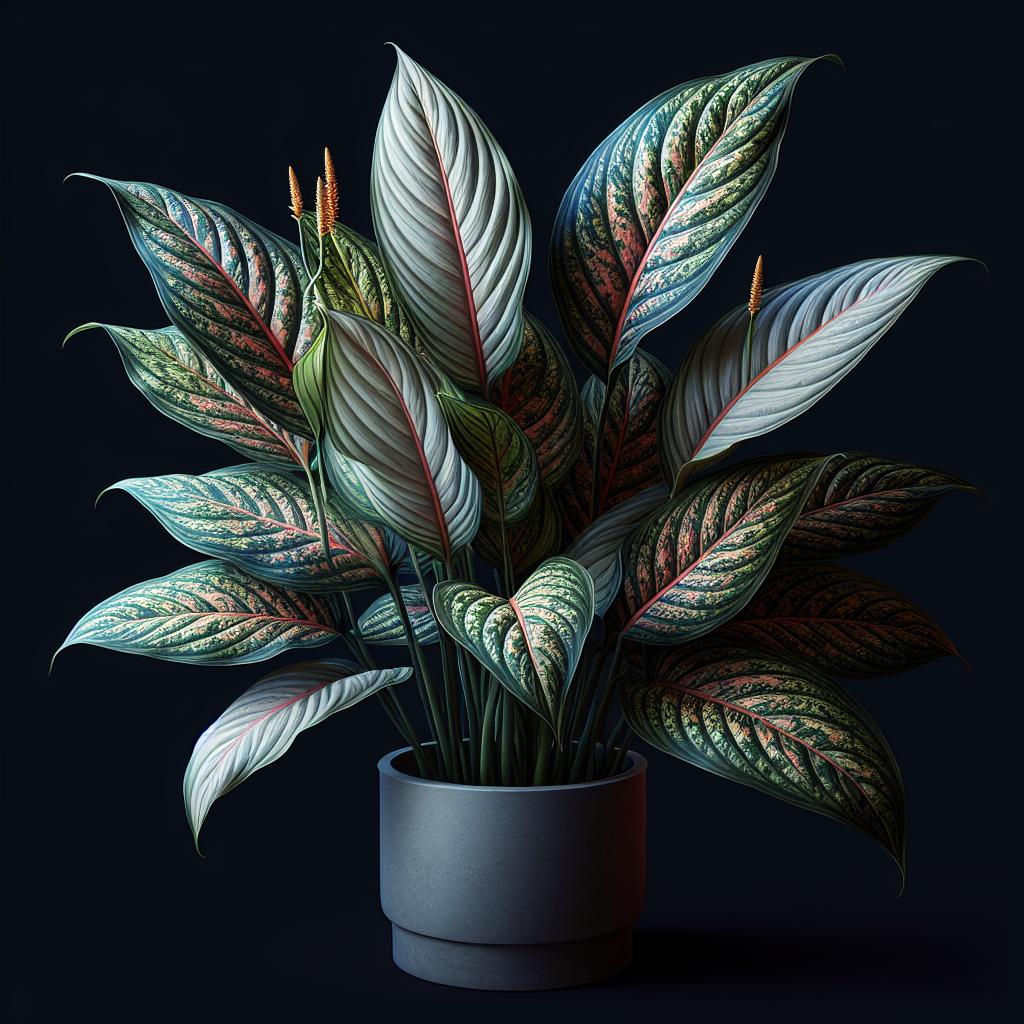
About Aglaonema
### Aglaonema (Aglaonema) #### Safety Information for Pets Aglaonema, commonly known as Chinese Evergreen, is **toxic to pets**. Both cats and dogs can experience adverse effects if they ingest any part of the plant. The plant contains calcium oxalate crystals, which can cause the following symptoms in pets: - Oral irritation - Intense burning and irritation of the mouth, tongue, and lips - Excessive drooling - Vomiting - Difficulty swallowing If you suspect your pet has ingested Aglaonema, it is crucial to contact your veterinarian immediately. #### General Description - **Scientific Name**: Aglaonema - **Common Names**: Chinese Evergreen, Philippine Evergreen - **Family**: Araceae - **Plant Type**: Shrub #### Morphology - **Leaves**: The leaves of Aglaonema are typically large, glossy, and often variegated with different shades of green, silver, cream, and sometimes red. They are usually ovate to elliptic in shape and have a leathery texture. - **Stems**: The plant has short stems, and in some varieties, the stems may be nearly invisible as the leaves grow densely. - **Flowers**: Aglaonema produces small, insignificant flowers that are often hidden by the foliage. These flowers are typical of the Araceae family, forming a spadix surrounded by a spathe. - **Fruit**: If the flowers are pollinated, the plant may produce small, red or orange berries. #### Growing Conditions - **Light**: Aglaonema is well-suited for low to medium light conditions, making it an excellent indoor plant. However, it thrives best in bright, indirect light. - **Water**: The plant prefers consistently moist soil but should not be waterlogged. Allow the top inch of soil to dry out between waterings. - **Soil**: A well-draining potting mix is ideal. A mix designed for houseplants usually works well. - **Temperature**: Aglaonema prefers warm temperatures ranging from 65°F to 80°F (18°C to 27°C). It is sensitive to cold drafts and should be kept away from air conditioning vents and windows during the winter. - **Humidity**: High humidity levels are ideal for Aglaonema, although it can tolerate average household humidity. To increase humidity, consider using a humidifier or placing the plant on a pebble tray with water. #### Care Tips - **Fertilization**: Feed the plant with a balanced, water-soluble fertilizer every month during the growing season (spring and summer). Reduce feeding during the fall and winter months. - **Pruning**: Regularly prune any yellow or dead leaves to keep the plant looking its best. Pruning can also help promote bushier growth. - **Repotting**: Repot the plant every 2-3 years or when it becomes root-bound. Choose a pot that is 1-2 inches larger in diameter than the current one. - **Pests**: Aglaonema is generally pest-resistant, but it can occasionally suffer from common houseplant pests like spider mites, mealybugs, and aphids. Treat infestations with insecticidal soap or neem oil. #### Benefits - **Air Purification**: Aglaonema is known for its air-purifying qualities. It can help remove common indoor pollutants such as formaldehyde and benzene from the air. #### Varieties There are numerous varieties of Aglaonema, each with unique leaf patterns and colors. Some popular varieties include: - **Aglaonema 'Silver Bay'**: Known for its striking silver and green variegated leaves. - **Aglaonema 'Emerald Beauty'**: Features dark green leaves with silvery-green markings. - **Aglaonema 'Red Siam'**: Has vibrant red and green foliage. In summary, Aglaonema is a versatile and attractive houseplant that is relatively easy to care for. However, it is essential to keep it out of reach of pets due to its toxicity. With proper care, it can thrive and add a touch of greenery to indoor spaces.
Be honest — you won't remember this article at 2am when your pet eats something.
Skip the Googling next time. Scan Aglaonema (or anything else) in ToxiPets and get an instant answer personalized to your pet's weight and breed.