
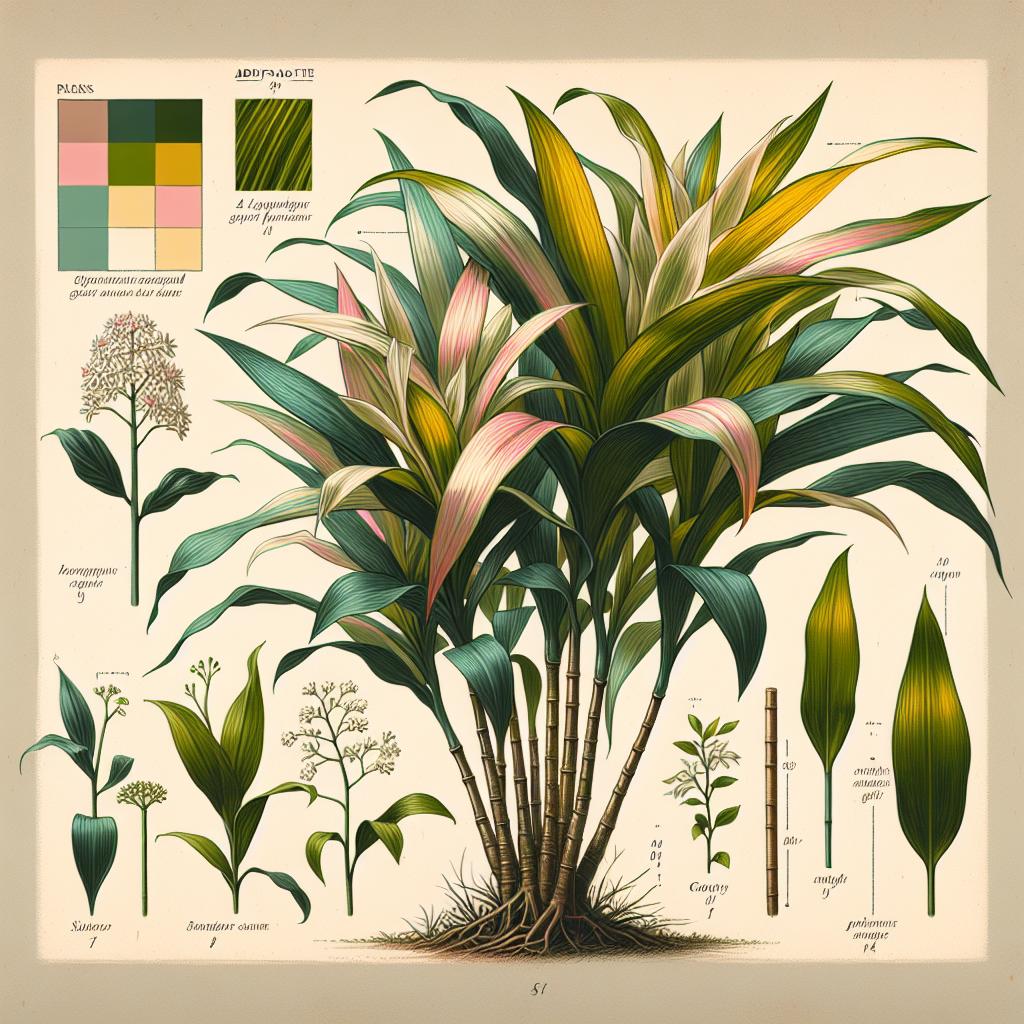
About Dracaena
### Dracaena (Dracaena spp.) #### Safety Information for Pets Dracaena species are toxic to both cats and dogs. If ingested, pets may experience symptoms such as: - Vomiting (sometimes with blood) - Loss of appetite - Increased salivation - Depression - Dilated pupils (in cats) If you suspect your pet has ingested dracaena, it is crucial to contact your veterinarian immediately. ### General Information **Scientific Name**: Dracaena spp. **Common Names**: Dracaena, Dragon Tree, Corn Plant (specific varieties) **Family**: Agavaceae (sometimes classified under Asparagaceae) **Plant Type**: Shrub #### Description Dracaena is a genus of about 120 species of trees and succulent shrubs. These plants are native to Africa, Southeast Asia, and other tropical regions. Dracaenas are popular as houseplants due to their attractive foliage and relative ease of care. **Leaves**: - The leaves are typically long, narrow, and lance-shaped. - They come in various colors, including green, yellow, and variegated patterns. - Most species have a rosette leaf arrangement, with leaves emerging from a central point. **Stems**: - The stems are woody and can be either single or branched. - Some species develop thickened, cane-like stems as they mature. **Flowers**: - Dracaena plants can produce small, fragrant flowers, although flowering is rare in indoor conditions. - The flowers are usually white or pale pink and are borne in clusters. **Growth Habit**: - Dracaenas can grow to a height of 2-10 feet indoors, depending on the species and care conditions. - They are slow growers but can live for many years with proper care. ### Care Instructions **Light**: - Dracaenas thrive in bright, indirect light but can tolerate lower light conditions. - Direct sunlight may scorch the leaves. **Watering**: - Water when the top inch of soil feels dry. - Overwatering can lead to root rot, so ensure the plant is in a well-draining pot. **Soil**: - Use a well-draining potting mix, such as a mix formulated for houseplants or one that contains peat and perlite. **Temperature and Humidity**: - Dracaenas prefer temperatures between 60-75°F (15-24°C). - They enjoy moderate humidity but can tolerate lower humidity levels. **Fertilization**: - Fertilize every 4-6 weeks during the growing season (spring and summer) with a balanced, water-soluble fertilizer. - Reduce or stop fertilizing during the dormant period (fall and winter). **Pruning**: - Prune to remove dead or yellowing leaves. - Trim the stems to control the plant's height and encourage bushier growth. **Propagation**: - Dracaenas can be propagated by stem cuttings. - Cut a healthy stem and allow it to dry slightly before planting it in moist soil or water. ### Common Issues **Pests**: - Dracaenas can be susceptible to pests like spider mites, mealybugs, and scale. - Regularly inspect the plant and treat infestations with insecticidal soap or neem oil. **Diseases**: - Root rot from overwatering is a common issue. - Leaf spot diseases can occur but are less common. **Leaf Yellowing**: - Can be caused by overwatering, underwatering, or insufficient light. - Adjust care practices to resolve the issue. ### Popular Species and Varieties - **Dracaena marginata**: Also known as Madagascar Dragon Tree, it has slender, arching, red-edged leaves. - **Dracaena fragrans**: Known as the Corn Plant, it has broad, arching leaves and a more tree-like form. - **Dracaena reflexa**: Also called Song of India, it has narrow, green leaves edged with yellow. ### Conclusion Dracaena plants are versatile and attractive additions to indoor spaces, known for their striking foliage and easy-care nature. However, pet owners should exercise caution due to their toxicity to cats and dogs. With the right care, these plants can thrive and enhance the indoor environment for many years.
Be honest — you won't remember this article at 2am when your pet eats something.
Skip the Googling next time. Scan Dracaena (or anything else) in ToxiPets and get an instant answer personalized to your pet's weight and breed.