
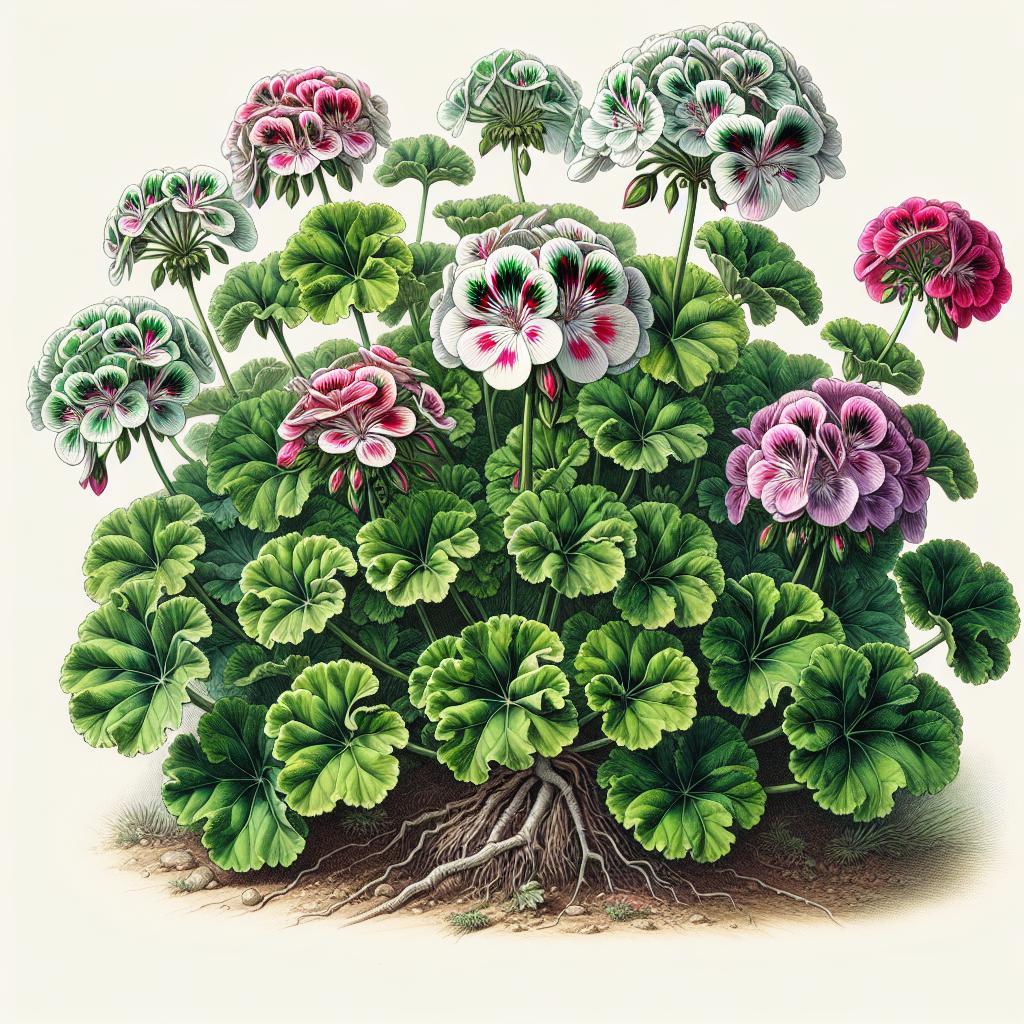
About Geranium
### Geranium (Geranium spp.) #### Safety Information for Pets - **Toxicity**: Geraniums are considered toxic to pets, including cats, dogs, and horses. - **Toxic Compounds**: The primary toxic compounds are geraniol and linalool. - **Symptoms of Ingestion**: If ingested, symptoms can include vomiting, loss of appetite, lethargy, and dermatitis or skin irritation. - **Action**: If you suspect your pet has ingested part of a geranium plant, it is advisable to contact your veterinarian immediately. #### General Plant Information - **Scientific Name**: Geranium spp. - **Common Names**: Geranium, cranesbill - **Family**: Geraniaceae - **Plant Type**: Flower, perennial, annual (depending on the species) #### Description **Growth Habit**: - Geraniums can be herbaceous perennials or annuals. They often have a sprawling or mounding growth habit. - They vary in height from a few inches to several feet, depending on the species and variety. **Leaves**: - The leaves are typically lobed or deeply divided, often with a somewhat rounded shape. - They are usually arranged in an alternate pattern on the stem. - The foliage can have a slightly aromatic scent when crushed. **Flowers**: - Geranium flowers are generally five-petaled and can be single or in clusters. - They come in a wide range of colors, including white, pink, red, purple, and blue. - Bloom time varies but generally occurs from late spring to early fall. **Fruit**: - The fruit is a capsule that dehisces (splits open) at maturity, releasing seeds. #### Cultivation **Light Requirements**: - Geraniums prefer full sun to partial shade. However, they generally perform best with at least 6 hours of direct sunlight per day. **Soil**: - They thrive in well-draining soil. A loamy soil enriched with organic matter is ideal. - pH preference is slightly acidic to neutral (pH 6.0-7.0). **Watering**: - Keep the soil evenly moist but not waterlogged. Overwatering can lead to root rot. - Established plants are somewhat drought-tolerant but perform better with regular watering, especially during dry periods. **Fertilization**: - Fertilize geraniums monthly during the growing season with a balanced fertilizer (10-10-10). - Avoid over-fertilizing, which can lead to excessive foliage growth at the expense of blooms. **Pruning**: - Deadhead spent flowers to encourage continued blooming. - Prune back leggy growth to maintain shape and promote bushiness. **Propagation**: - Geraniums can be propagated by seed, cuttings, or division. - Cuttings are often the most reliable method and can be taken in late summer or early fall. **Pests and Diseases**: - Common pests include aphids, spider mites, and whiteflies. - Diseases can include botrytis blight, bacterial blight, and powdery mildew. - Proper spacing and air circulation can help prevent disease. #### Uses **Ornamental**: - Geraniums are popular in gardens, containers, hanging baskets, and as ground covers. - Their vibrant flowers and attractive foliage make them a staple in ornamental horticulture. **Medicinal**: - Some species of geraniums have been used in traditional medicine for their astringent and anti-inflammatory properties. **Aromatic**: - The essential oils extracted from some geranium species are used in perfumes and aromatherapy. ### Conclusion Geraniums are versatile and beautiful plants that can enhance any garden or indoor space with their bright colors and pleasant aroma. However, their toxicity to pets requires careful placement and monitoring to ensure the safety of animals in the vicinity. With proper care, geraniums can be a delightful and rewarding addition to your plant collection.
Be honest — you won't remember this article at 2am when your pet eats something.
Skip the Googling next time. Scan Geranium (or anything else) in ToxiPets and get an instant answer personalized to your pet's weight and breed.