
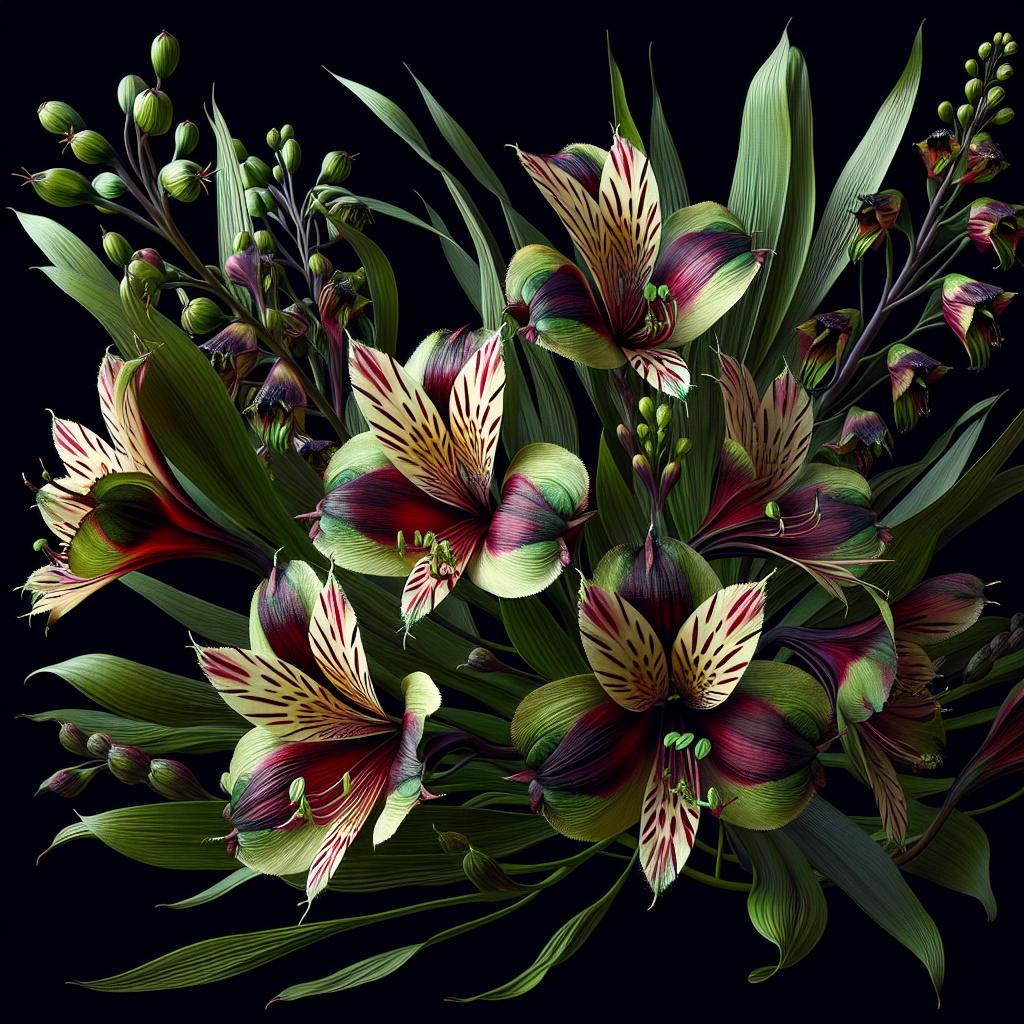
About Alstroemeria psittacina
### Safety Information for Pets **Alstroemeria psittacina**, commonly known as parrot-lily, lily of the Incas, or Peruvian-lily, is **toxic to pets**. Both cats and dogs can experience adverse effects if they ingest any part of the plant. Symptoms of toxicity may include vomiting, diarrhea, abdominal pain, and lethargy. In severe cases, it can lead to more serious health issues. If you suspect that your pet has ingested Alstroemeria psittacina, it is crucial to contact your veterinarian immediately. ### General Information #### Scientific Name - **Alstroemeria psittacina** #### Common Names - Parrot-lily - Lily of the Incas - Peruvian-lily #### Family - **Liliaceae** #### Plant Type - Flower ### Description **Alstroemeria psittacina** is a perennial plant known for its striking and colorful flowers. It is native to South America, particularly in regions such as Brazil and Argentina. #### Appearance - **Flowers**: The flowers are typically red with greenish tips, often marked with dark spots or streaks. The petals are arranged in a unique, somewhat tubular form that is reminiscent of a parrot's plumage, hence the common name "parrot-lily." - **Leaves**: The leaves are lanceolate (lance-shaped) and grow in a whorled arrangement around the stem. They are usually green and have a smooth texture. - **Stems**: The stems are slender and can grow up to 1-2 feet tall. They are often somewhat weak and may require staking to remain upright. #### Growth Conditions - **Light**: Prefers full sun to partial shade. In hotter climates, some afternoon shade can be beneficial. - **Soil**: Thrives in well-draining, fertile soil. A slightly acidic to neutral pH is ideal. - **Water**: Regular watering is essential, especially during the growing season. However, it is crucial to avoid waterlogging as it can lead to root rot. - **Temperature**: The plant prefers mild temperatures and can be sensitive to extreme cold. It is generally hardy in USDA zones 7-10. #### Care and Maintenance - **Pruning**: Deadheading spent flowers can encourage more blooms. Cut back the foliage after flowering has finished for the season. - **Fertilization**: A balanced, slow-release fertilizer applied in the spring can promote healthy growth and vibrant blooms. - **Propagation**: Can be propagated by division in the spring or fall. Seed propagation is also possible but less common due to the time required for seeds to mature. ### Uses **Ornamental**: Alstroemeria psittacina is highly valued for its ornamental qualities. It is commonly used in garden beds, borders, and as a cut flower due to its long-lasting blooms and vibrant colors. **Cut Flower**: The flowers are popular in floral arrangements and bouquets because they have a long vase life and add a touch of exotic beauty. ### Potential Issues - **Pests**: The plant can be susceptible to aphids, spider mites, and slugs. Regular inspection and appropriate pest control measures can help keep these issues at bay. - **Diseases**: Overwatering can lead to root rot and fungal diseases. Ensure good air circulation and avoid waterlogged soil conditions to minimize these risks. ### Summary Alstroemeria psittacina, or parrot-lily, is a stunning perennial flower that brings a splash of vibrant color to gardens and floral arrangements. While it requires specific care conditions, its beauty makes it a worthwhile addition to any plant collection. However, pet owners should exercise caution due to its toxicity to animals.
Be honest — you won't remember this article at 2am when your pet eats something.
Skip the Googling next time. Scan Alstroemeria psittacina (or anything else) in ToxiPets and get an instant answer personalized to your pet's weight and breed.