
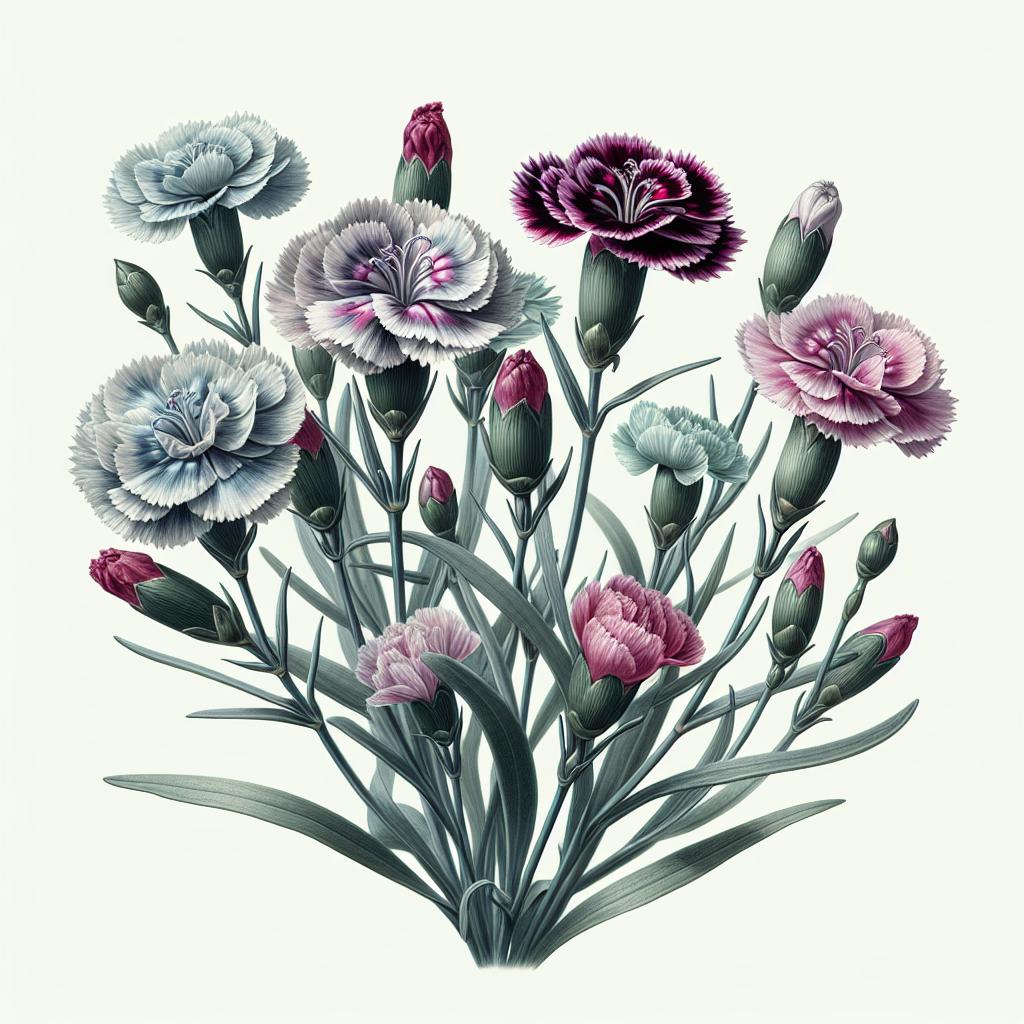
Is Dianthus caryophyllus Toxic to Dogs and Cats?
Yes, Dianthus caryophyllus is toxic to pets. ### Safety Information for Pets **Toxicity**: Dianthus caryophyllus (Carnation) is considered mildly toxic to pets, including cats and dogs. Ingestion may lead to mild gastrointestinal symptoms such as vomiting, drooling, and diarrhea. If a pet shows symptoms after ingesting any part of the plant, it is advisable to consult a veterinarian promptly. ### Detailed Plant Description #### **Scientific Name**: - Dianthus caryophyllus #### **Common Names**: - Garten-Nelke - Divine flower - Nelke - Carnation - Oeillet Giroflée - Have-nellike - Clove Pink - Oeillet des fleuristes - Edel-Nelke - Land-Nelke - Garofano coltivato #### **Family**: - Caryophyllaceae #### **Plant Type**: - Flower ### Botanical Characteristics #### **Origin**: - Native to the Mediterranean region. #### **Growth Habit**: - Perennial plant that is often grown as an annual in cooler climates. - Can reach heights of 18-24 inches (45-60 cm). #### **Leaves**: - Linear to lanceolate in shape. - Gray-green to blue-green in color. - Arranged oppositely along the stem. #### **Flowers**: - Typically bloom in late spring to early summer. - Flowers are usually 2-3 inches (5-7 cm) in diameter. - Common colors include pink, red, white, yellow, and purple, often with a sweet, spicy fragrance. - Double-flowered and single-flowered varieties exist, with frilled or serrated petal edges. #### **Cultural Requirements**: - **Light**: Prefers full sun but can tolerate partial shade. - **Soil**: Well-drained, neutral to slightly alkaline soil with a pH of 6.7 to 7.4. - **Water**: Moderate watering; avoid waterlogging as it can cause root rot. - **Temperature**: Thrives in moderate temperatures; can be sensitive to extreme heat or frost. - **Fertilization**: Benefits from a balanced, all-purpose fertilizer during the growing season. #### **Propagation**: - Primarily propagated through seeds, cuttings, or division. - Seeds can be sown indoors before the last frost or directly in the garden after the danger of frost has passed. #### **Uses**: - Widely used in floral arrangements and bouquets due to its long-lasting flowers and pleasant fragrance. - Popular in gardens and landscapes for borders, rock gardens, and as cut flowers. - The petals are sometimes used in culinary applications for their slight peppery flavor. ### Pest and Disease Management - **Pests**: Aphids, spider mites, and thrips can be common problems. - **Diseases**: Susceptible to fungal diseases such as powdery mildew, rust, and stem rot. Proper spacing and watering practices can minimize these issues. ### Additional Notes - Carnations have a rich historical and cultural significance; they are often associated with love and fascination. - They are frequently used in various ceremonies and celebrations, including weddings, Mother's Day, and as symbols in different cultural events. By providing these details, we ensure that anyone interested in growing Dianthus caryophyllus has a comprehensive understanding of the plant's characteristics, care requirements, and potential issues, especially concerning pet safety.
Toxic - Danger
This can be dangerous at any amount. Contact your veterinarian or poison control immediately if your pet is exposed.
### Safety Information for Pets **Toxicity**: Dianthus caryophyllus (Carnation) is considered mildly toxic to pets, including cats and dogs. Ingestion may lead to mild gastrointestinal symptoms such as vomiting, drooling, and diarrhea. If a pet shows symptoms after ingesting any part of the plant, it is advisable to consult a veterinarian promptly. ### Detailed Plant Description #### **Scientific Name**: - Dianthus caryophyllus #### **Common Names**: - Garten-Nelke - Divine flower - Nelke - Carnation - Oeillet Giroflée - Have-nellike - Clove Pink - Oeillet des fleuristes - Edel-Nelke - Land-Nelke - Garofano coltivato #### **Family**: - Caryophyllaceae #### **Plant Type**: - Flower ### Botanical Characteristics #### **Origin**: - Native to the Mediterranean region. #### **Growth Habit**: - Perennial plant that is often grown as an annual in cooler climates. - Can reach heights of 18-24 inches (45-60 cm). #### **Leaves**: - Linear to lanceolate in shape. - Gray-green to blue-green in color. - Arranged oppositely along the stem. #### **Flowers**: - Typically bloom in late spring to early summer. - Flowers are usually 2-3 inches (5-7 cm) in diameter. - Common colors include pink, red, white, yellow, and purple, often with a sweet, spicy fragrance. - Double-flowered and single-flowered varieties exist, with frilled or serrated petal edges. #### **Cultural Requirements**: - **Light**: Prefers full sun but can tolerate partial shade. - **Soil**: Well-drained, neutral to slightly alkaline soil with a pH of 6.7 to 7.4. - **Water**: Moderate watering; avoid waterlogging as it can cause root rot. - **Temperature**: Thrives in moderate temperatures; can be sensitive to extreme heat or frost. - **Fertilization**: Benefits from a balanced, all-purpose fertilizer during the growing season. #### **Propagation**: - Primarily propagated through seeds, cuttings, or division. - Seeds can be sown indoors before the last frost or directly in the garden after the danger of frost has passed. #### **Uses**: - Widely used in floral arrangements and bouquets due to its long-lasting flowers and pleasant fragrance. - Popular in gardens and landscapes for borders, rock gardens, and as cut flowers. - The petals are sometimes used in culinary applications for their slight peppery flavor. ### Pest and Disease Management - **Pests**: Aphids, spider mites, and thrips can be common problems. - **Diseases**: Susceptible to fungal diseases such as powdery mildew, rust, and stem rot. Proper spacing and watering practices can minimize these issues. ### Additional Notes - Carnations have a rich historical and cultural significance; they are often associated with love and fascination. - They are frequently used in various ceremonies and celebrations, including weddings, Mother's Day, and as symbols in different cultural events. By providing these details, we ensure that anyone interested in growing Dianthus caryophyllus has a comprehensive understanding of the plant's characteristics, care requirements, and potential issues, especially concerning pet safety.
Worried about your pet?
Get personalized guidance for Dianthus caryophyllus exposure based on your pet's weight and breed.
What To Do If Your Pet Ate Dianthus caryophyllus
Stay calm and remove your pet from the source
Contact your veterinarian immediately
Call ASPCA Poison Control: (888) 426-4435
Be honest — you won't remember this article at 2am when your pet eats something.
Skip the Googling next time. Scan Dianthus caryophyllus (or anything else) in ToxiPets and get an instant answer personalized to your pet's weight and breed.
Stop Googling. Start scanning.
Next time your pet gets into something, skip the articles. Open ToxiPets, scan it, and get a personalized answer in seconds — based on your pet's weight, breed, and health.
Free to download • Used by 50,000+ pet parents