
Is Aeonium arboreum Toxic to Dogs and Cats?
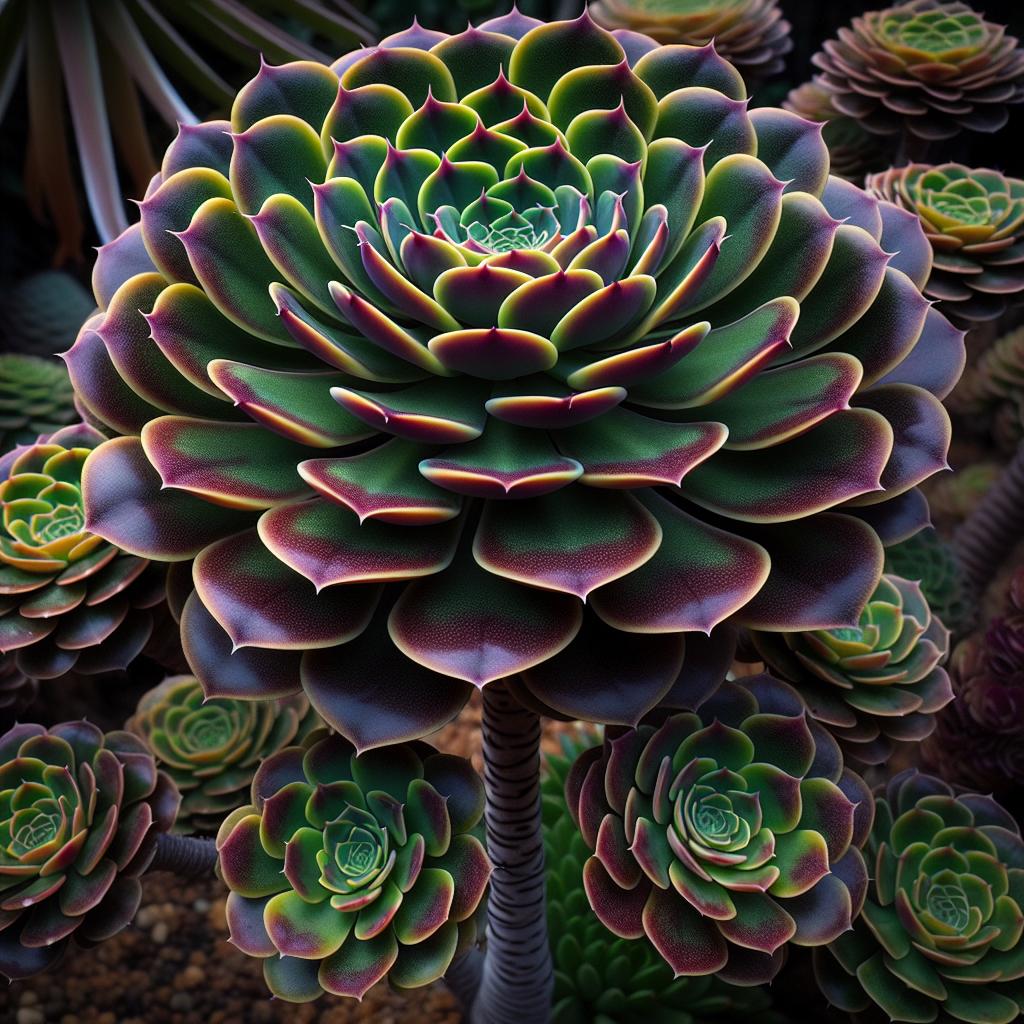
No, Aeonium arboreum is generally safe for pets. ### Aeonium arboreum (Tree Aeonium) #### Safety Information for Pets - **Toxicity**: Aeonium arboreum is generally considered non-toxic to pets, including cats and dogs. However, ingestion of large quantities might cause mild stomach irritation or discomfort. Always monitor pets to ensure they do not consume plants excessively. #### General Description - **Scientific Name**: Aeonium arboreum - **Common Names**: aeonium, rosa verde, tree aeonium, Tree Aeonium, Aéonium arboré, Aéonium arborescent, ensaião, saiao, aeonium-negro, saião, trädtaklök #### Family - **Family**: Crassulaceae #### Plant Type - **Type**: Succulent #### Origin and Habitat - **Native Range**: Aeonium arboreum is native to the Canary Islands and parts of North Africa. - **Habitat**: This succulent thrives in arid, rocky habitats with well-draining soil. #### Botanical Characteristics - **Growth Habit**: Aeonium arboreum is a branching succulent that can grow up to 3-4 feet (90-120 cm) tall. It features rosettes of fleshy, spoon-shaped leaves at the ends of its branches. - **Leaves**: The leaves are usually green but can also have a purplish hue, especially in full sun or during cooler weather. The edges of the leaves can sometimes exhibit red tinges. - **Stems**: The plant has woody stems that support the rosettes. - **Flowers**: Aeonium arboreum produces yellow, star-shaped flowers that bloom in dense clusters on tall stalks, usually in the spring. The flowering process often results in the death of the rosette that produced the flower (monocarpic behavior). #### Growing Conditions - **Light**: Prefers full sun to partial shade. In hot climates, some afternoon shade can be beneficial. - **Soil**: Requires well-draining soil, such as a cactus or succulent mix. Poor drainage can lead to root rot. - **Watering**: Water moderately during the growing season (spring and fall), allowing the soil to dry out between waterings. Reduce watering in the winter when the plant is dormant. - **Temperature**: Aeonium arboreum is not frost-tolerant and should be protected from freezing temperatures. Ideal temperature range is between 40°F (4°C) and 100°F (38°C). - **Humidity**: This plant prefers low humidity but can adapt to more humid environments if the soil drains well. #### Propagation - **Methods**: Propagation is commonly done through stem cuttings or offsets. Cuttings should be allowed to callous over for a few days before planting in well-draining soil. #### Care Tips - **Pruning**: Prune spent flower stalks and any dead or damaged leaves to maintain a tidy appearance. - **Fertilization**: Feed with a balanced, diluted fertilizer during the growing season. Avoid over-fertilizing. - **Pests and Diseases**: Generally pest-resistant but can occasionally be affected by aphids, mealybugs, or scale. Overwatering can lead to root rot. #### Uses - **Ornamental**: Aeonium arboreum is popular in gardens and container arrangements due to its striking rosettes and architectural form. - **Landscaping**: Ideal for rock gardens, succulent gardens, and xeriscaping. This succulent is not only an attractive addition to any plant collection but also relatively easy to care for, making it a favorite among plant enthusiasts.
Safe
### Aeonium arboreum (Tree Aeonium) #### Safety Information for Pets - **Toxicity**: Aeonium arboreum is generally considered non-toxic to pets, including cats and dogs. However, ingestion of large quantities might cause mild stomach irritation or discomfort. Always monitor pets to ensure they do not consume plants excessively. #### General Description - **Scientific Name**: Aeonium arboreum - **Common Names**: aeonium, rosa verde, tree aeonium, Tree Aeonium, Aéonium arboré, Aéonium arborescent, ensaião, saiao, aeonium-negro, saião, trädtaklök #### Family - **Family**: Crassulaceae #### Plant Type - **Type**: Succulent #### Origin and Habitat - **Native Range**: Aeonium arboreum is native to the Canary Islands and parts of North Africa. - **Habitat**: This succulent thrives in arid, rocky habitats with well-draining soil. #### Botanical Characteristics - **Growth Habit**: Aeonium arboreum is a branching succulent that can grow up to 3-4 feet (90-120 cm) tall. It features rosettes of fleshy, spoon-shaped leaves at the ends of its branches. - **Leaves**: The leaves are usually green but can also have a purplish hue, especially in full sun or during cooler weather. The edges of the leaves can sometimes exhibit red tinges. - **Stems**: The plant has woody stems that support the rosettes. - **Flowers**: Aeonium arboreum produces yellow, star-shaped flowers that bloom in dense clusters on tall stalks, usually in the spring. The flowering process often results in the death of the rosette that produced the flower (monocarpic behavior). #### Growing Conditions - **Light**: Prefers full sun to partial shade. In hot climates, some afternoon shade can be beneficial. - **Soil**: Requires well-draining soil, such as a cactus or succulent mix. Poor drainage can lead to root rot. - **Watering**: Water moderately during the growing season (spring and fall), allowing the soil to dry out between waterings. Reduce watering in the winter when the plant is dormant. - **Temperature**: Aeonium arboreum is not frost-tolerant and should be protected from freezing temperatures. Ideal temperature range is between 40°F (4°C) and 100°F (38°C). - **Humidity**: This plant prefers low humidity but can adapt to more humid environments if the soil drains well. #### Propagation - **Methods**: Propagation is commonly done through stem cuttings or offsets. Cuttings should be allowed to callous over for a few days before planting in well-draining soil. #### Care Tips - **Pruning**: Prune spent flower stalks and any dead or damaged leaves to maintain a tidy appearance. - **Fertilization**: Feed with a balanced, diluted fertilizer during the growing season. Avoid over-fertilizing. - **Pests and Diseases**: Generally pest-resistant but can occasionally be affected by aphids, mealybugs, or scale. Overwatering can lead to root rot. #### Uses - **Ornamental**: Aeonium arboreum is popular in gardens and container arrangements due to its striking rosettes and architectural form. - **Landscaping**: Ideal for rock gardens, succulent gardens, and xeriscaping. This succulent is not only an attractive addition to any plant collection but also relatively easy to care for, making it a favorite among plant enthusiasts.
Worried about your pet?
Get personalized guidance for Aeonium arboreum exposure based on your pet's weight and breed.
What To Do If Your Pet Ate Aeonium arboreum
Stay calm and remove your pet from the source
Contact your veterinarian immediately
Call ASPCA Poison Control: (888) 426-4435
Be honest — you won't remember this article at 2am when your pet eats something.
Skip the Googling next time. Scan Aeonium arboreum (or anything else) in ToxiPets and get an instant answer personalized to your pet's weight and breed.
Stop Googling. Start scanning.
Next time your pet gets into something, skip the articles. Open ToxiPets, scan it, and get a personalized answer in seconds — based on your pet's weight, breed, and health.
Free to download • Used by 50,000+ pet parents